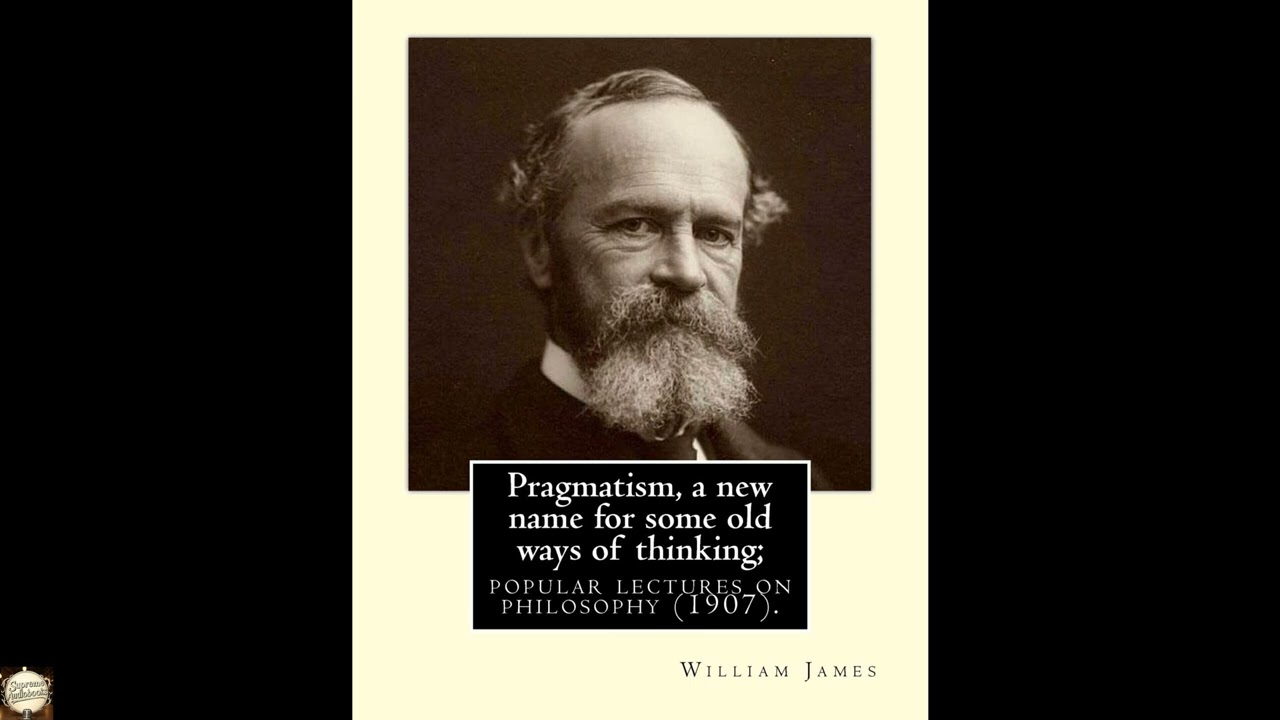
Pragmatism, a new name for some old ways of thinking; popular lectures on philosoph
Prepare to redefine how you understand truth, belief, and the very act of thinking with Pragmatism, a new name for some old ways of thinking; popular lectures on philosoph. This foundational text, delivered originally as a series of public lectures, offers not a dry academic treatise but a lively, direct conversation about the fundamental questions that shape human understanding. Far from an abstract exercise, the philosophy presented here insists on the practical consequences of our ideas, making it astonishingly relevant in an era brimming with information and competing claims to reality. It's a call to examine beliefs not just for their internal consistency, but for their tangible impact on our lives and the world around us. The structure of this work unfolds much like a captivating intellectual drama, beginning with an introduction to pragmatism itself—a method of clarifying ideas by tracing their practical effects. Imagine the scene: a lecturer standing before an audience, challenging conventional wisdom and inviting listeners to consider the meaning of a concept by asking, "What concrete difference will its being true make in anyone's actual life?" The central conflict arises from the age-old debates in philosophy regarding the nature of truth, reality, and knowledge, often pitting rationalism against empiricism, and rigid idealism against unyielding materialism. The work guides its audience through these intellectual battlegrounds, offering pragmatism as a mediating path, a way to reconcile seemingly intractable oppositions by shifting the focus from abstract essences to observable consequences. As the lectures progress, the “story” moves through various philosophical problems, each addressed with the pragmatic lens. From the nature of substances and the question of free will, to the challenges of religious belief and the pursuit of scientific understanding, the speaker systematically demonstrates how pragmatism cuts through complex theoretical knots. The arc of the work builds steadily, starting with the basic definition and expanding its application, much like a detective piecing together clues to solve a grand mystery. The climax, if one can call it that in a philosophical argument, comes as the full scope of pragmatism’s implications is revealed—not merely as a method for settling disputes, but as a robust, forward-looking philosophical attitude that embraces an open-ended, pluralistic universe, still in the making and continually shaped by our active engagement. While the authorship of this specific recording is presented as unknown, the insights contained within Pragmatism, a new name for some old ways of thinking represent a pivotal moment in American thought, giving voice to a distinct philosophical movement that took root in the late nineteenth and early twentieth centuries. This text stands as a landmark exposition of pragmatism, a philosophy born from the uniquely American spirit of ingenuity, practicality, and democratic enterprise. It reflects a period when thinkers sought to move beyond the grand, often abstract, metaphysical systems of European philosophy, yearning for a system of thought grounded in experience, action, and the tangible results of human endeavor. The popular lecture format, by its very nature, signals a desire to engage a broad public, to bring philosophical inquiry out of the ivory tower and into the everyday discourse of citizens navigating a rapidly changing world. The accessibility and directness of these lectures were crucial to disseminating pragmatic ideas far beyond academic circles, influencing not only philosophy but also education, law, and social reform. One of the central themes running through these lectures is the nature of truth itself, reframing it not as a static, absolute entity waiting to be discovered, but as a dynamic process. The speaker offers compelling analogies, suggesting that truth is not something an idea is, but something an idea becomes when it proves its utility and efficacy. For instance, the truth of a scientific hypothesis is not determined by its logical elegance alone, but by whether it works—whether it leads to successful predictions, practical applications, and a coherent understanding of phenomena. Another significant theme is the primacy of experience and action. The philosophy asserts that our beliefs are ultimately rules for action, and their meaning is found in the consequences they entail. Consider a person deciding which path to take through a dense forest; the "truth" of one path over another is not an abstract quality, but its capacity to actually lead to the desired destination, a truth confirmed by the act of walking it. Furthermore, the lectures champion pluralism and open-endedness, arguing against the notion of a single, immutable reality that all must conform to. Reality, it is suggested, reveals itself differently to different inquiries, and multiple perspectives can hold their own forms of truth, depending on the ends they serve. This ties into the fourth major theme: utility and practical consequences. For a concept to have meaning, it must make some discernible difference in our experience. If two ideas have no conceivable practical distinction, then, pragmatically speaking, they are the same idea. This way of thinking encourages us to look past theoretical disputes to the actual results of beliefs and propositions, creating a powerfully practical filter for philosophical inquiry and everyday decision-making. This philosophical orientation emerged during a time of profound transformation in America. The late nineteenth and early twentieth centuries witnessed astonishing industrial growth, significant social upheavals, and the widespread impact of Darwinian evolutionary theory, which challenged traditional views of human nature and cosmic design. There was a burgeoning sense of national identity, seeking its own voice in philosophy and the arts. Older, established modes of thought, often inherited from European traditions, seemed increasingly inadequate to address the dynamism and practical challenges of a modernizing society. In this milieu, a philosophy that valued experimentation, adaptation, and tangible results resonated deeply. It provided an intellectual framework for understanding a world that was constantly evolving and for empowering individuals to actively shape their realities, rather than passively accepting them. To experience Pragmatism, a new name for some old ways of thinking as an audiobook is to encounter it precisely as it was intended—as a voice, a conversation, an unfolding argument. The run length of several hours makes it an ideal companion for commutes, extended walks, or dedicated listening sessions where you can fully immerse yourself in the flow of ideas. Listen for the engaging, conversational tone of the speaker, designed to persuade and enlighten rather than merely inform. Pay attention to how the argument builds, layer by layer, with relatable examples and a steady rhythm that guides you through complex concepts. The narration allows the persuasive power of the original lectures to shine through, providing a sense of direct address that makes the philosophical points particularly vivid and impactful, drawing you into the very heart of this revolutionary way of thinking.
Enjoyed Pragmatism, a new name for some old ways of thinking; popular lectures on philosoph? A few ways to support us
Audible & Amazon links are affiliate; we may earn a small commission at no extra cost.
About this production
Human narration by a volunteer reader from LibriVox.org, the public-domain audiobook project. LibriVox volunteers record literary works whose copyright has expired in the United States, releasing the resulting recordings into the public domain.
Pragmatism, a new name for some old ways of thinking; popular lectures on philosoph by William James. The underlying text is in the U.S. public domain. We do not republish any modern copyrighted edition, translation, or commentary.
The 4K cinematic visuals accompanying this audiobook are generated by an AI image model from prompts derived from the source text. No copyrighted photos, paintings, or stock footage are used. AI generation is disclosed on every video on our YouTube channel as required by YouTube's altered/synthetic content policy.
English subtitles are transcribed from the LibriVox recording with OpenAI Whisper. Translations into the 11 other supported languages are produced by Meta's NLLB-200 neural translation model. No human translator's copyrighted translation is used.
Questions about sourcing or rights? See our DMCA & Sourcing policy or contact us.
Enjoyed this audiobook?
If you'd like to own a copy of Pragmatism, a new name for some old ways of thinking; popular lectures on philosoph or hear a professionally produced edition, the links below help support free audiobook production at no extra cost to you.
As an Amazon Associate we earn from qualifying purchases. Audible / print links are affiliate.