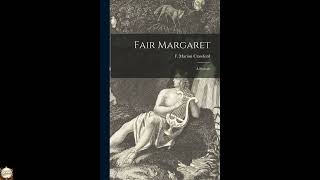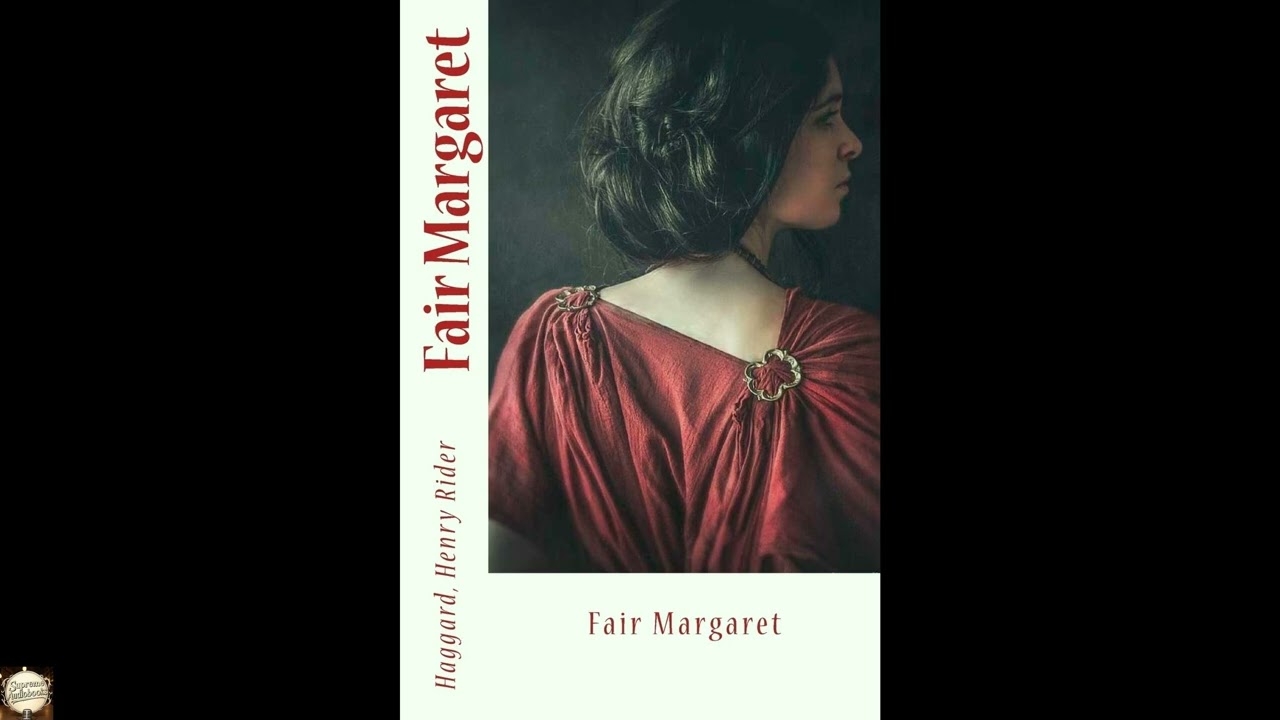
Fair Margaret
Step into a world where the glow of Renaissance art clashes with the shadow of the Spanish Inquisition, where loyalties are tested by religious fervor and personal ambition. Henry Rider Haggard, an author best known for his sweeping adventures across the African continent, here transports listeners to a different, equally perilous arena: late fifteenth-century Europe. Fair Margaret stands as a testament to Haggard’s versatility, moving beyond the jungles and lost cities to render a vivid portrait of a historical period fraught with danger and romance. This particular novel offers a rare opportunity to experience Haggard’s storytelling prowess applied to a European setting, presenting a gripping narrative that resonates with enduring questions about faith, power, and the human heart’s resilience. It is a story that proves the universal appeal of courage in the face of tyranny, a narrative that feels as urgent today as it did when first written. The story begins in Spain, a nation on the cusp of immense change and marked by the chilling authority of the newly ascendant Spanish Inquisition. At the heart of the narrative is Margaret de Fonseca, a young woman of extraordinary beauty and considerable inheritance, whose mixed English and Spanish parentage makes her a figure of both privilege and vulnerability. Orphaned and under the protection of her formidable Spanish father, Don Pedro de Fonseca, Margaret finds herself increasingly imperiled by the machinations of her ambitious cousin, Don Emanuel. Emanuel, a man of ruthless cunning and intense desire, covets not only Margaret’s wealth but Margaret herself, and he is willing to leverage the terrifying power of the Holy Office to achieve his aims. His relentless pursuit places Margaret in mortal danger, as her English mother’s Protestant sympathies are twisted into accusations of heresy, threatening her very life and liberty. Into this maelstrom arrives Peter Brome, a young English adventurer of noble character and unwavering loyalty. Peter, initially drawn to Spain by circumstance, quickly becomes Margaret’s staunchest defender, falling deeply in love with her amidst the looming threats. Their affection blossoms under the very shadow of the Inquisition, making their defiance all the more poignant. As Emanuel tightens his grip and the weight of religious persecution bears down, Margaret and Peter must navigate a treacherous landscape of betrayal, escape, and desperate acts of courage. From the opulent halls of Spanish nobility to the grim dungeons of the Inquisition, their struggle for justice and survival becomes a dramatic conflict between individual will and the crushing force of institutional power. The narrative unfolds as a race against time, with Margaret’s fate hanging precariously in the balance and Peter risking everything to protect the woman he loves from a fate worse than death. The author, Sir Henry Rider Haggard, born in rural Norfolk, England, in 1856, carved out an influential niche in late Victorian literature. His early life experiences significantly shaped his imagination; at the age of nineteen, he moved to South Africa, where he served in various administrative roles, witnessing firsthand the dramatic landscapes and complex political realities of the region. This period provided him with an unparalleled wealth of material that would later define his literary output. After returning to England and qualifying as a barrister, Haggard turned to writing, quickly gaining immense popularity. His name became synonymous with the adventure genre, particularly with stories set in exotic, often uncharted, locales. Haggard’s impact on literature is undeniable. With works like King Solomon’s Mines (1885) and She (1887), he pioneered the "lost world" genre, creating archetypal heroes and narratives that continue to inspire writers and filmmakers. These tales, featuring daring quests, ancient mysteries, and formidable adversaries, captured the public imagination and helped define the era’s fascination with discovery and empire. Though Fair Margaret, published in 1907, differs in its European setting, it retains Haggard's characteristic flair for dramatic pacing, vivid scene-setting, and clearly defined moral conflicts. He possessed a unique ability to combine historical detail with fantastical elements, crafting stories that were both thrillingly imaginative and deeply rooted in a sense of the past. Fair Margaret powerfully conveys several recurring themes that provide its core literary significance. Central among these is the stark representation of religious intolerance and persecution. The Spanish Inquisition acts not merely as a backdrop but as a palpable, terrifying force, illustrating how institutional power, when unchecked, can crush individual liberty and conscience. Concrete scenes depicting arrests, accusations based on flimsy evidence, and the looming threat of the auto-da-fé vividly show the human cost of such fervor. Another prominent theme is the enduring conflict between selfless love and destructive ambition. The pure affection between Margaret and Peter stands in sharp contrast to Don Emanuel’s relentless pursuit of power and wealth, which he seeks to achieve through coercion and deceit, even within the bonds of family. The book further brings to light the themes of duty and loyalty, particularly through Peter Brome’s unwavering commitment to Margaret, even when it means facing incredible danger and personal sacrifice. His courageous actions in the face of overwhelming odds underscore the moral imperative to protect the innocent and uphold justice, even when society itself seems to have abandoned these principles. Finally, the story implicitly comments on the remarkable resilience of the human spirit. Margaret, though frequently in peril, demonstrates immense inner strength and moral fortitude, refusing to compromise her beliefs or surrender to her tormentors. Her quiet courage in the face of brutal oppression provides a powerful counterpoint to the darkness surrounding her, affirming the strength found in steadfastness. When Fair Margaret was published in 1907, the world was in the midst of the Edwardian era, a period of relative peace and prosperity in Britain, but also one marked by growing social change and international tensions. While Haggard’s most celebrated works had appeared in the late Victorian period, his continued literary output in the early 20th century demonstrates a sustained appetite for adventure and historical fiction among readers. The historical backdrop of the Spanish Inquisition, a subject of enduring fascination and horror, would have resonated with contemporary audiences accustomed to tales of religious conflict and the fight for freedom. The novel emerged from an author who, while famous for his colonial narratives, also held a deep interest in historical epochs beyond the British Empire, perhaps reflecting a broader cultural curiosity about diverse historical settings and the universal human dramas that play out within them. It was a time when historical scholarship was becoming more accessible, and a story grounded in a recognizable, albeit dramatic, past offered both entertainment and a connection to historical events. Listening to Fair Margaret as an audiobook offers a unique and immersive way to experience Haggard’s storytelling. A skilled narrator can bring the full force of this historical epic to life, giving distinct voices to the varied cast of characters – from the valiant Peter Brome and the steadfast Margaret, to the menacing Don Emanuel and the austere figures of the Inquisition. The several hours of runtime allow for a complete immersion in the detailed historical setting, letting the listener truly inhabit the atmosphere of late 15th-century Spain, with all its beauty and terror. Listen for the narrator’s pacing, which can amplify the suspense during harrowing escapes and quiet moments of romance, and how their voice can convey the gravity of the period’s dialogue. The careful articulation of names, places, and historical details will enhance the sense of authenticity, making the grand historical scope of the novel feel immediate and personal.
Enjoyed Fair Margaret? A few ways to support us
Audible & Amazon links are affiliate; we may earn a small commission at no extra cost.
About this production
Human narration by a volunteer reader from LibriVox.org, the public-domain audiobook project. LibriVox volunteers record literary works whose copyright has expired in the United States, releasing the resulting recordings into the public domain.
Fair Margaret by Henry Rider, Haggard. The underlying text is in the U.S. public domain. We do not republish any modern copyrighted edition, translation, or commentary.
The 4K cinematic visuals accompanying this audiobook are generated by an AI image model from prompts derived from the source text. No copyrighted photos, paintings, or stock footage are used. AI generation is disclosed on every video on our YouTube channel as required by YouTube's altered/synthetic content policy.
English subtitles are transcribed from the LibriVox recording with OpenAI Whisper. Translations into the 11 other supported languages are produced by Meta's NLLB-200 neural translation model. No human translator's copyrighted translation is used.
Questions about sourcing or rights? See our DMCA & Sourcing policy or contact us.
Enjoyed this audiobook?
If you'd like to own a copy of Fair Margaret or hear a professionally produced edition, the links below help support free audiobook production at no extra cost to you.
As an Amazon Associate we earn from qualifying purchases. Audible / print links are affiliate.