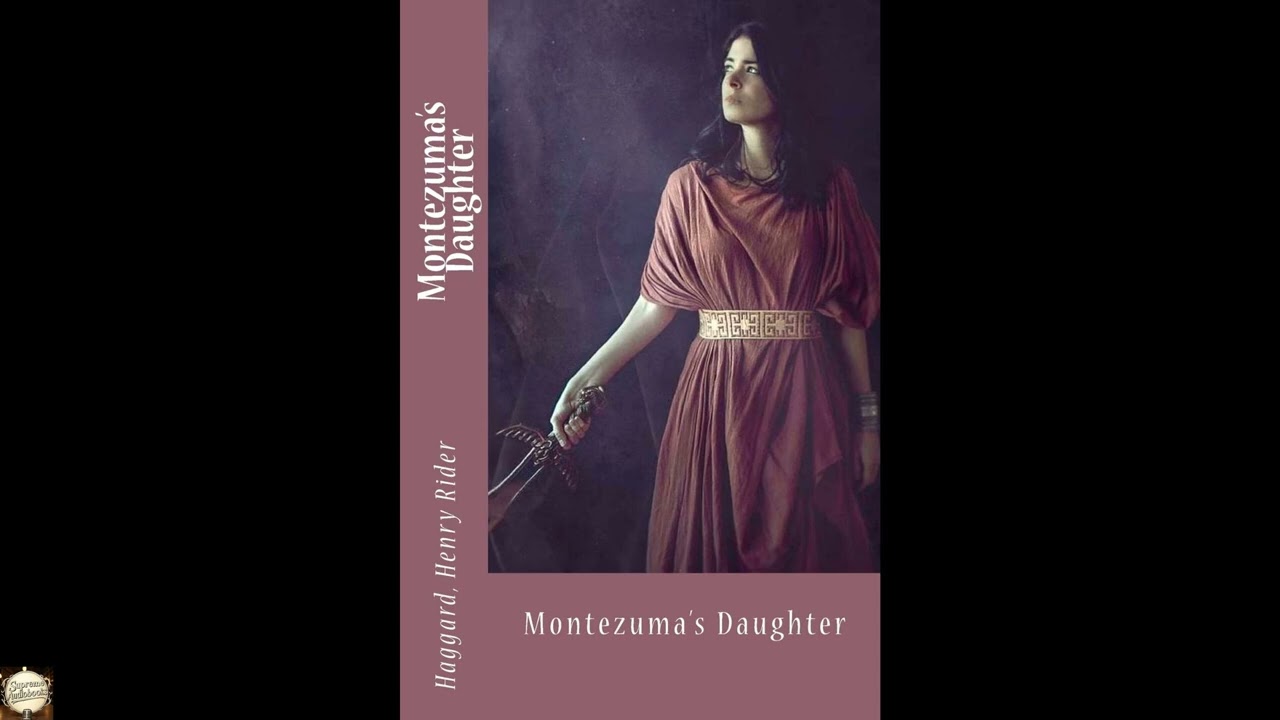
Montezuma's Daughter
Step into a world where ancient empires clash with European ambition, where a quest for revenge leads to an unexpected destiny among a vanishing civilization. Henry Rider Haggard's Montezuma's Daughter, first published in 1893, is more than an adventure tale; it is a sweeping historical romance that plunges listeners into the heart of the Aztec Empire just before its cataclysmic fall. It stands as a testament to the power of a single individual caught between worlds, an exciting narrative that questions assumptions about civilization and savagery, love and vengeance. This story, with its grand scope and intimate human drama, continues to resonate, offering a lens through which to consider cultural encounters and the search for identity in an alien landscape. The narrative unfurls through the eyes of Thomas Wingfield, a young Englishman living in the 16th century, whose quiet life is brutally shattered. The horrific murder of his beloved mother at the hands of a Spanish grandee, Don Jose, ignites a burning desire for retribution that shapes the remainder of his days. Driven by this singular purpose, Wingfield’s pursuit of his foe leads him across Europe, through the treacherous seas, and ultimately to the shores of the New World – specifically, the sprawling, awe-inspiring realm of the Aztecs. There, amid the splendor and ritualistic practices of a society poised on the brink of profound change, Wingfield finds himself entangled in local politics and prophecies. His quest for personal vengeance becomes intertwined with the larger conflict brewing between the indigenous peoples and the encroaching Spanish conquistadors led by Hernán Cortés. Wingfield, through a series of dramatic events, becomes deeply embedded within the Aztec court, forming relationships, gaining allies, and even falling in love with a princess believed to be Montezuma’s daughter. He witnesses firsthand the grandeur of Tenochtitlan, the intricate social structures, and the spiritual fervor of its people, contrasting sharply with the relentless greed and evangelism of the Spanish. The story follows his transformations as he grapples with his identity, torn between his European heritage and his growing loyalty to the people who have embraced him, all while his original thirst for revenge smolders, occasionally flaring up to drive his actions. The author, Henry Rider Haggard, lived a life almost as adventurous as his characters. Born in 1856 in Norfolk, England, Haggard spent formative years in colonial South Africa, where he worked in various administrative roles, including secretary to the Lieutenant-Governor of Natal. His time in Africa, observing indigenous cultures and participating in political events like the annexation of the Transvaal, profoundly influenced his writing, providing him with a wealth of material and an enduring fascination with "lost" civilizations and grand narratives of discovery. After returning to England and briefly studying law, Haggard turned to writing fiction, rapidly establishing himself as a prolific and popular author. Haggard quickly became one of the pioneers of adventure fiction, a genre that flourished in the late Victorian era. His most celebrated works include King Solomon's Mines (1885), which introduced the iconic Allan Quatermain, and She (1887), featuring the mysterious immortal Ayesha. These novels, along with Montezuma's Daughter, cemented his reputation for crafting fast-paced, imaginative stories set in exotic locales, often blending historical detail with fantastic elements. Haggard’s place in the literary canon is significant as a foundational figure for what would later become science fiction and fantasy, directly influencing writers from Robert Louis Stevenson to J.R.R. Tolkien, and many creators of pulp fiction and subsequent popular adventure stories. Montezuma's Daughter powerfully enacts several enduring themes. Foremost among these is the stark clash of civilizations, depicted through the confrontation between the technologically advanced, religiously zealous Spanish and the highly structured, ritualistic Aztec Empire. Haggard shows this conflict through vivid scenes, such as the initial astonishment of Wingfield at the magnificence of Tenochtitlan versus the horror of the Aztec sacrificial rites, or the Spanish relentless push to convert and conquer. Another central theme is the nature of revenge and justice. Wingfield's initial, all-consuming desire for vengeance against Don Jose drives the entire plot, yet as he lives among the Aztecs, his understanding of justice and its potential consequences broadens and complicates, leading to internal struggles about his ultimate aim. The narrative also powerfully portrays the themes of love and sacrifice. Wingfield's affection for the Aztec princess provides a deeply human counterpoint to the grand historical events unfolding around him. Their relationship transcends cultural barriers, highlighting shared human emotions even amidst profound differences. His growing loyalty to the Aztec people, and his willingness to fight for their survival against impossible odds, demonstrates a profound personal transformation and the sacrifices one might make for a chosen community. The novel continually examines how an individual's identity can be reshaped by new experiences and allegiances when placed in radically unfamiliar circumstances. When Montezuma's Daughter was published in 1893, Britain was at the zenith of its imperial power, and public interest in distant lands, archaeology, and anthropology was exceptionally high. The late Victorian era saw a boom in popular literature that capitalized on this fascination, often presenting narratives of discovery, conquest, and encounters with "primitive" or "lost" cultures. Haggard's work fit perfectly into this cultural moment, providing vicarious thrills of adventure and glimpses into exotic worlds that many readers could only dream of seeing. The era also harbored a prevailing (and often problematic) curiosity about the "other," filtered through lenses of both romanticism and Eurocentric superiority, which is subtly present in the novel's depiction of Aztec society. The literary world of the 1890s was also ripe for adventure stories. Following the success of Robert Louis Stevenson's Treasure Island and Haggard's own earlier works, readers eagerly consumed tales of derring-do, scientific discovery, and imperial romance. These stories often served as a form of escapism from the increasingly industrialized and complex home front, transporting audiences to simpler, more heroic (if often brutal) landscapes. Haggard’s novels, with their blend of historical detail, dramatic action, and romantic elements, were perfectly positioned to satisfy the widespread appetite for such thrilling narratives, making them immensely popular and culturally influential during their time. Listening to Montezuma's Daughter as an audiobook transforms the experience of this grand adventure. The narrator's voice becomes the conduit for Wingfield's dramatic encounters, conveying the awe of first seeing Tenochtitlan, the tension of battle, and the emotional weight of personal betrayals. The run length, measured in several hours, allows for a truly immersive experience, letting the listener become fully absorbed in the intricate plot and the richly imagined world. Pay close attention to how the narration differentiates between the steadfast British resolve, the passionate Spanish temperament, and the ritualistic cadence of the Aztec dialogue, each delivered with a distinct atmospheric quality. The spoken word amplifies Haggard's descriptive prose, making the ancient sounds and sights of a vanished civilization come alive, echoing with the clash of swords, the beating of drums, and the desperate cries of a people facing their fate.
Enjoyed Montezuma's Daughter? A few ways to support us
Audible & Amazon links are affiliate; we may earn a small commission at no extra cost.
About this production
Human narration by a volunteer reader from LibriVox.org, the public-domain audiobook project. LibriVox volunteers record literary works whose copyright has expired in the United States, releasing the resulting recordings into the public domain.
Montezuma's Daughter by Henry Rider, Haggard. The underlying text is in the U.S. public domain. We do not republish any modern copyrighted edition, translation, or commentary.
The 4K cinematic visuals accompanying this audiobook are generated by an AI image model from prompts derived from the source text. No copyrighted photos, paintings, or stock footage are used. AI generation is disclosed on every video on our YouTube channel as required by YouTube's altered/synthetic content policy.
English subtitles are transcribed from the LibriVox recording with OpenAI Whisper. Translations into the 11 other supported languages are produced by Meta's NLLB-200 neural translation model. No human translator's copyrighted translation is used.
Questions about sourcing or rights? See our DMCA & Sourcing policy or contact us.
Enjoyed this audiobook?
If you'd like to own a copy of Montezuma's Daughter or hear a professionally produced edition, the links below help support free audiobook production at no extra cost to you.
As an Amazon Associate we earn from qualifying purchases. Audible / print links are affiliate.