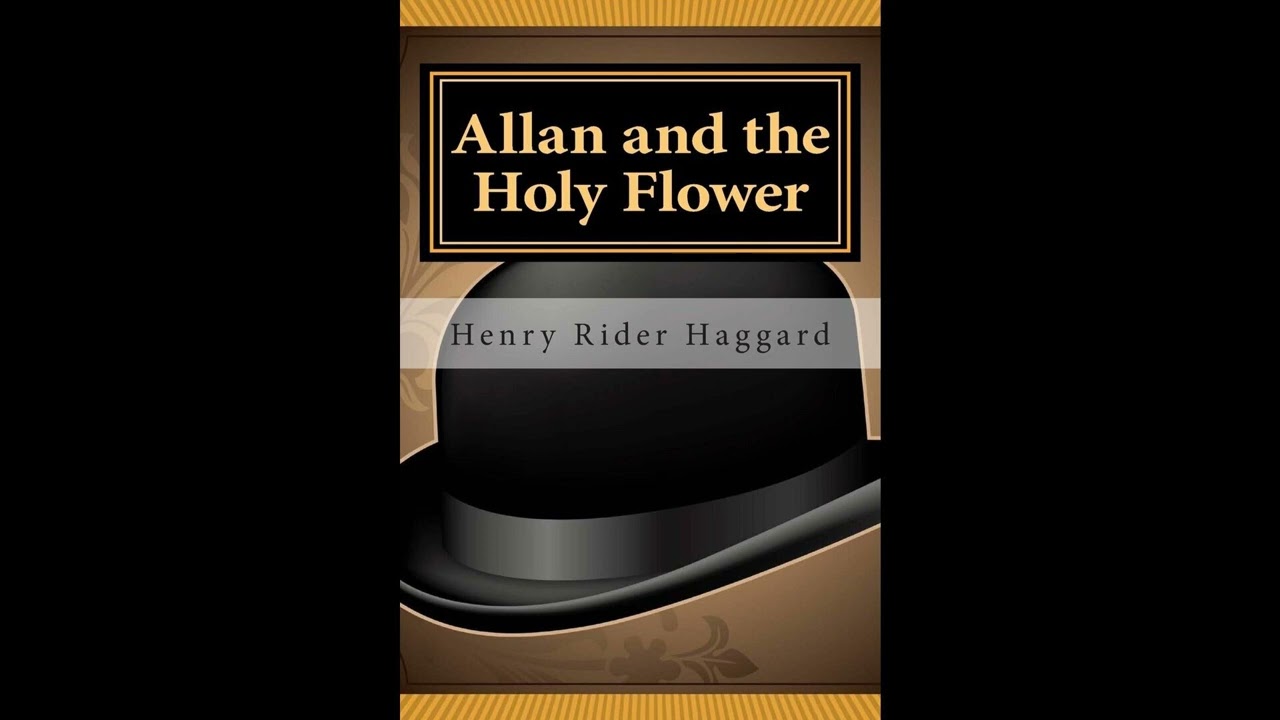
Allan and the Holy Flower (Allan Quatermain)
Henry Rider Haggard’s Allan and the Holy Flower, first published in 1915, stands as a compelling testament to the enduring appeal of classic adventure. This book represents a later entry in the celebrated saga of Allan Quatermain, the venerable white hunter whose tales have ignited the imaginations of readers for generations. Far from a mere genre exercise, this narrative offers both the thrill of the chase and a nuanced look at the motivations behind a life spent facing the wild. For modern listeners, it provides an opportunity to reconnect with the foundational texts of adventure fiction, to appreciate the narrative drive that inspired countless stories, and to consider the historical lens through which such tales were told, prompting reflection on courage, discovery, and the human relationship with the unknown. The story plunges us once more into the heart of Quatermain’s South Africa, a landscape of profound beauty and unforgiving peril. Our protagonist, now older and perhaps more reflective, finds himself drawn into a new quest that promises both danger and the potential for a rare, almost mythical reward. The central conflict arises from Quatermain’s agreement to seek out the fabled "Holy Flower," a botanical marvel said to possess extraordinary properties, rumored to be hidden deep within an uncharted and dangerous territory. This quest is not undertaken lightly; it requires extensive preparation, assembling a small, dedicated party, and confronting the known and unknown hazards of the African interior. As Quatermain and his companions push further into the wilderness, the narrative unfolds through a series of escalating challenges. They encounter formidable natural obstacles, navigate the complex politics of various indigenous tribes, and face a constant threat from both human and animal adversaries. The arc of the story follows their arduous progress, each step a test of their resolve, their skills, and their understanding of the harsh environment. Along the way, Quatermain relies on his vast experience, his keen observational abilities, and his moral compass, even as he grapples with the physical tolls of age and the ever-present shadow of death in the untamed lands he calls his second home. The true nature of the Holy Flower and the ultimate outcome of their perilous search remain shrouded in anticipation, driving the narrative forward with an insistent energy. The creator of this enduring character and his world was Henry Rider Haggard, an English writer born in Norfolk in 1856. Haggard’s life was as adventurous as many of his fictional creations, heavily influencing his literary output. After an initial period studying in England, he traveled to South Africa at the age of 19, serving in various administrative roles in Natal and the Transvaal. His years there, particularly during the annexation of the Transvaal by the British Empire, provided him with an intimate knowledge of the continent’s geography, its diverse peoples, and the complexities of colonial life. These formative experiences fueled his imagination and laid the groundwork for the vivid settings and authentic details that would define his later novels. Upon returning to England and qualifying as a barrister, Haggard found his legal career less stimulating than his African adventures. He turned to writing, quickly achieving widespread recognition with King Solomon’s Mines in 1885, a book that virtually launched the "Lost World" genre. This success was followed by other celebrated works such as She (1887) and Allan Quatermain (1887), firmly establishing him as a pioneer of adventure fiction. His work often blended thrilling escapades with elements of myth, archaeology, and the supernatural, making him a cornerstone of popular literature in the late Victorian and early Edwardian periods. Haggard was knighted in 1912 for his public service, reflecting his diverse interests which extended to agricultural reform and imperial advocacy alongside his literary pursuits. Allan and the Holy Flower presents several prominent themes that resonate within Haggard’s broader body of work. One significant theme is the quest for knowledge and discovery, exemplified by Quatermain’s pursuit of the rare botanical specimen. This is not simply a hunt for a trophy; it represents humanity’s intrinsic desire to uncover the secrets of the natural world, to push beyond known boundaries, and to understand the marvels hidden within distant lands. The very notion of a "Holy Flower" imbues this quest with a spiritual dimension, suggesting a search for something more profound than material gain. Another central theme is man’s relationship with the untamed wilderness. The African landscape is portrayed as a powerful, sometimes indifferent force, challenging Quatermain and his companions at every turn. Scenes depicting the struggle against treacherous rivers, dense jungles, and ferocious wildlife underscore the fragility of human life in the face of nature’s raw power. Yet, there is also a deep respect and affection for this wild environment, conveyed through Quatermain’s keen observations and his intimate knowledge of its rhythms and dangers. This dynamic tension highlights both the perils and the profound allure of the natural world. The novel also offers insights into colonialism and cross-cultural interaction, albeit from the perspective of its time. Quatermain, as a white hunter and explorer, navigates a continent inhabited by numerous African tribes, each with distinct customs, beliefs, and internal conflicts. While his interactions often display the paternalistic attitudes common among Europeans of that era, there is also a pragmatic respect for indigenous knowledge and a recognition of the strength and resilience of the African peoples he encounters. This perspective provides valuable historical context for understanding the complex dynamics of the period. Published in 1915, Allan and the Holy Flower emerged into a world drastically altered by the onset of World War I. While the conflict raged across Europe, consuming national attention and resources, Haggard’s novels offered a form of escapism, a return to heroic individual adventures in exotic locales. This period marked a complex juncture for the British Empire, which was simultaneously at its zenith in territorial reach and beginning to face the internal and external pressures that would lead to its eventual decline. The popularity of adventure stories like Haggard’s reflected a lingering fascination with the "undiscovered" corners of the globe, a romanticization of the imperial project, and a yearning for clear-cut heroism in a world that was becoming increasingly mechanized and morally ambiguous. The book functions both as a continuation of a beloved series and as a cultural artifact, capturing the spirit and perspectives of a pivotal moment in history. Listening to Allan and the Holy Flower as an audiobook transforms the experience of this classic adventure. The narrator’s voice becomes the conduit for Quatermain’s observations and the various characters he meets, allowing listeners to fully immerse themselves in the world Haggard created. A skilled reader can bring out the distinct voices of the diverse cast, from the seasoned Quatermain to the tribal leaders and loyal companions. The narrative’s pacing, with its stretches of suspenseful travel punctuated by sudden bursts of action and moments of quiet reflection, lends itself perfectly to audio, maintaining engagement over several hours of listening. Pay attention to how the voice acting conveys the atmosphere of the African wilderness—the sense of anticipation, the danger lurking just out of sight, and the profound beauty of the landscape—making this quest for the Holy Flower a deeply resonant experience.
Enjoyed Allan and the Holy Flower (Allan Quatermain)? A few ways to support us
Audible & Amazon links are affiliate; we may earn a small commission at no extra cost.
About this production
Human narration by a volunteer reader from LibriVox.org, the public-domain audiobook project. LibriVox volunteers record literary works whose copyright has expired in the United States, releasing the resulting recordings into the public domain.
Allan and the Holy Flower (Allan Quatermain) by Henry Rider Haggard. The underlying text is in the U.S. public domain. We do not republish any modern copyrighted edition, translation, or commentary.
The 4K cinematic visuals accompanying this audiobook are generated by an AI image model from prompts derived from the source text. No copyrighted photos, paintings, or stock footage are used. AI generation is disclosed on every video on our YouTube channel as required by YouTube's altered/synthetic content policy.
English subtitles are transcribed from the LibriVox recording with OpenAI Whisper. Translations into the 11 other supported languages are produced by Meta's NLLB-200 neural translation model. No human translator's copyrighted translation is used.
Questions about sourcing or rights? See our DMCA & Sourcing policy or contact us.
Enjoyed this audiobook?
If you'd like to own a copy of Allan and the Holy Flower (Allan Quatermain) or hear a professionally produced edition, the links below help support free audiobook production at no extra cost to you.
As an Amazon Associate we earn from qualifying purchases. Audible / print links are affiliate.