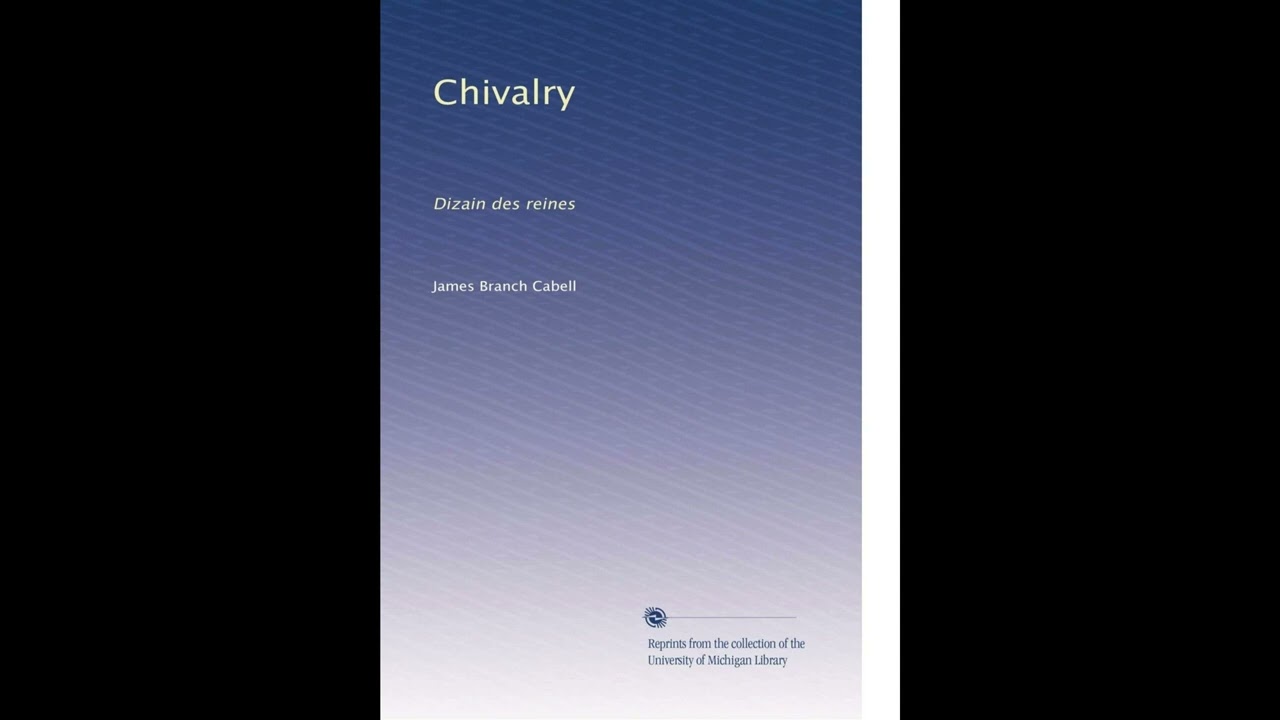
Chivalry: Dizain des reines
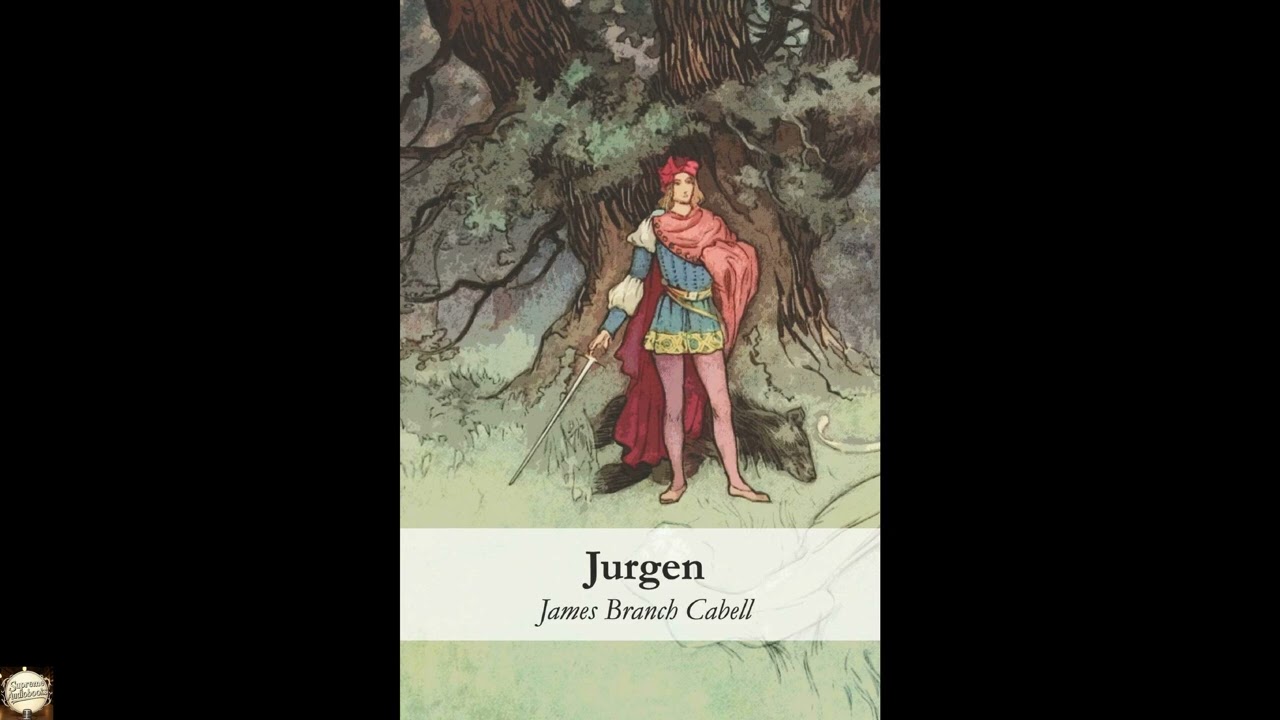
In an age where the grand narratives of history often feel distant, and the very concept of heroism seems to shift with every new headline, James Branch Cabell’s Chivalry: Dizain des reines offers a singular invitation to revisit the past through a uniquely refracting lens. First published in the early years of the twentieth century, this collection of tales draws listeners into the lives of legendary and historical queens, not as straightforward biographies, but as shimmering fictions that reveal the enduring tension between human ambition and the ideals we project onto the world. Why should one care today? Because Cabell’s keen, ironic gaze dissects the very foundations of myth-making, showing how even the most celebrated virtues—like chivalry—are often complex, contradictory, and deeply human constructs. This is a book that encourages us to question the stories we inherit, finding resonance in a time when truth and fiction frequently blur. The setting for these interwoven narratives is not a single location but rather a panorama spanning medieval Europe and the borderlands of Cabell's own mythical realm of Poictesme. Each tale centers on a queen or a noblewoman, some drawn from documented history, others from the twilight zone of legend. We encounter figures like Eleanor of Aquitaine, whose formidable intellect and political acumen shaped the destinies of kingdoms, and Melicent, a composite character embodying the romanticized women of legend. The central conflict across these stories arises from the collision of fervent chivalric ideals with the stark realities of power, passion, and personal will. Cabell portrays these women navigating courts rife with intrigue, battles fought for dubious causes, and hearts swayed by both genuine affection and calculated ambition. The arc of the story, or rather, the collection of stories, presents a series of vignettes where noble aspirations frequently meet with unexpected consequences. A queen might strive to embody perfect virtue or inspire great deeds, only to find her efforts manipulated by others, misunderstood by her subjects, or undermined by the simple, inescapable dictates of human nature. These are not simple morality plays, but rather nuanced examinations of how individuals, particularly women of influence, contend with a world that demands adherence to an idealized code while often operating on far more cynical principles. We witness their struggles to assert agency within patriarchal structures, their attempts to secure legacies, and their often-fraught quests for love and recognition, all without predicting the specific resolutions of their individual sagas. James Branch Cabell, born in Richmond, Virginia, in 1879, was a writer whose unique sensibility defied easy categorization. Hailing from an old Southern family, his early life included a period at William & Mary College and various journalistic endeavors before he committed fully to literature. Cabell spent much of his career meticulously crafting the intricate fictional universe of Poictesme, a fantastical, allegorical setting that became the backdrop for many of his more than 50 books. His most famous work, Jurgen, published in 1919, sparked a celebrated obscenity trial, ultimately acquitted, which brought him significant notoriety and a loyal readership. Cabell’s style, characterized by its elegant prose, learned allusions, and pervasive irony, placed him somewhat apart from the dominant literary currents of his time, such as the burgeoning realism and naturalism. While his works often engaged with themes of myth and romance, he consistently subverted them with a dry wit and a profound skepticism about human motives. He was a master of sophisticated fantasy, but his fantasy was always in service of philosophical inquiry and social commentary. Though often considered a cult figure during his lifetime and after, Cabell's influence extended to later fantasy writers and those who appreciated his distinctive blend of satire and erudition, securing his place as an idiosyncratic but significant voice in American letters. The collection enacts several enduring themes, foremost among them the persistent disparity between idealistic chivalry and human fallibility. In one tale, a queen might endeavor to inspire a knight to noble deeds, only to discover his motivations are rooted in personal gain or unrequited desire rather than pure honor. Her carefully constructed vision of a heroic figure unravels, revealing the base metal beneath the gilded facade. This constant negotiation between the ideal and the real is a recurring motif, showing how legends are often born from a selective retelling of far more prosaic, even scandalous, events. Another prominent theme is the subtle yet profound power wielded by women, even within structures designed to constrain them. Cabell’s queens are rarely passive figures; they are strategists, manipulators, lovers, and rulers who often find ingenious ways to exert their influence. A queen might use her beauty or her supposed weakness as a tool to achieve political ends, turning societal expectations on their head. These stories illustrate how these figures, often relegated to supporting roles in history, were in fact active agents, shaping events through their intellect, resilience, and sometimes, their willingness to bend or break the very rules of chivalry they were expected to uphold. When Chivalry: Dizain des reines appeared in 1904, the literary landscape was in a state of flux. The Victorian era, with its emphasis on moral rectitude and romanticized history, was receding, making way for the grittier realism of authors like Theodore Dreiser and Stephen Crane. Yet, the turn of the century also saw a renewed interest in historical fiction and a burgeoning of fantasy literature, often looking back to medieval periods for inspiration. Cabell’s work emerged at this fascinating juncture, simultaneously embracing the aesthetics of romance while critiquing its underlying assumptions. Culturally, the early 1900s in America were a time of rapid industrialization, social change, and a growing questioning of traditional values. This context provided fertile ground for Cabell’s ironic dissection of established myths and heroic narratives. His quiet subversion of the chivalric ideal served as a commentary not just on the past, but on the contemporary tendency to romanticize power and ignore inconvenient truths. It was a period ripe for a writer who could both appreciate the beauty of legend and expose the often-absurd human motivations beneath it. Listening to Chivalry: Dizain des reines as an audiobook transforms the experience, allowing Cabell's distinctive prose to unfold with a captivating rhythm and intonation. The narrator's voice becomes crucial in conveying the author’s subtle wit and precise language, which often carries layers of irony and understated humor. The run length, several hours in total, makes it an ideal companion for extended periods of quiet contemplation, whether during a long commute, a contemplative afternoon, or while working on a project that allows for listening. Pay close attention to the deliberate pacing, which allows listeners to savor Cabell’s carefully constructed sentences and the intricate turns of phrase. The dialogue, often formal and eloquent, demands a nuanced delivery that brings out the unspoken meanings and the personalities of these legendary women. The atmosphere created by the narration should evoke a sense of elegant detachment, a blend of historical grandeur and the author's gently mocking perspective, drawing the listener into a world where fact and fable dance a perpetual, fascinating waltz.
Enjoyed Chivalry: Dizain des reines? A few ways to support us
Audible & Amazon links are affiliate; we may earn a small commission at no extra cost.
About this production
Human narration by a volunteer reader from LibriVox.org, the public-domain audiobook project. LibriVox volunteers record literary works whose copyright has expired in the United States, releasing the resulting recordings into the public domain.
Chivalry: Dizain des reines by James Branch Cabell. The underlying text is in the U.S. public domain. We do not republish any modern copyrighted edition, translation, or commentary.
The 4K cinematic visuals accompanying this audiobook are generated by an AI image model from prompts derived from the source text. No copyrighted photos, paintings, or stock footage are used. AI generation is disclosed on every video on our YouTube channel as required by YouTube's altered/synthetic content policy.
English subtitles are transcribed from the LibriVox recording with OpenAI Whisper. Translations into the 11 other supported languages are produced by Meta's NLLB-200 neural translation model. No human translator's copyrighted translation is used.
Questions about sourcing or rights? See our DMCA & Sourcing policy or contact us.
Enjoyed this audiobook?
If you'd like to own a copy of Chivalry: Dizain des reines or hear a professionally produced edition, the links below help support free audiobook production at no extra cost to you.
As an Amazon Associate we earn from qualifying purchases. Audible / print links are affiliate.