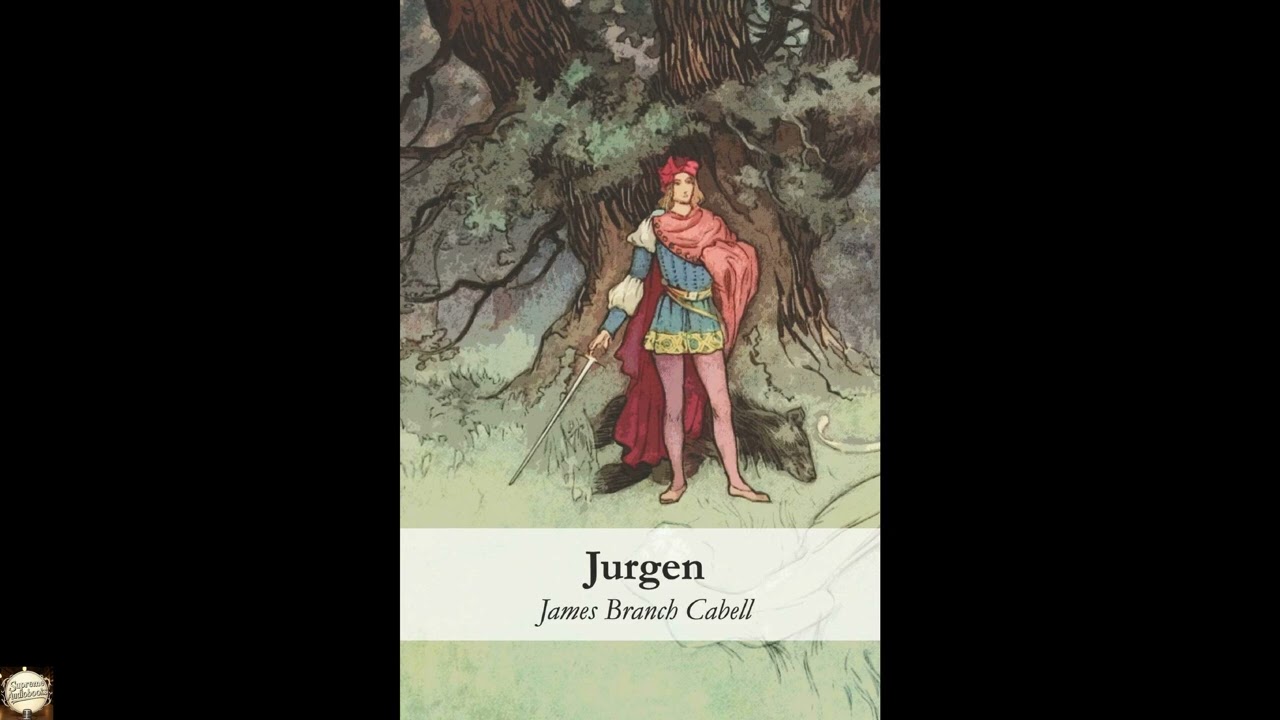
Jurgen: A Comedy of Justice
Jurgen: A Comedy of Justice stands as a singular, often baffling, and endlessly witty creation from the American literary landscape. First published in 1919, this fantastical satire by James Branch Cabell invites listeners into a world where myth, legend, and philosophy intertwine with a decidedly human cynicism. It is the story of a middle-aged pawnbroker who finds himself granted a second chance at youth, a magical shirt, and the opportunity to question every ideal he ever held dear. What begins as a seemingly lighthearted romp through a succession of mythical realms quickly reveals itself as a profound, if ironic, meditation on desire, truth, and the elusive nature of happiness. Even today, Cabell's prose sparkles with an audacious intellect and a playful irreverence that challenges conventional notions of heroism and virtue, offering a unique blend of humor and existential rumination that continues to resonate with anyone who has ever pondered the meaning of a life lived. Our tale begins with Jurgen, a pawnbroker from the fictional French province of Poictesme. He is, to put it mildly, a man of settled habits and settled dissatisfactions. Approaching middle age, Jurgen considers himself a poet manque, a man of unfulfilled desires who believes he has been unjustly treated by life. He frequently laments what might have been, rather than what is. One day, while walking home, Jurgen encounters a figure generally understood to be the Devil. After a rather peculiar conversation, a hag representing Cabell's grandmother is spirited away, and Jurgen finds himself with an unexpected gift: the opportunity to live again, from any point in his past, with the added bonus of a magical shirt that renders him irresistible. This shirt, and the renewed vigor of youth, sets Jurgen off on a series of adventures that defy easy categorization. He travels through various mythical and legendary lands, from the Forest of Phallom to Cocaigne, from Hell to Heaven, and even to the land where the gods themselves originated. Along the way, he encounters an astonishing array of figures: legendary women like Helen of Troy and Guenevere, mythical creatures, historical personages, and deities from diverse pantheons. Each encounter presents Jurgen with a new ideal or a different philosophy of life, and with each, he attempts to find the "justice" he feels he was denied. Jurgen's quest is less about reaching a destination and more about accumulating experiences and observations. He marries various queens and goddesses, seduces others, and consistently applies his pragmatic, slightly cynical worldview to every grand romantic gesture or philosophical declaration he encounters. He seeks satisfaction in beauty, in power, in knowledge, and in pure pleasure, only to find each ideal slightly tarnished by reality. Throughout his wanderings, Jurgen grapples with the disparity between grand aspirations and mundane outcomes, between what is promised and what is actually delivered, always with a wry commentary and a persistent sense of disillusionment that somehow never quite extinguishes his curiosity. His journey is a circular one, a grand tour of human aspiration that ultimately leads him back to where he began, though significantly altered by his strange and wonderful odyssey. James Branch Cabell, the mind behind Jurgen, was born in Richmond, Virginia, in 1879, and remained deeply rooted in his native state throughout his life, until his death in 1958. His upbringing in the South, steeped in its unique cultural heritage and history, undoubtedly colored his distinctive literary output. Cabell's early career saw him work as a journalist before he turned his full attention to fiction, beginning a prolific period that would establish him as a truly original voice in American letters. Cabell developed a literary world all his own, the mythical European province of Poictesme, which served as the setting for many of his works, including Jurgen. Within this carefully constructed realm, he blended elements of romance, fantasy, and satire, creating narratives that often disguised profound philosophical critiques beneath layers of ironic wit and elaborate wordplay. He was a writer who delighted in the nuances of language, frequently employing archaic diction and complex sentence structures to craft prose that was both elegant and deliberately challenging. Jurgen cemented Cabell's fame, not least because of the notorious obscenity charges brought against it shortly after its publication in 1919. This controversy, though eventually resolved in Cabell's favor, thrust him into the national spotlight and highlighted the perceived risqué nature of his allegories. Beyond Jurgen, Cabell wrote dozens of other books, many part of his sprawling "Biography of the Life of Manuel," a multi-volume cycle that chronicled generations of mythical figures in Poictesme. Notable among these are Domnei: A Glimpse into the Lives of Poictesme's Nobility and Figures of Earth: A Comedy of Appearances. While his popularity waned somewhat in later years, Cabell remains a significant figure for his unique contributions to fantasy literature and his particular brand of intellectual satire. He stands as a fascinating bridge between the romanticism of earlier eras and the growing modernism of his own time, never quite fitting neatly into any single literary category. At its core, Jurgen is a sophisticated examination of the nature of ideals and the often-disappointing reality of their pursuit. One of its central themes revolves around the discrepancy between perception and reality, or idealism versus cynicism. Jurgen himself embodies this conflict; he is a poet and a dreamer, yet his experiences continually show him that perfection is an illusion. For example, he seeks the pure, unblemished love he imagines for Helen of Troy, only to find her as an aging, rather ordinary woman. He believes "justice" to be a grand, universal principle, but when granted the power to enact it, he finds his understanding limited and his actions often lead to unintended, complicated consequences. Another significant theme is the quest for self-knowledge and happiness. Jurgen's odyssey is fundamentally an internal one, as he tries on different roles and philosophies, seeking a lasting contentment. He desires to be a hero, a lover, a king, a god—each a temporary costume in his search for meaning. His interactions with figures like Guenevere, who represents unattainable beauty, or Anaïtis, a devil-goddess representing passionate desire, serve to illustrate different facets of human longing, ultimately showing that no single ideal provides lasting satisfaction. Cabell deftly demonstrates that happiness is not a destination to be reached or a prize to be won, but rather a fleeting state often found in the most unexpected or mundane moments, or perhaps not at all in the way one imagines. The novel suggests that true understanding might lie in accepting the imperfections and absurdities of existence, rather than ceaselessly chasing an impossible perfection. When Jurgen was published in 1919, the world was still reeling from the devastating aftermath of World War I. This was a period of profound disillusionment and social upheaval, where old certainties were being questioned and new ideas were beginning to take root. The optimism of the pre-war era had evaporated, replaced by a more cynical, fragmented view of human nature and society. American society was on the cusp of the Roaring Twenties, a decade characterized by rapid social change, a loosening of moral constraints for some, and a strong conservative backlash from others. This tension between tradition and modernity, between strict moral codes and burgeoning artistic freedom, directly contributed to the controversy surrounding Jurgen. The book's allegorical nature, its playful treatment of religion, and its frank (though coded) allusions to sexuality were deemed offensive by some elements of society, leading to the infamous obscenity trial initiated by the New York Society for the Suppression of Vice. This legal battle, which Cabell ultimately won, was part of a larger cultural skirmish of the time, reflecting a national anxiety about what was considered appropriate in literature and public discourse. Jurgen emerged then not merely as a work of fantasy, but as a bold statement challenging the moralistic strictures of its day, pushing the boundaries of what could be written and discussed in American fiction. It perfectly embodied the spirit of a new era, one that was beginning to grapple with ambiguity, irony, and a more complex understanding of the human psyche. To truly appreciate the richness of James Branch Cabell's Jurgen, listening to it as an audiobook provides an unparalleled experience. Cabell's prose is meticulously crafted, dense with allusions, subtle humor, and a vocabulary that demands attention. A skilled narrator can illuminate the nuanced irony and the underlying philosophical current that runs beneath the surface of Jurgen's fantastical encounters. The spoken word allows the listener to more easily follow the intricacies of Cabell's sentence structure and to savor the rhythm and musicality of his language. The multi-hour length of this work lends itself perfectly to immersive listening, allowing the story to unfold gradually and the listener to become fully absorbed in Jurgen's peculiar adventures and his unending dialogues with gods, devils, and various magnificent women. The narrative voice can guide one through the episodic nature of the plot, enhancing the emotional depth and intellectual playfulness that define this unique literary achievement.
Enjoyed Jurgen: A Comedy of Justice? A few ways to support us
Audible & Amazon links are affiliate; we may earn a small commission at no extra cost.
About this production
Human narration by a volunteer reader from LibriVox.org, the public-domain audiobook project. LibriVox volunteers record literary works whose copyright has expired in the United States, releasing the resulting recordings into the public domain.
Jurgen: A Comedy of Justice by James Branch Cabell. The underlying text is in the U.S. public domain. We do not republish any modern copyrighted edition, translation, or commentary.
The 4K cinematic visuals accompanying this audiobook are generated by an AI image model from prompts derived from the source text. No copyrighted photos, paintings, or stock footage are used. AI generation is disclosed on every video on our YouTube channel as required by YouTube's altered/synthetic content policy.
English subtitles are transcribed from the LibriVox recording with OpenAI Whisper. Translations into the 11 other supported languages are produced by Meta's NLLB-200 neural translation model. No human translator's copyrighted translation is used.
Questions about sourcing or rights? See our DMCA & Sourcing policy or contact us.
View 10 famous quotes from this book →
Enjoyed this audiobook?
If you'd like to own a copy of Jurgen: A Comedy of Justice or hear a professionally produced edition, the links below help support free audiobook production at no extra cost to you.
As an Amazon Associate we earn from qualifying purchases. Audible / print links are affiliate.