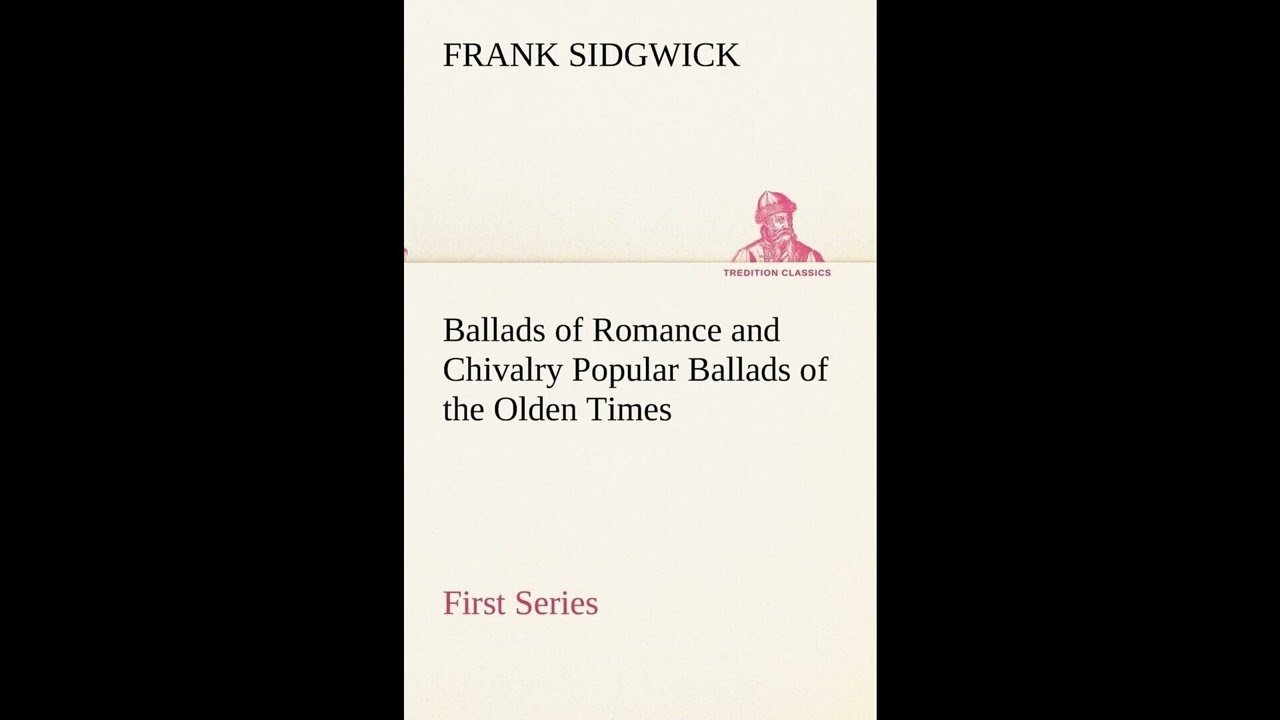
Ballads of Romance and Chivalry Popular Ballads of the Olden Times - First Series
Open a gateway to a world where honor was paramount, love a perilous quest, and courage the currency of survival. "Ballads of Romance and Chivalry Popular Ballads of the Olden Times - First Series" brings forth an essential collection of stories that have resonated through generations, echoing from ancient hearths to modern digital spaces. These aren't just old songs; they are the fundamental narratives of humanity, spun from the very fabric of human experience and emotion. They speak to the enduring spirit of storytelling, offering a direct link to the fears, aspirations, and moral dilemmas that continue to shape our lives today. Listening to these ballads is not merely a passive act; it is an invitation to witness the birth of legends and to understand the roots of epic tradition, presented with all the drama and poignancy that only the human voice can convey. Within these ballads, listeners will encounter a sprawling panorama of human existence, often centered around the grand, yet intensely personal, struggles of a bygone era. The settings vary widely, from the windswept moors and shadowed forests where outlaws like Robin Hood might roam, to the grand halls of kings and queens, or the blood-soaked battlefields where empires clashed. While there isn't a single continuous plot line, each ballad presents a self-contained drama, a miniature world of its own. Listeners will meet a cast of archetypal figures: the valiant knight, sworn to duty and a lady's favor; the fair maiden, often caught between love and obligation; the treacherous villain, driven by greed or envy; and the common folk, whose lives are often swept up in larger conflicts. The central conflicts are as varied as the characters themselves, yet consistently touch upon universal themes. There are tales of forbidden love that defy social strictures, leading to tragic partings or desperate elopements. Deeds of martial prowess unfold, depicting knights fighting for honor, country, or to right a grievous wrong, often against overwhelming odds. Betrayal frequently rears its head, whether it be a false friend, a jealous relative, or a king's unjust decree, sparking a chain of events that demands vengeance or reconciliation. The narrative arc typically begins with an inciting incident—a challenge issued, a love declared, a crime committed—and progresses through a series of escalating actions, building dramatic tension toward a climactic resolution that rarely offers simple answers, but always leaves a lasting impression. The author of this collection is a testament to the power of communal artistry: "Unknown." These ballads were not born from a single pen in a quiet study, but emerged organically from the oral tradition of pre-literate societies, passed down and reshaped by countless voices over centuries. They were the news, the entertainment, and the moral compass of their time, sung by minstrels and bards in great halls, recited by mothers to their children, and chanted by commoners in taverns and at village greens. This anonymity underscores their authenticity as expressions of a collective consciousness, reflecting the shared values, beliefs, and experiences of a people. The act of compiling such a series, even with an unknown original "publication year," speaks to the enduring efforts of scholars and enthusiasts in later centuries to preserve these fragile echoes of the past. Figures like Bishop Thomas Percy, whose Reliques of Ancient English Poetry appeared in the 18th century, and Francis James Child, whose monumental 19th-century collection cataloged hundreds of Anglo-Scottish ballads, were instrumental in transcribing and codifying these oral tales. This process transformed them from ephemeral songs into documented literary works, ensuring their survival and recognition as fundamental components of the Western literary canon. The ballads within this collection serve as a potent lens through which to examine universal human themes. One prominent theme is the power and fragility of love, often depicted as a force capable of both immense joy and profound sorrow. We encounter examples of lovers defying social barriers, sacrificing everything for one another, or suffering heartbreaking separation, as when a knight departs for war, leaving his beloved behind with no certainty of return. Another recurring theme is honor and loyalty, particularly within the feudal system. Knights are often presented with choices between personal gain and fealty to their lord or their code of chivalry, with dire consequences for any transgression. A tale might show a hero steadfastly upholding an oath even at great personal cost, or expose the tragedy that unfolds when loyalty is betrayed. Furthermore, justice and revenge frequently drive the narratives. Many ballads recount instances of injustice—a wrongful accusation, an unprovoked attack, or a ruler's tyranny—and detail the subsequent quest for retribution, sometimes through lawful means, but often through acts of personal vengeance that form the core of the story's drama. Finally, the supernatural element often weaves its way into these tales, with ghosts, fairies, or omens influencing events and characters, adding a layer of mystery and suggesting the thin veil between the mundane and the magical worlds, as when a spectral figure appears to deliver a warning or lament a past wrong. These themes are not merely abstract concepts; they are brought to life through vivid scenes and emotional confrontations that connect directly to the human heart. These "Popular Ballads of the Olden Times" emerged from periods largely predating widespread literacy, when spoken word was the primary medium for transmitting history, entertainment, and moral instruction. During the medieval and early modern eras, storytelling was a communal activity, fostering a shared cultural identity. Politically, these times were characterized by feudal structures, frequent warfare, and the rise and fall of kingdoms, all of which provided rich material for tales of heroism, conflict, and tragic loss. Culturally, the ideals of chivalry, courtly love, and religious piety were deeply ingrained, shaping the values and behaviors depicted in many ballads. The later period, likely the 18th or 19th century when such a "First Series" would have been compiled, saw a resurgence of interest in folklore and national heritage. The Romantic movement, in particular, celebrated the "authentic" voices of the common people and the ancient, "unspoiled" forms of poetry, driving efforts to collect and publish these oral traditions before they vanished. This historical moment gave these ancient songs new life as significant literary works. Listening to these ballads in audiobook format offers a uniquely authentic experience, bringing them full circle back to their oral origins. The narrator's voice becomes the modern-day bard, delivering these stories with the rhythm, emphasis, and emotional nuance they were always intended to have. The "several hours" run length allows ample time to become immersed in the distinct atmosphere of each tale, experiencing the shifts from high drama to tender pathos, from stark battle cries to mournful laments. Pay attention to the narrator's pacing, which can heighten tension during a chase scene or slow to underscore a moment of profound reflection. The varied voices given to different characters bring them vividly to life, transforming simple dialogue into resonant exchanges. The spoken delivery breathes life into the poetic language, allowing the listener to appreciate the cadence and alliterative beauty that might be missed on the page, ultimately forging a powerful connection to the ancient storytelling tradition.
Enjoyed Ballads of Romance and Chivalry Popular Ballads of the Olden Times - First Series? A few ways to support us
Audible & Amazon links are affiliate; we may earn a small commission at no extra cost.
About this production
Human narration by a volunteer reader from LibriVox.org, the public-domain audiobook project. LibriVox volunteers record literary works whose copyright has expired in the United States, releasing the resulting recordings into the public domain.
Ballads of Romance and Chivalry Popular Ballads of the Olden Times - First Series by First Series. The underlying text is in the U.S. public domain. We do not republish any modern copyrighted edition, translation, or commentary.
The 4K cinematic visuals accompanying this audiobook are generated by an AI image model from prompts derived from the source text. No copyrighted photos, paintings, or stock footage are used. AI generation is disclosed on every video on our YouTube channel as required by YouTube's altered/synthetic content policy.
English subtitles are transcribed from the LibriVox recording with OpenAI Whisper. Translations into the 11 other supported languages are produced by Meta's NLLB-200 neural translation model. No human translator's copyrighted translation is used.
Questions about sourcing or rights? See our DMCA & Sourcing policy or contact us.
Enjoyed this audiobook?
If you'd like to own a copy of Ballads of Romance and Chivalry Popular Ballads of the Olden Times - First Series or hear a professionally produced edition, the links below help support free audiobook production at no extra cost to you.
As an Amazon Associate we earn from qualifying purchases. Audible / print links are affiliate.