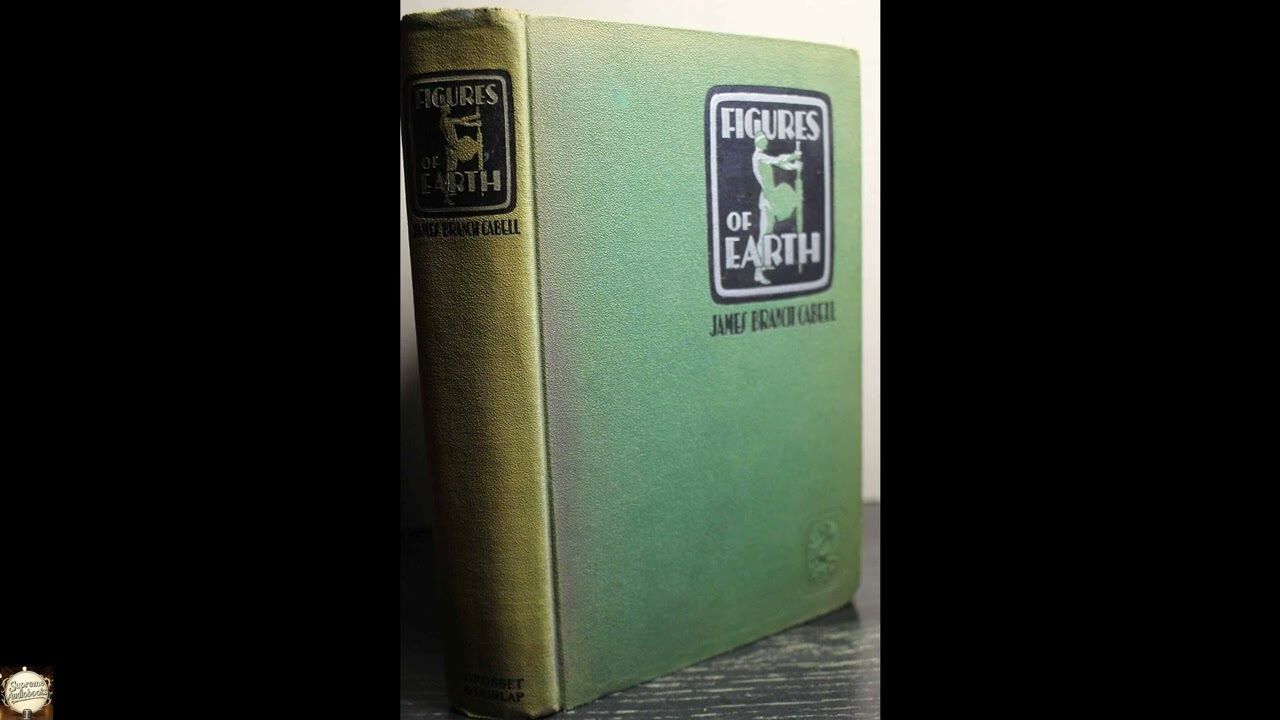
Figures of earth: A comedy of appearances
James Branch Cabell’s Figures of Earth: A Comedy of Appearances is an extraordinary entry point into a world where reality is a malleable concept, and heroism often springs from the most unlikely, and frequently self-deceiving, sources. This novel, a cornerstone of Cabell’s sprawling "Biography of Manuel" cycle, invites listeners to ponder the very nature of identity, ambition, and the stories we construct about ourselves and others. Far from a mere historical curiosity, its piercing wit and philosophical undercurrents offer a surprising commentary on modern concerns about public image, the allure of legend, and the often-absurd pursuit of self-justification. It is a book that asks us to look beyond the glittering surfaces of life and consider the sometimes-foolish, sometimes-profound motivations that drive us all. The story transports us to Poictesme, a mythical province in medieval France, a realm brimming with magic, chivalry, and a pervasive sense of the fantastical. Our protagonist is Manuel, a simple, unassuming pig-herder who seems destined for nothing more than his humble station. However, fate, or perhaps a series of convenient misinterpretations, intercedes. Manuel receives a cryptic prophecy that he is to create "figures of earth" that will eventually save Poictesme. This vague directive sets him on a remarkable and often bewildering quest. He begins by literally shaping crude figures from the soil, but the prophecy, and Manuel's understanding of it, gradually takes on much grander, more symbolic dimensions. As Manuel navigates the peculiar landscapes and stranger inhabitants of Poictesme, he encounters sorcerers, damsels, formidable adversaries, and even figures from legend, each interaction shaping his destiny in unexpected ways. His journey is less about physical prowess and more about the power of belief—his own, and the projections of others onto him. He rises from a swineherd to a duke, becomes a husband and a father, and through a series of accidents, misunderstandings, and outright deceptions, transforms into the revered figure of legend known as Manuel the Redeemer. The narrative follows his long life, charting his accumulating triumphs and his quiet personal compromises, illustrating how a man can become a myth, even if the man himself remains stubbornly ordinary. The humor often lies in the stark contrast between Manuel’s internal, sometimes mundane thoughts and the heroic mantle that the world insists on placing upon him. James Branch Cabell, born in Richmond, Virginia, in 1879, was a writer whose unique vision defied easy categorization throughout his prolific career. He came from a distinguished Virginian family, a heritage he often wove into the intricate genealogies of his fictional realms. After an early career in journalism, Cabell turned his full attention to fiction, beginning a literary project that would encompass dozens of novels, short stories, and essays, all interconnected by his distinctive philosophical outlook and a recurring cast of characters across different ages and settings. He lived the majority of his life in Virginia, writing in a precise, often archaic style that nevertheless carried a modern, cynical wit. Cabell achieved significant literary fame, and infamy, particularly with the publication of Jurgen: A Comedy of Justice in 1919, which faced obscenity charges that brought him widespread notoriety. Other notable works include The Silver Stallion and The High Place. He was admired by contemporaries such as H.L. Mencken and Sinclair Lewis, who recognized his unique voice and satirical genius. While often associated with the "Southern Renaissance" due to his origins and a certain elegance in his prose, Cabell forged his own path, blending romance, fantasy, and biting social commentary into a genre that was distinctly his own. His "Biography of Manuel" cycle, of which Figures of Earth is an integral part, sought to examine the recurring human follies across generations through a fantastical lens, solidifying his unusual but significant place in early 20th-century literature. One of the central themes permeating Figures of Earth is the power of illusion and self-deception. Manuel’s initial task to create "figures of earth" is profoundly ambiguous. He constructs literal, crude clay figures, yet the world, eager for a hero, interprets his actions as deeply symbolic and heroic. This disparity underscores Cabell’s recurring idea that people believe what they wish to believe, and often invent noble justifications for their actions. For instance, Manuel, rather than explicitly lying, simply allows others to project their grand hopes onto his mundane tasks, leading to an ever-expanding mythos that he eventually comes to inhabit, almost against his will. His true deeds are frequently pragmatic or even selfish, yet they are reinterpreted as acts of profound virtue. Another significant theme is the nature of heroism and legend-making itself. Manuel becomes a hero not through conventional bravery or strength, but through a sequence of fortunate accidents, clever evasions, and the collective desire of Poictesme for a savior. The story shows how a man’s actual life can be meticulously rewritten and embellished until the legend completely eclipses the reality. Manuel’s eventual status as Duke and Redeemer is a testament less to his innate greatness and more to the human need for narratives of greatness, regardless of their factual basis. This satirical take on traditional heroic sagas reveals Cabell's skepticism towards grand, unchallenged narratives and the often-unquestioning acceptance of historical "truth." Published in 1921, Figures of Earth emerged during a period of profound cultural and societal transformation following the devastation of World War I. The conflict had shaken many of the old certainties and ideals, leading to a widespread sense of disillusionment and a questioning of traditional notions of heroism, progress, and truth. Cabell’s work, with its cynical appraisal of human ambition and the manufactured nature of legend, resonated strongly with this post-war sensibility. It offered a sophisticated irony that critiqued the earnestness of the Victorian era, even as it employed a seemingly archaic setting and style. In the literary world, this was an era of burgeoning modernism, with writers challenging established forms and conventions. Cabell, while not a modernist in the stylistic sense, shared their spirit of intellectual rebellion. His sophisticated wit and philosophical skepticism provided an alternative to both the moralizing tones of the past and the burgeoning psychological realism of the present. The controversy surrounding Jurgen just two years prior had also highlighted the shifting moral landscape and the tensions between artistic freedom and societal expectations, making Figures of Earth a particularly relevant and provocative work at the time of its release, speaking to an audience ready for thoughtful, often humorous, critiques of conventional morality and heroism. Listening to Figures of Earth as an audiobook offers a particularly rewarding experience, given Cabell's distinctive prose. His language is precise, often formal, and imbued with an elegant, archaic cadence that a skilled narrator can bring to life with remarkable clarity. The numerous subtle ironies and philosophical asides are best appreciated when delivered with expert pacing and vocal nuance, allowing the listener to fully absorb the wry humor woven throughout the narrative. Over its several hours of run time, the unfolding tale of Manuel's improbable rise gains depth through the spoken word, with the narrator's voice providing a consistent atmospheric presence. Listen for the playful shifts in tone, the subtle differentiation between the various fantastical characters, and the way the narration highlights Cabell's profound observations about human nature, making what might otherwise be dense philosophical passages feel accessible and engaging.
Enjoyed Figures of earth: A comedy of appearances? A few ways to support us
Audible & Amazon links are affiliate; we may earn a small commission at no extra cost.
About this production
Human narration by a volunteer reader from LibriVox.org, the public-domain audiobook project. LibriVox volunteers record literary works whose copyright has expired in the United States, releasing the resulting recordings into the public domain.
Figures of earth: A comedy of appearances by James Branch Cabell. The underlying text is in the U.S. public domain. We do not republish any modern copyrighted edition, translation, or commentary.
The 4K cinematic visuals accompanying this audiobook are generated by an AI image model from prompts derived from the source text. No copyrighted photos, paintings, or stock footage are used. AI generation is disclosed on every video on our YouTube channel as required by YouTube's altered/synthetic content policy.
English subtitles are transcribed from the LibriVox recording with OpenAI Whisper. Translations into the 11 other supported languages are produced by Meta's NLLB-200 neural translation model. No human translator's copyrighted translation is used.
Questions about sourcing or rights? See our DMCA & Sourcing policy or contact us.
Enjoyed this audiobook?
If you'd like to own a copy of Figures of earth: A comedy of appearances or hear a professionally produced edition, the links below help support free audiobook production at no extra cost to you.
As an Amazon Associate we earn from qualifying purchases. Audible / print links are affiliate.