Sense and Sensibility
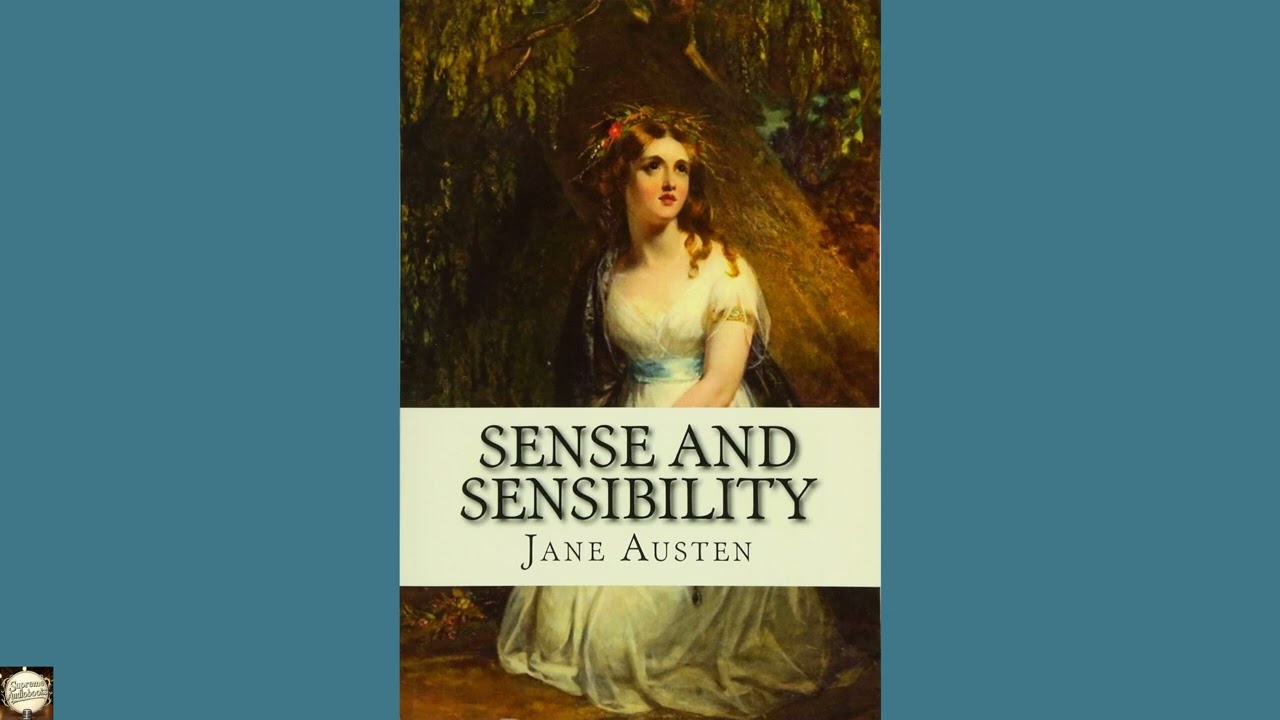
In a world where fortunes could vanish overnight and a woman's future hinged on property and propriety, Jane Austen’s Sense and Sensibility introduces us to a dilemma as relevant today as it was over two centuries ago: how do we balance the dictates of the heart with the demands of society? This founding work of the modern novel poses a fundamental question: should we govern our lives with cool reason, or surrender to the depths of our feelings? It’s a compelling human story that unpacks the very nature of human emotion and resilience in the face of financial insecurity and societal expectation, offering not only a window into a bygone era but a mirror reflecting our own struggles with love, loss, and the quest for happiness. The narrative unfolds in late 18th-century England, a society meticulously structured around land, inheritance, and social standing. We meet the three Dashwood women—Mrs. Dashwood and her daughters, Elinor and Marianne—suddenly rendered nearly penniless after the death of Mr. Dashwood. The family estate, Norland Park, is entailed to the male line, leaving them at the mercy of their insensitive, avaricious stepbrother, John Dashwood, and his cruel wife, Fanny. With their reduced circumstances, the Dashwoods are forced to relocate to Barton Cottage in Devonshire, a modest dwelling provided by a kind relative. Here, far from the familiar comforts of their previous home, the sisters must navigate the complex rules of courtship and social interaction with vastly different approaches. Elinor, the elder sister, embodies "sense." She is thoughtful, discreet, and prefers to manage her emotions with a calm, rational demeanor, even when facing profound personal heartbreak. Her quiet affections for Edward Ferrars, Fanny Dashwood's brother, develop subtly amidst familial disapproval and unspoken obligations. In stark contrast, Marianne represents "sensibility." Impulsive, passionate, and prone to dramatic displays of emotion, she openly champions grand romantic ideals and finds herself swept away by the dashing, seemingly perfect John Willoughby. As both sisters experience the joys and pains of first love, the contrasting natures of their characters are put to the ultimate test, leading them through periods of intense happiness, bitter disappointment, and profound self-discovery, all while the specter of financial instability looms large. Jane Austen, born in 1775 in Steventon, Hampshire, was the seventh of eight children of a country clergyman. Her life, though outwardly quiet and circumscribed by the rural gentry class, was one of acute observation and intellectual vigor. She never married, living a life of close family ties, primarily with her beloved sister, Cassandra. This relative detachment from the societal pressures of marriage and child-rearing allowed her to hone her unparalleled skills as an observer of character and social dynamics. Austen began writing in her youth, producing early versions of her later novels, often for the entertainment of her family. Her major works—including Pride and Prejudice, Mansfield Park, Emma, Northanger Abbey, and Persuasion—were largely published anonymously during her lifetime, often as "By a Lady." Austen's place in the literary canon is secured by her innovative approach to the novel. She eschewed the sensational plots popular in her time, choosing instead to focus on the domestic sphere, the intricacies of human relationships, and the subtle interplay of personality within polite society. Her sharp wit, ironic commentary, and psychological insight into her characters—particularly her female protagonists—set a new standard for realism in fiction. She meticulously rendered the manners, customs, and moral dilemmas of the small circle she knew, creating a body of work that continues to resonate with readers worldwide long after her death in 1817 in Winchester. The novel’s central theme is undoubtedly the tension between "sense" (reason, prudence, discretion) and "sensibility" (emotion, passion, openness of feeling). Elinor's disciplined self-control, for instance, allows her to suffer in silence when she learns of Edward Ferrars's prior engagement, believing it her duty to bear her sorrow privately. Her quiet strength offers a powerful counterpoint to Marianne’s more theatrical responses, such as her public despair after Willoughby's betrayal, which includes self-indulgent walks in inclement weather that compromise her health. Through their respective experiences, Austen suggests that neither extreme is ideal; true wisdom lies in finding a balance between the head and the heart. Another significant theme is the role of social class and money, particularly its impact on women's lives. The Dashwood sisters' precarious financial situation dictates their social standing and severely limits their marriage prospects. Their diminished income means they cannot afford to marry for love alone, highlighting the economic necessity of a good match for women of their era. This constraint is vividly illustrated by the contrasting motivations of characters like Lucy Steele, who prioritizes financial security and social climbing, often at the expense of genuine affection, and the wealthy but manipulative Fanny Dashwood, whose entire existence seems predicated on maintaining and expanding her family's fortune. When Sense and Sensibility first appeared in print in 1811, England was firmly entrenched in the Regency period, a time marked by elegant social customs, elaborate fashion, and a rigid class structure, all against the backdrop of the Napoleonic Wars. While Austen largely avoided direct political commentary, the stability of the social order and the importance of property were ever-present concerns. The concept of "sensibility" itself was undergoing a cultural shift; initially a valued trait associated with empathy and refined emotions, it had by this period begun to be viewed with suspicion, often seen as an excessive, even dangerous, indulgence in feeling. Austen’s novel thus subtly critiques this cultural trend, suggesting that unchecked emotionalism could lead to recklessness and unhappiness, while an overly cold rationality could stifle genuine affection. Her work emerged as part of the rising popularity of the novel as a literary form, offering a nuanced and insightful alternative to the more melodramatic and moralizing tales often found on booksellers' shelves. Listening to Sense and Sensibility as an audiobook offers a singular opportunity to immerse oneself in Austen's meticulously crafted world. A skilled narrator brings the distinct personalities of Elinor and Marianne to life, differentiating their voices and temperaments with subtlety, making the sisters' contrasting perspectives truly palpable. The careful pacing of the narration allows listeners to savor Austen's renowned wit and irony, often embedded in seemingly casual dialogue or the narrator's astute observations. One can appreciate the rhythm of the period language, the emotional weight behind understated remarks, and the internal struggles that might be missed in a quick reading. The several hours of this production provide a sustained engagement with a story that benefits immensely from being heard, allowing the layers of social commentary, romantic misunderstanding, and eventual resolution to unfold with a captivating naturalness that honors Austen's genius.
Enjoyed Sense and Sensibility? A few ways to support us
Audible & Amazon links are affiliate; we may earn a small commission at no extra cost.
About this production
Human narration by a volunteer reader from LibriVox.org, the public-domain audiobook project. LibriVox volunteers record literary works whose copyright has expired in the United States, releasing the resulting recordings into the public domain.
Sense and Sensibility by Jane Austen. The underlying text is in the U.S. public domain. We do not republish any modern copyrighted edition, translation, or commentary.
The 4K cinematic visuals accompanying this audiobook are generated by an AI image model from prompts derived from the source text. No copyrighted photos, paintings, or stock footage are used. AI generation is disclosed on every video on our YouTube channel as required by YouTube's altered/synthetic content policy.
English subtitles are transcribed from the LibriVox recording with OpenAI Whisper. Translations into the 11 other supported languages are produced by Meta's NLLB-200 neural translation model. No human translator's copyrighted translation is used.
Questions about sourcing or rights? See our DMCA & Sourcing policy or contact us.
Enjoyed this audiobook?
If you'd like to own a copy of Sense and Sensibility or hear a professionally produced edition, the links below help support free audiobook production at no extra cost to you.
As an Amazon Associate we earn from qualifying purchases. Audible / print links are affiliate.