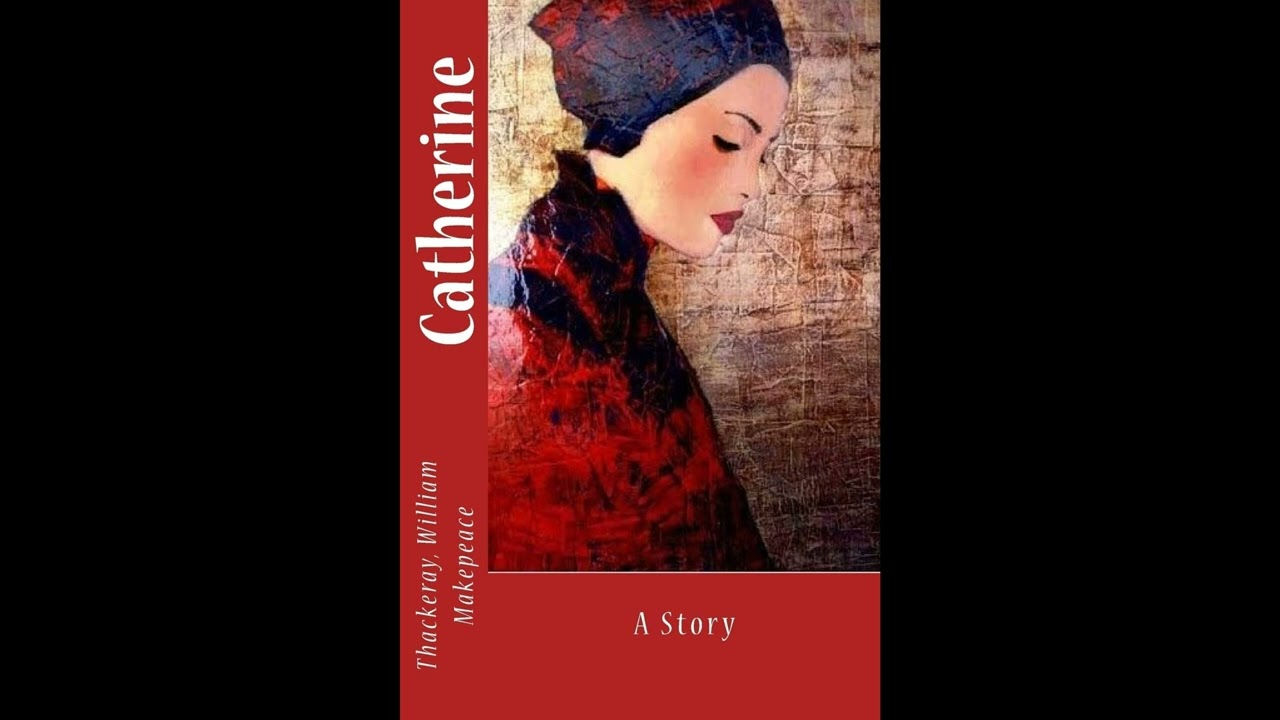
Catherine: A Story
William Makepeace Thackeray's Catherine: A Story casts a long shadow, not just as an early work by one of the Victorian era's most incisive satirists, but as a chilling indictment of crime and the romantic folly often attached to it. Published serially in 1839 and 1840, this novel plunges listeners into the brutal realities of 18th-century England, specifically the grim consequences faced by those who turn to violence. It stands as a vital, often uncomfortable, counterpoint to the sentimentalized criminal narratives popular in its day, challenging its audience to look at human depravity without the veil of heroism. For contemporary listeners, Catherine offers a fascinating window into the developing mind of a literary giant, showcasing Thackeray's burgeoning talent for sharp characterization and unflinching social commentary, proving that the struggle against moral corruption and the lure of quick, illicit gains remains a potent, resonant theme. The story centers on Catherine Hayes, a young woman of limited means living in rural Hertfordshire. Beautiful and ambitious, Catherine feels constrained by her circumstances and longs for a life beyond the drudgery and perceived dullness of her home. She is married to the kind but simple John Hayes, a man who, despite his devotion, cannot provide the excitement or social elevation Catherine craves. Her discontent leads her into a clandestine affair with Thomas Billings, a handsome, reckless soldier with a charming facade that masks a deeply amoral core. Billings, too, is a man on the make, and together they hatch a nefarious plot that will forever alter the course of their lives and those around them. As their scheme unfolds, the initial thrill of their illicit passion gives way to a horrifying descent into treachery and violence. The novel meticulously details the escalating crimes and the psychological toll they take, though Catherine herself often appears disturbingly unperturbed by her actions. She navigates a world of taverns, back alleys, and country estates, encountering a cast of morally ambiguous figures—petty thieves, corrupt servants, and dissolute gentlemen—all contributing to an atmosphere of pervasive deceit. Thackeray meticulously charts their moral decay, making it clear that their choices lead not to adventure, but to increasing desperation and the ever-present threat of discovery and retribution. The narrative follows Catherine and Billings as they attempt to cover their tracks, leading them deeper into a network of lies and complicity, demonstrating how one transgression can quickly spiral into many more. The author, William Makepeace Thackeray, was born in Calcutta, India, in 1811, the son of an East India Company official. Sent to England for his education, he attended Charterhouse School and Trinity College, Cambridge, though he left the university without completing a degree. Thackeray initially pursued law and then art in Paris, endeavors which met with limited success. His early life was marked by the loss of a substantial inheritance, a misfortune that forced him to turn to journalism to support himself and his family, especially after his wife’s mental health declined, necessitating her permanent care. This period of struggle proved formative for his writing, sharpening his observational skills and deepening his understanding of social pretense and human frailty. Thackeray would later gain immense fame for novels like Vanity Fair (1847–48), a sprawling panorama of early 19th-century English society, and The History of Henry Esmond (1852), a historical novel admired for its nuanced portrayal of the Augustan age. He emerged as a leading figure in Victorian literature, often seen as a realist and a satirist, crafting narratives that critiqued the social climbing and moral hypocrisy he perceived in his era. Catherine: A Story serves as an important, albeit lesser-known, predecessor to his acclaimed later works, demonstrating the early stirrings of his distinct literary voice. Published anonymously at first, it allowed him to hone his craft, experimenting with narrative voice and character development. His writing is characterized by an elegant, often ironic prose style, a keen eye for social detail, and a profound, if sometimes cynical, understanding of human motivation. Thackeray often employed a didactic, authorial presence in his novels, directly addressing the reader to comment on his characters’ actions and the moral implications of his stories, a technique already evident in Catherine. Among the specific themes Thackeray addresses in Catherine is the de-glamorization of crime. He wrote this novel in direct opposition to the "Newgate novels" of the period, which he believed romanticized criminals and presented them as dashing, albeit morally ambiguous, heroes. Instead, Thackeray shows Catherine and Billings as petty, often cowardly, and ultimately pathetic figures, whose acts of violence are born of desperation and greed, not grand ambition. When Billings attempts to dispose of a body, for instance, the scene is rendered with graphic, unsentimental detail, emphasizing the horror and clumsiness of the act rather than any perceived cleverness. Another key theme is moral decay and its insidious nature. The story illustrates how small acts of infidelity and dishonesty pave the way for increasingly heinous crimes. Catherine's initial resentment of her husband, fueled by Billings's flattery, gradually hardens into a cold determination to remove him, showing a gradual erosion of her conscience. The novel also touches upon social aspiration and its corrupting influence. Catherine's desire to rise above her station, while understandable, becomes a destructive force when coupled with a lack of moral compass. Her ambition, untethered by ethical considerations, leads her to choose the most violent path to perceived betterment. Furthermore, Thackeray highlights the pervasive hypocrisy of individuals across various social strata. Many characters present a respectable exterior while engaging in base or illicit activities behind closed doors, blurring the lines between respectable society and the criminal underworld. The innkeepers and common folk who aid or abet the criminals are often depicted as complicit, driven by self-interest or fear, rather than any grand moral conviction. Catherine: A Story appeared at a pivotal moment in British literary history, serialized between 1839 and 1840. This was the early Victorian era, a time of significant social and economic upheaval. The Newgate novels, named after London's infamous prison, were immensely popular, thrilling readers with tales of notorious criminals like Jack Sheppard and Dick Turpin, often presenting them in a heroic light. Authors such as Harrison Ainsworth were lauded for these stories, which, to Thackeray, were morally dangerous, encouraging a fascination with villainy. His novel was a deliberate, polemical response, an attempt to use the same historical settings and criminal subject matter but strip away any romantic appeal. By portraying the real Catherine Hayes and her accomplices in their true, sordid colors—as mean-spirited, brutal, and without redeeming features—Thackeray aimed to shock his audience into recognizing the ugliness of true criminality. He was not just telling a story but waging a literary battle against a prevailing cultural trend he found deeply problematic, advocating for a more truthful, less flattering representation of human nature. Listening to Catherine: A Story as an audiobook offers a unique gateway into Thackeray's early genius. The narrative voice, steeped in subtle irony and sometimes outright sarcasm, truly comes alive when read aloud, allowing the listener to fully appreciate the author's biting commentary on his characters and society. At several hours in length, it is a focused and potent listen, perfect for those who want a complete narrative without committing to the epic scale of Thackeray's later works. A skilled narrator will master the balance between the grim unfolding of events and Thackeray's sardonic asides, bringing out the distinct voices of the diverse cast—from the cunning Catherine to the blustering Billings and the various minor figures caught in their web. The pacing of the story, with its methodical build-up of tension and its unsparing descriptions, benefits immensely from a thoughtful vocal performance, immersing listeners in the unsettling atmosphere of 18th-century English crime and punishment.
Enjoyed Catherine: A Story? A few ways to support us
Audible & Amazon links are affiliate; we may earn a small commission at no extra cost.
About this production
Human narration by a volunteer reader from LibriVox.org, the public-domain audiobook project. LibriVox volunteers record literary works whose copyright has expired in the United States, releasing the resulting recordings into the public domain.
Catherine: A Story by William Makepeace Thackeray. The underlying text is in the U.S. public domain. We do not republish any modern copyrighted edition, translation, or commentary.
The 4K cinematic visuals accompanying this audiobook are generated by an AI image model from prompts derived from the source text. No copyrighted photos, paintings, or stock footage are used. AI generation is disclosed on every video on our YouTube channel as required by YouTube's altered/synthetic content policy.
English subtitles are transcribed from the LibriVox recording with OpenAI Whisper. Translations into the 11 other supported languages are produced by Meta's NLLB-200 neural translation model. No human translator's copyrighted translation is used.
Questions about sourcing or rights? See our DMCA & Sourcing policy or contact us.
Enjoyed this audiobook?
If you'd like to own a copy of Catherine: A Story or hear a professionally produced edition, the links below help support free audiobook production at no extra cost to you.
As an Amazon Associate we earn from qualifying purchases. Audible / print links are affiliate.