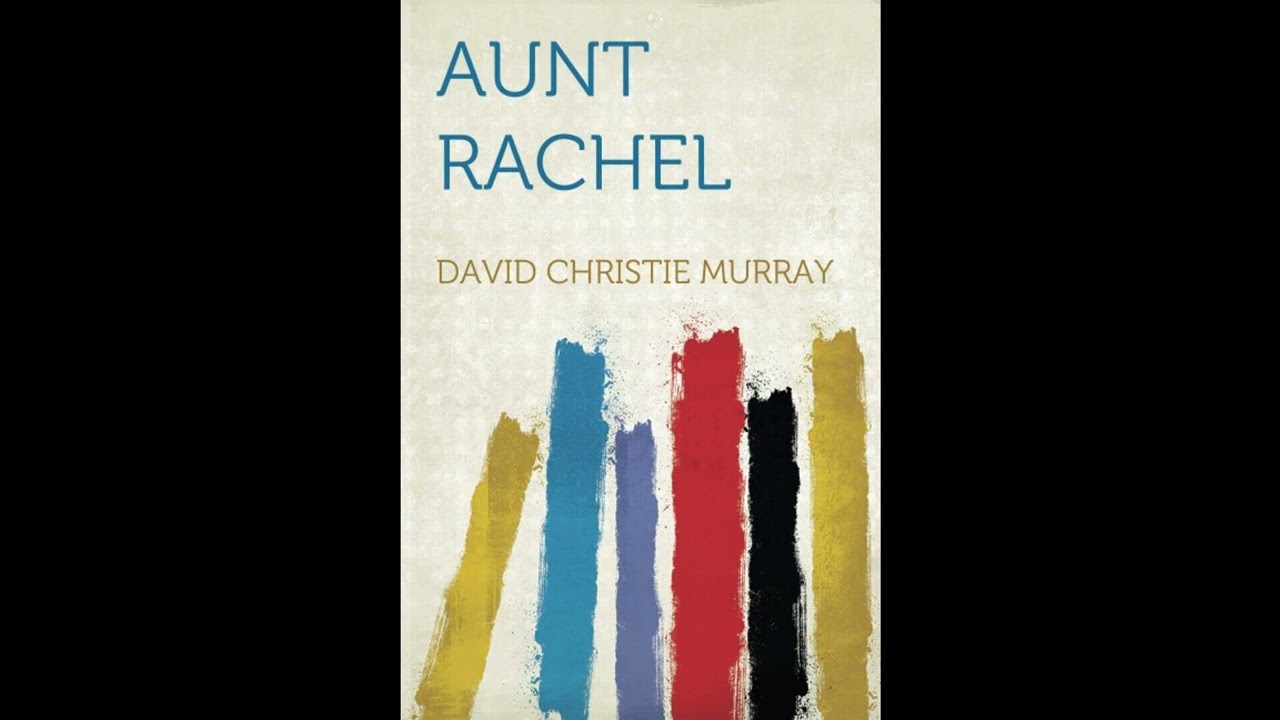
Aunt Rachel
Step into the unassuming world of David Christie Murray’s Aunt Rachel, a novel that distills the complex social currents of late Victorian England into a deeply human story. Published in 1886, this book may seem at first glance a quaint portrait of rural life, yet it reveals itself as a trenchant examination of ambition, integrity, and the often-deceptive facades people construct. It asks us to consider what truly constitutes a good life and how readily reputation can be bought or lost in the pursuit of material gain. Listeners today will find its questions about character, societal pressures, and the enduring power of familial bonds as resonant as they were over a century ago. The story unfolds in the quiet, yet socially stratified, English Midlands, a landscape poised between ancient agrarian rhythms and the encroaching hum of industrial change. Here, amidst the cottages and country lanes, we meet the titular Aunt Rachel, a woman whose stern exterior belies a profound moral compass and an unwavering sense of justice. She is the steadfast center of a community, an arbiter of right and wrong whose influence extends far beyond her own hearth. Around her orbit a cast of characters whose lives become inextricably linked through love, aspirations, and secrets. Central among them are young John Hordern, a blacksmith’s son with a restless ambition that chafes against his humble origins, and the gentle Clara, whose affections he seeks. Their budding romance, however, is complicated by the manipulations of a rival suitor, Mark Hopley, whose charm masks a calculating nature and a questionable past. As the narrative progresses, Murray skillfully interweaves the personal dramas of these individuals with the broader social dynamics of their village. John’s yearning for a higher station in life drives him to London, where he hopes to make his fortune, leaving Clara behind to navigate the persistent attentions of Mark. The story tracks John’s struggles and moral compromises in the city, contrasting them with the steadfast values of those he left behind. Back in the village, Mark’s increasingly elaborate deceptions begin to create a tangled web of misunderstandings and mistrust, threatening to unravel not only Clara’s happiness but also the fabric of the community itself. The central conflict solidifies around the question of whether true character can withstand the pressures of social climbing and the corrosive influence of dishonesty, all while the wise gaze of Aunt Rachel observes, discerns, and ultimately seeks to bring truth to light. The author, David Christie Murray (1847-1907), was a significant, albeit often overlooked, voice in late nineteenth-century British literature. Born in West Bromwich, in the industrial heartland of England, Murray began his career as a journalist, first for the Birmingham Daily Post and later for The Daily News in London. This journalistic background instilled in him a keen eye for social observation and a direct, unvarnished style that would define his extensive body of work. He wrote prolifically, publishing over fifty novels, many of which were serialized in popular magazines of the era, a common practice that kept readers eagerly awaiting each installment. Murray’s works often depicted the lives of ordinary people, particularly those in the provincial towns and industrial regions he knew so well. He possessed a particular gift for rendering local dialects and customs, lending an authentic texture to his settings. While not achieving the towering fame of contemporaries like Thomas Hardy or George Eliot, Murray was highly regarded in his time for his narrative skill and his commitment to realism. He tackled themes of social mobility, moral dilemmas, and the impact of industrialization on traditional communities, placing him firmly within the tradition of Victorian social realism. Other notable works include Joseph’s Coat (1881), a tale of brotherly rivalry and deceit, and Val Strange (1882), which also explores themes of class and personal ambition. Aunt Rachel acts out several key themes that resonate deeply within the human experience. One prominent theme is the corrosive nature of unchecked ambition and social climbing. We witness John Hordern's desire to rise above his perceived station, which, while not inherently wrong, leads him to make choices that compromise his integrity and distance him from his true self. His struggles in London highlight the temptations and moral quandaries that often accompany the pursuit of wealth and status, illustrating how easily one can lose sight of fundamental values in the process. Another central theme is the enduring power of truth and the consequences of deception. Mark Hopley’s carefully constructed lies, designed to secure his desired outcome, slowly but inexorably begin to unravel, creating a ripple effect of pain and mistrust throughout the community. Murray masterfully shows how even seemingly small untruths can build into an elaborate edifice of deceit, which ultimately cannot stand. The novel also thoughtfully considers the contrasting values of rural authenticity versus urban artifice. The village, with its close-knit community and traditional moral codes, stands in stark opposition to the anonymity and perceived opportunities of London. Murray uses this contrast to question where true happiness and genuine character reside, suggesting that while the city offers the promise of advancement, it can also be a crucible for moral compromise. Finally, the steadfastness of familial and communal bonds forms a vital backbone of the narrative. Aunt Rachel herself embodies this, serving as a moral anchor whose unwavering commitment to honesty and kindness provides a necessary counterbalance to the moral failings of others. Her influence underscores the importance of a strong moral compass within a community, a force that can both guide and, when necessary, correct. The late nineteenth century, when Aunt Rachel was penned, was a period of profound transformation in Britain. The industrial revolution, though well underway, continued to reshape the landscape and society, driving migration from rural areas to burgeoning industrial towns and cities. This era saw the consolidation of class structures, but also the rise of new social anxieties about mobility, wealth, and the decline of traditional values. Culturally, it was the height of the Victorian age, characterized by an earnest belief in progress alongside a burgeoning interest in social reform and a critical examination of societal ills. In the literary world, realism was the dominant mode, with novelists moving away from romantic idealism to portray life as it truly was, complete with its complexities, injustices, and moral ambiguities. Aunt Rachel fits squarely into this tradition, emerging from a time when authors felt compelled to shine a light on the lives of everyday people, giving voice to their struggles and aspirations amidst a rapidly changing world. Listening to Aunt Rachel as an audiobook offers a unique opportunity to immerse oneself fully in Murray’s detailed world. The several hours of narration allow ample time for the listener to become intimately familiar with the subtle nuances of the characters’ voices, the rhythm of their dialogue, and the specific atmosphere of the Midlands village. A skilled narrator can bring out the distinct cadences of the local speech patterns Murray so carefully rendered, distinguishing between the resolute tones of Aunt Rachel, the more conflicted expressions of John Hordern, and the smooth, deceptive inflections of Mark Hopley. The unhurried pace of the storytelling lends itself perfectly to audio, allowing the listener to absorb the unfolding drama, the gradual revelation of secrets, and the emotional weight of each decision. It is an experience that brings the textures and sounds of a bygone era to life, allowing the listener to truly inhabit the world Murray created.
Enjoyed Aunt Rachel? A few ways to support us
Audible & Amazon links are affiliate; we may earn a small commission at no extra cost.
About this production
Human narration by a volunteer reader from LibriVox.org, the public-domain audiobook project. LibriVox volunteers record literary works whose copyright has expired in the United States, releasing the resulting recordings into the public domain.
Aunt Rachel by David Christie Murray. The underlying text is in the U.S. public domain. We do not republish any modern copyrighted edition, translation, or commentary.
The 4K cinematic visuals accompanying this audiobook are generated by an AI image model from prompts derived from the source text. No copyrighted photos, paintings, or stock footage are used. AI generation is disclosed on every video on our YouTube channel as required by YouTube's altered/synthetic content policy.
English subtitles are transcribed from the LibriVox recording with OpenAI Whisper. Translations into the 11 other supported languages are produced by Meta's NLLB-200 neural translation model. No human translator's copyrighted translation is used.
Questions about sourcing or rights? See our DMCA & Sourcing policy or contact us.
Enjoyed this audiobook?
If you'd like to own a copy of Aunt Rachel or hear a professionally produced edition, the links below help support free audiobook production at no extra cost to you.
As an Amazon Associate we earn from qualifying purchases. Audible / print links are affiliate.