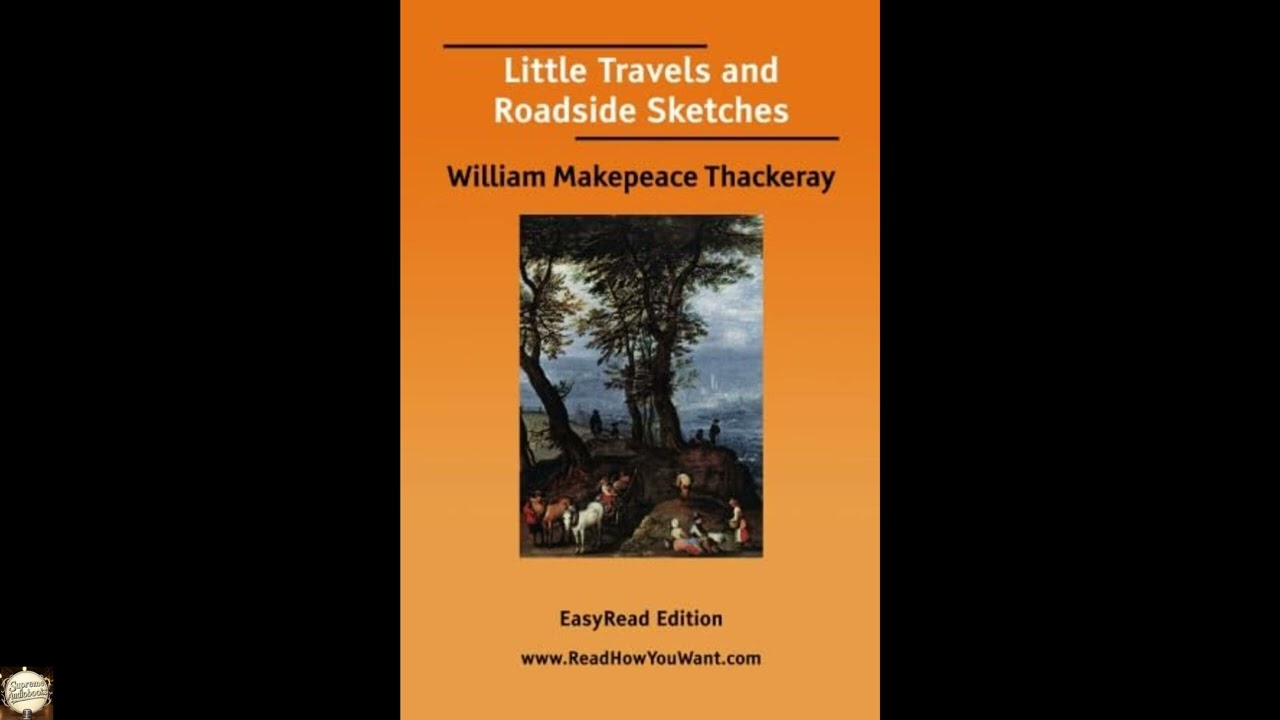
Little Travels and Roadside Sketches
Step into a bygone era and roam the continent with one of literature's most perceptive and witty observers. William Makepeace Thackeray's Little Travels and Roadside Sketches offers far more than a simple chronicle of places visited; it presents a brilliant, often biting, sometimes tender look at human nature itself, seen through the prism of a 19th-century grand tour. For anyone who appreciates sharp satire, keen insight into social mores, and the enduring humor of our follies and pretensions, this collection remains as relevant and entertaining today as it was when first penned. It’s a delightful invitation to witness the world through the eyes of a master satirist, whose observations on people and places continue to resonate. This collection does not follow a singular narrative arc with a conventional plot or a definitive ending to be spoiled. Instead, listeners are invited to accompany Thackeray—or his lightly fictionalized persona—on a series of excursions, primarily across Europe, but also touching upon locales closer to home. Imagine yourself in the mid-19th century, joining a discerning gentleman as he moves from Paris to Brussels, from German spas to Italian cities, all the while sketching out the characters and customs he encounters. The "main character" is essentially the authorial voice itself: a cynical, yet deeply sympathetic, commentator on the human comedy. Each sketch is a self-contained window into a particular scene, a memorable character, or a cultural observation. We might find ourselves at a fashionable resort, observing the comical attempts of social climbers to outdo one another, or in a quiet country inn, listening to the gossip of local residents. Thackeray has a particular fondness for exposing the gap between outward show and inner reality, often depicting Englishmen abroad with a blend of national pride and gentle ridicule. The "conflict," such as it exists, is the delightful friction between expectation and reality, between the romanticized view of travel and the often-mundane or surprisingly human details that fill it. Listeners will witness the author's encounters with fellow travelers, hotelier staff, local artists, and historical sites, all filtered through his distinctive lens, creating a vivid, episodic mosaic of life on the move. William Makepeace Thackeray, born in Calcutta, British India, in 1811, was a towering figure of Victorian literature. Sent to England for his education at a young age, he attended Charterhouse School and later Trinity College, Cambridge, though he left without a degree. His early career saw him studying art in Paris, dabbling in law, and struggling financially before finding his true calling in journalism and literary criticism. Thackeray’s life was marked by significant personal hardships, including severe financial losses and the tragic mental decline of his wife, Isabella Shawe, which left him a widower in all but name, raising their two daughters. He rose to prominence through his contributions to various periodicals, including Fraser's Magazine and the satirical Punch, often publishing under pseudonyms such as "Michael Angelo Titmarsh" and "George Savage Fitz-Boodle"—the very bylines under which many of these Little Travels pieces first appeared. Thackeray achieved lasting fame with the publication of Vanity Fair (1847–48), a novel of unprecedented scope and social commentary that cemented his reputation as a keen satirist and a master of prose. Other notable works include The History of Henry Esmond, a meticulously researched historical novel, and Pendennis, a semi-autobiographical account of an aspiring writer. Thackeray died in 1863, leaving behind a substantial body of work that established him as one of the great realist novelists of the Victorian era, often considered a rival to Charles Dickens in his acute observations of society and character. One of the central themes that runs through Little Travels and Roadside Sketches is the pervasive nature of social hypocrisy and pretension. Thackeray frequently trains his sharp, often amused, gaze on individuals who strive to maintain an outward appearance of wealth, status, or refinement, even when their true circumstances or characters betray them. For instance, in one sketch set at a fashionable German spa, he describes the ludicrous efforts of certain visitors to outdo each other in ostentatious displays, meticulously detailing their exaggerated finery and affected manners, all while subtly revealing the underlying insecurities and snobbery that drive such behavior. This keen observation of human folly provides both comedic relief and a deeper insight into the societal pressures of his time. Another prominent theme is the contrast between romantic ideals and gritty reality. Thackeray often approaches historically significant sites or culturally lauded experiences with a certain degree of expectation, only to find them transformed by commerce, tourism, or simply the passage of time. He might visit a hallowed battlefield, expecting a profound spiritual experience, but instead observes the mundane lives of the locals, or the hawkers selling souvenirs. This juxtaposition serves to underscore his nuanced view of the world: that while history and beauty hold their appeal, everyday life, with all its imperfections, ultimately prevails and offers its own unique brand of truth. He also frequently muses on the peculiar characteristics of national identities, often with an affectionate but critical eye, highlighting the humorous differences in demeanor between the English, French, and German travelers he encounters. When these sketches were first published in the 1840s, England and Europe were undergoing significant transformations. The industrial revolution was reshaping society, leading to the rise of a burgeoning middle class with the means and leisure to travel. The development of railways and steamships made continental travel increasingly accessible, creating a new phenomenon of tourism that Thackeray dissects with both humor and critical insight. Culturally, the Victorian era was marked by a strong emphasis on social decorum and outward respectability, which Thackeray, as a satirist, delighted in puncturing. His writings emerged from a period ripe for social commentary, where the clash between old aristocratic traditions and new money, between national identities and an emerging cosmopolitanism, provided fertile ground for observation. The popularity of literary magazines and serial publications also allowed authors like Thackeray to comment directly and immediately on contemporary life, and his collected sketches capture the spirit and social anxieties of this particular moment in time. Listening to Little Travels and Roadside Sketches as an audiobook transforms it into a truly intimate experience. The "several hours" run length is perfectly suited for savoring Thackeray’s rich, often conversational prose, allowing his wit and wisdom to unfold gradually. A skilled narrator brings a consistent, guiding voice to the varied scenes and characters, highlighting the subtle shifts in tone from acerbic satire to poignant reflection. Listeners can fully appreciate the distinct accents and mannerisms Thackeray assigns to his characters, from the boisterous English tourist to the polite French innkeeper, as the narrator breathes life into the dialogue. The pacing allows for thoughtful pauses, encouraging contemplation of Thackeray’s philosophical asides, while the atmosphere conjured by the voice carries one directly into the bustling streets of Paris, the quiet German countryside, or the grand halls of European hotels, creating a sense of being a direct companion to the perceptive author himself.
Enjoyed Little Travels and Roadside Sketches? A few ways to support us
Audible & Amazon links are affiliate; we may earn a small commission at no extra cost.
About this production
Human narration by a volunteer reader from LibriVox.org, the public-domain audiobook project. LibriVox volunteers record literary works whose copyright has expired in the United States, releasing the resulting recordings into the public domain.
Little Travels and Roadside Sketches by William Makepeace Thackeray. The underlying text is in the U.S. public domain. We do not republish any modern copyrighted edition, translation, or commentary.
The 4K cinematic visuals accompanying this audiobook are generated by an AI image model from prompts derived from the source text. No copyrighted photos, paintings, or stock footage are used. AI generation is disclosed on every video on our YouTube channel as required by YouTube's altered/synthetic content policy.
English subtitles are transcribed from the LibriVox recording with OpenAI Whisper. Translations into the 11 other supported languages are produced by Meta's NLLB-200 neural translation model. No human translator's copyrighted translation is used.
Questions about sourcing or rights? See our DMCA & Sourcing policy or contact us.
Enjoyed this audiobook?
If you'd like to own a copy of Little Travels and Roadside Sketches or hear a professionally produced edition, the links below help support free audiobook production at no extra cost to you.
As an Amazon Associate we earn from qualifying purchases. Audible / print links are affiliate.