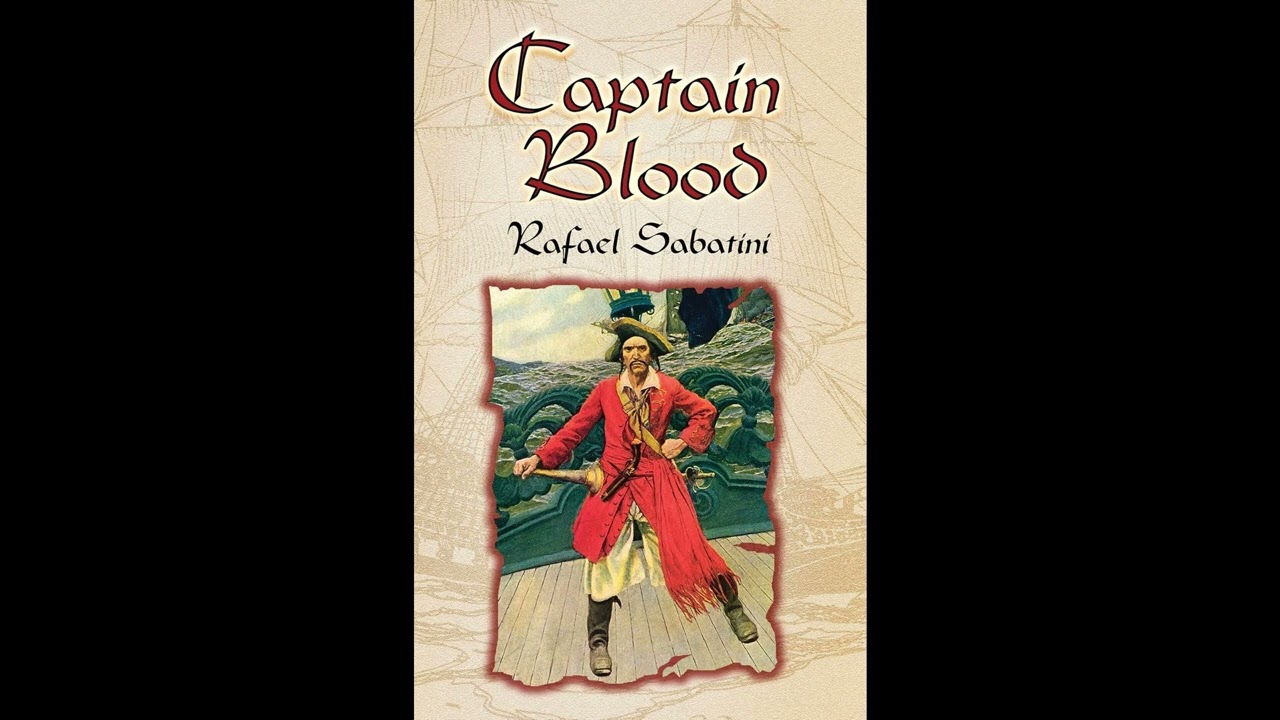
Captain Blood
For those who crave the thrill of the open sea, the clash of swords, and the ultimate triumph of justice against impossible odds, Rafael Sabatini’s Captain Blood remains an essential and exhilarating experience. This isn't merely a tale of pirates and adventure; it is a profound human drama about a man stripped of his identity and forced to forge a new one, a story that resonates even today with its examination of systemic injustice, the fight for personal liberty, and the enduring power of a moral compass in a lawless world. It’s a compelling argument for the hero who isn't born but made, tempered by adversity and driven by an unwavering sense of right. The story transports listeners back to the turbulent final decades of the 17th century, first to England in the shadow of the Monmouth Rebellion, then across the vast, unforgiving expanse of the Atlantic to the sun-drenched, treacherous shores of the Caribbean. Our reluctant protagonist is Peter Blood, a skilled and reputable Irish physician, whose quiet life is brutally upended by an accident of fate. While tending to a wounded rebel soldier—an act of purely humanitarian compassion—Blood is wrongly accused of treason and condemned by the infamous Judge Jeffreys during the Bloody Assizes. Stripped of his freedom and his medical license, he is sentenced to servitude in the harsh West Indian colonies, destined to labor under the cruel hand of Colonel Bishop on the sugar plantations of Barbados. However, Blood is no ordinary captive. Resourceful and intelligent, he seizes an opportunity to escape during a Spanish raid on Port Royal. Leading a small band of fellow indentured servants, he orchestrates a daring takeover of the Spanish galleon, thus becoming Captain Blood, a name that will soon echo with both terror and respect across the Spanish Main. From this point, the narrative follows Blood as he navigates the perilous world of piracy, not as a wanton renegade, but as a principled outlaw. He maintains a strict code of conduct, fighting tyranny and injustice wherever he finds it, all while attempting to reclaim his honor and perhaps, eventually, the attention of Arabella Bishop, the spirited and initially disdainful niece of the very man who condemned him. The ensuing exploits pit Blood and his crew against the might of the British and Spanish empires, forcing him to use his keen intellect and military acumen to survive and thrive, forever walking a tightrope between the gallows and a chance at redemption. The creator of this enduring saga, Rafael Sabatini, was born in Jesi, Italy, on April 29, 1875, to an Italian father and an English mother, both opera singers. This dual heritage imbued him with a unique perspective and an innate gift for languages; he reportedly mastered five by the age of 17. His early career involved translation work, but his passion soon turned to writing historical romances. He published his first novel in 1902 and quickly established himself as a master of the genre, known for his meticulous research, vivid historical detail, and thrilling plots. Sabatini ultimately moved to England, making it his permanent home and continuing to produce a steady stream of highly popular novels. He passed away on February 13, 1950, in Adelboden, Switzerland, leaving behind a legacy that shaped the very definition of the swashbuckler. Beyond Captain Blood, Sabatini penned many other acclaimed works that cemented his reputation, including the equally celebrated Scaramouche and The Sea-Hawk. His writing style blended rigorous historical accuracy with energetic storytelling, creating narratives that felt both authentic and incredibly dramatic. He occupied a significant place in the popular fiction of the early 20th century, elevating the historical adventure novel with his commitment to research and his knack for creating unforgettable characters. His influence can be felt in countless adventure stories and films that followed, particularly those featuring pirates and heroic figures operating outside the strictures of society. At its core, Captain Blood wrestles with several powerful themes. One of the most prominent is the clash between justice and injustice. Peter Blood's initial condemnation is a stark portrayal of judicial corruption and the abuse of power. His subsequent actions, though outside the law, are driven by an unshakeable moral compass, forcing listeners to question what true justice looks like when legal systems fail. Another vital theme is freedom and rebellion. Blood’s escape from servitude and his decision to become a pirate represent a fierce assertion of personal liberty against oppressive authority. He chooses a life of danger over a life of subjugation, embodying the spirit of defiance that resonates with anyone who has felt unfairly constrained. Furthermore, the novel explores the complex idea of honor and morality within immorality. Despite his status as a pirate, Blood consistently demonstrates an ethical code: he is never wantonly cruel, respects women, and uses his medical skills to heal rather than harm. For example, he treats his prisoners with a dignity unheard of among his peers and often saves lives, even those of his enemies, distinguishing him sharply from the ruthless buccaneers surrounding him. This tension between his outlaw status and his inner decency provides much of the story's psychological depth. The novel's emergence in 1922 came at a fascinating juncture in cultural and literary history. The world was still reeling from the devastation of World War I, and there was a widespread desire for escapism, for clear-cut heroes and villains, and for stories that offered a sense of order and adventure in a chaotic post-war landscape. Sabatini’s meticulous historical detail, set against a backdrop of grand imperial struggles and colonial expansion, offered readers a chance to lose themselves in a distant, romanticized past where individual courage could still make a profound difference. His work stood apart from some of the more overtly commercial adventure fiction by grounding its thrills in a believable historical framework, reflecting a public fascination with both the romance of the past and the enduring questions of empire and self-determination. Listening to Captain Blood as an audiobook offers a uniquely immersive experience, perfectly suited to Sabatini’s descriptive prose and lively dialogue. The story's several hours of runtime allow ample space for the narrative to unfold, making it an ideal companion for long journeys, quiet evenings, or moments when you simply wish to be spirited away to another time and place. A skilled narrator breathes life into Blood’s transformation, from the despair of unjust imprisonment to the calculated daring of a pirate captain. The cadences of 17th-century speech, the tension of naval battles, and the dramatic confrontations gain an added dimension through vocal performance. You can almost feel the salt spray, hear the creak of the timbers, and witness the flash of steel as the tale unfolds with all the vivid atmosphere Sabatini intended. The pacing, which shifts between intense action and moments of strategic planning or romantic tension, comes alive through the ebb and flow of a good reading, ensuring that every dramatic turn and every witty retort lands with maximum impact.
Enjoyed Captain Blood? A few ways to support us
Audible & Amazon links are affiliate; we may earn a small commission at no extra cost.
About this production
Human narration by a volunteer reader from LibriVox.org, the public-domain audiobook project. LibriVox volunteers record literary works whose copyright has expired in the United States, releasing the resulting recordings into the public domain.
Captain Blood by Rafael Sabatini. The underlying text is in the U.S. public domain. We do not republish any modern copyrighted edition, translation, or commentary.
The 4K cinematic visuals accompanying this audiobook are generated by an AI image model from prompts derived from the source text. No copyrighted photos, paintings, or stock footage are used. AI generation is disclosed on every video on our YouTube channel as required by YouTube's altered/synthetic content policy.
English subtitles are transcribed from the LibriVox recording with OpenAI Whisper. Translations into the 11 other supported languages are produced by Meta's NLLB-200 neural translation model. No human translator's copyrighted translation is used.
Questions about sourcing or rights? See our DMCA & Sourcing policy or contact us.
Enjoyed this audiobook?
If you'd like to own a copy of Captain Blood or hear a professionally produced edition, the links below help support free audiobook production at no extra cost to you.
As an Amazon Associate we earn from qualifying purchases. Audible / print links are affiliate.