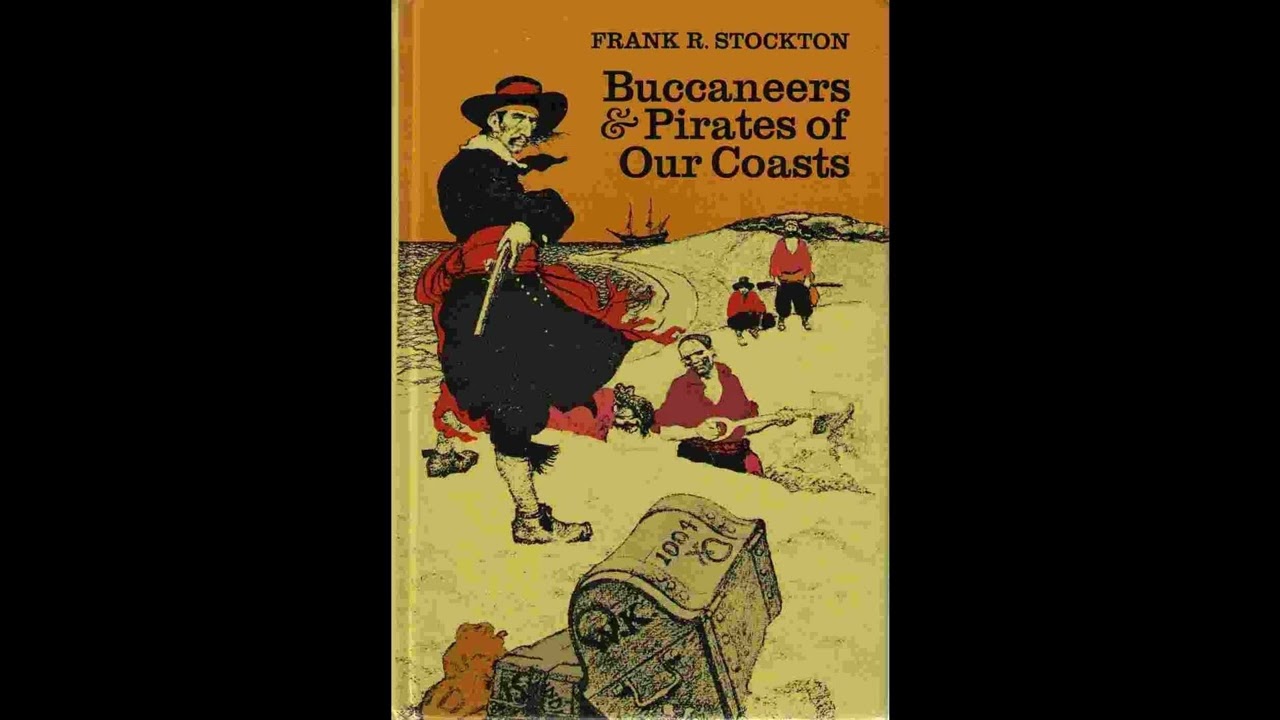
Buccaneers & Pirates of Our Coasts
The very mention of pirates conjures images of buried treasure, swashbuckling adventure, and freedom on the open sea – a potent cocktail of romance and danger that continues to fascinate. Yet, beneath the popular mythology lies a complex history of ambition, desperation, and brutal pragmatism. Frank R. Stockton’s Buccaneers & Pirates of Our Coasts offers a compelling look at these legendary figures, not as caricatures, but as real people operating within a specific historical context. This is not just a collection of thrilling tales; it is a thoughtful examination of the forces that shaped a unique criminal enterprise, an opportunity to understand why these outlaws became such enduring icons, and what their rise and fall reveals about the societies they preyed upon and emerged from. Stockton’s historical narrative sweeps listeners across the turbulent waters of the Caribbean and along the burgeoning coastlines of early America, setting the stage in an era when global powers vied for control of newly discovered lands and trade routes. The story begins not with the romanticized skull-and-crossbones, but with the emergence of the buccaneers – hardy, often desperate men, many of whom were initially hunters or disenfranchised colonists in the West Indies. These were the precursors to the more organized pirates, operating initially with some tacit state approval as privateers, harassing Spanish shipping during a period of intense imperial rivalry. From these origins, Stockton traces the evolution of these seaborne raiders, introducing us to an unforgettable roster of names. Listeners will encounter the strategic brilliance and ruthlessness of Henry Morgan, who transitioned from an infamous buccaneer to a knighted governor, demonstrating the fluidity of morality and power in the nascent colonial world. The account then moves to the notorious figures of the Golden Age of Piracy: the terrifying Blackbeard, with his burning fuses in his beard; Captain Kidd, whose complicated story blurs the line between privateer and pirate; and the audacious female pirates, Anne Bonny and Mary Read, who defied gender norms to carve out their own violent destinies on the high seas. The narrative arc follows their daring raids, their often-democratic shipboard societies, their incredible hauls of plunder, and the eventual, relentless efforts of colonial authorities to suppress them, leading to a period of dramatic chases, betrayals, and often, gruesome justice. Frank R. Stockton (1834-1902) was an American writer renowned for his distinctive short stories and children's literature, though his scope certainly extended to historical accounts like this one. Born in Philadelphia, Pennsylvania, Stockton initially pursued a career as a wood engraver and illustrator, a path that cultivated a keen eye for detail and a visual sensibility evident in his descriptive prose. He later transitioned to writing full-time, becoming a highly popular and prolific author in the latter half of the nineteenth century. His work as an editor for St. Nicholas Magazine, a prominent children's periodical, allowed him to hone his narrative craft and connect with a broad readership. While Buccaneers & Pirates of Our Coasts showcases his talent for non-fiction, Stockton is perhaps best remembered for his ingenious and often perplexing fictional tales. His most famous short story, "The Lady, or the Tiger?", exemplifies his unique blend of wit, suspense, and unresolved conclusions, leaving readers to ponder moral dilemmas. Other notable works, such as Rudder Grange and The Bee-Man of Orn, cement his place as a master of the whimsical and the subtly profound, often blurring the lines between the fantastic and the commonplace. Though not strictly aligned with any single literary movement, his writing often exhibits elements of American realism tempered with a distinctive imaginative flair, establishing him as a beloved and enduring voice in American letters. Within this historical account, Stockton highlights several enduring themes. One prominent idea is the lure of freedom versus the necessity of order. Pirates, by their very nature, represent a rejection of societal constraints, seeking self-governance and wealth outside the established law. Stockton shows this through examples like the pirate codes, which offered a crude form of democracy and justice on board a ship, contrasting sharply with the harsh realities of colonial life or naval service that many pirates escaped. Another theme is the distinction between myth and reality. Stockton meticulously peels back layers of legend to reveal the often-gritty, less glamorous truth behind the pirate persona. The famed treasure, for instance, was often more perishable goods and supplies than chests of gold, and the life itself was fraught with disease, danger, and a constant fear of capture and execution. A third central theme centers on consequences and the cycle of violence. While Stockton acknowledges the thrill of piratical success, he does not shy away from depicting the brutal ends many of these figures met. Their violent lives often led to violent demises, whether through battle, betrayal, or the gallows. This serves as a stark reminder of the inevitable price of living outside the societal compact. Furthermore, the book subtly addresses the theme of power and transformation, exemplified by figures like Henry Morgan, whose journey from ruthless raider to respected governor illustrates the fluid nature of allegiance and the way powerful individuals could legitimize themselves within the very systems they once opposed. Buccaneers & Pirates of Our Coasts emerged during a fascinating period in American culture and literature. Published in the late nineteenth century, a time roughly coinciding with the closing of the American frontier, there was a palpable shift in the national imagination. With no more "wild west" to conquer, the public's appetite for adventure and tales of lawlessness turned to other historical settings, particularly the high seas. This was an era that saw a renewed interest in historical adventure fiction, fueled by authors like Robert Louis Stevenson, whose Treasure Island (1883) had firmly planted pirates in the popular consciousness. Stockton's work, therefore, tapped into a prevailing cultural fascination, offering a non-fiction counterpart to the imaginative narratives that captured the public's imagination. It reflected a desire to understand the historical roots of these compelling figures, providing an informed perspective that balanced thrilling escapism with genuine historical inquiry. Listening to Buccaneers & Pirates of Our Coasts as an audiobook transforms a historical account into an immersive storytelling experience. The narrator's voice becomes the guiding hand, drawing listeners into the shifting tides of history and the lives of these complex figures. With a run length of several hours, this makes for an ideal companion for long commutes, an afternoon of chores, or simply an escape into a bygone era. A skilled narrator can modulate their voice to convey the gravitas of historical fact, the tension of a naval chase, or the colorful, often contradictory, personalities of the buccaneers and pirates themselves. Pay attention to the pacing, which will likely shift from descriptive passages detailing historical context to more anecdotal accounts of specific raids and encounters, allowing Stockton's carefully crafted prose to shine and transport you to a time when the horizon held both untold riches and the ever-present threat of the gallows.
Enjoyed Buccaneers & Pirates of Our Coasts? A few ways to support us
Audible & Amazon links are affiliate; we may earn a small commission at no extra cost.
About this production
Human narration by a volunteer reader from LibriVox.org, the public-domain audiobook project. LibriVox volunteers record literary works whose copyright has expired in the United States, releasing the resulting recordings into the public domain.
Buccaneers & Pirates of Our Coasts by Frank R. Stockton. The underlying text is in the U.S. public domain. We do not republish any modern copyrighted edition, translation, or commentary.
The 4K cinematic visuals accompanying this audiobook are generated by an AI image model from prompts derived from the source text. No copyrighted photos, paintings, or stock footage are used. AI generation is disclosed on every video on our YouTube channel as required by YouTube's altered/synthetic content policy.
English subtitles are transcribed from the LibriVox recording with OpenAI Whisper. Translations into the 11 other supported languages are produced by Meta's NLLB-200 neural translation model. No human translator's copyrighted translation is used.
Questions about sourcing or rights? See our DMCA & Sourcing policy or contact us.
Enjoyed this audiobook?
If you'd like to own a copy of Buccaneers & Pirates of Our Coasts or hear a professionally produced edition, the links below help support free audiobook production at no extra cost to you.
As an Amazon Associate we earn from qualifying purchases. Audible / print links are affiliate.