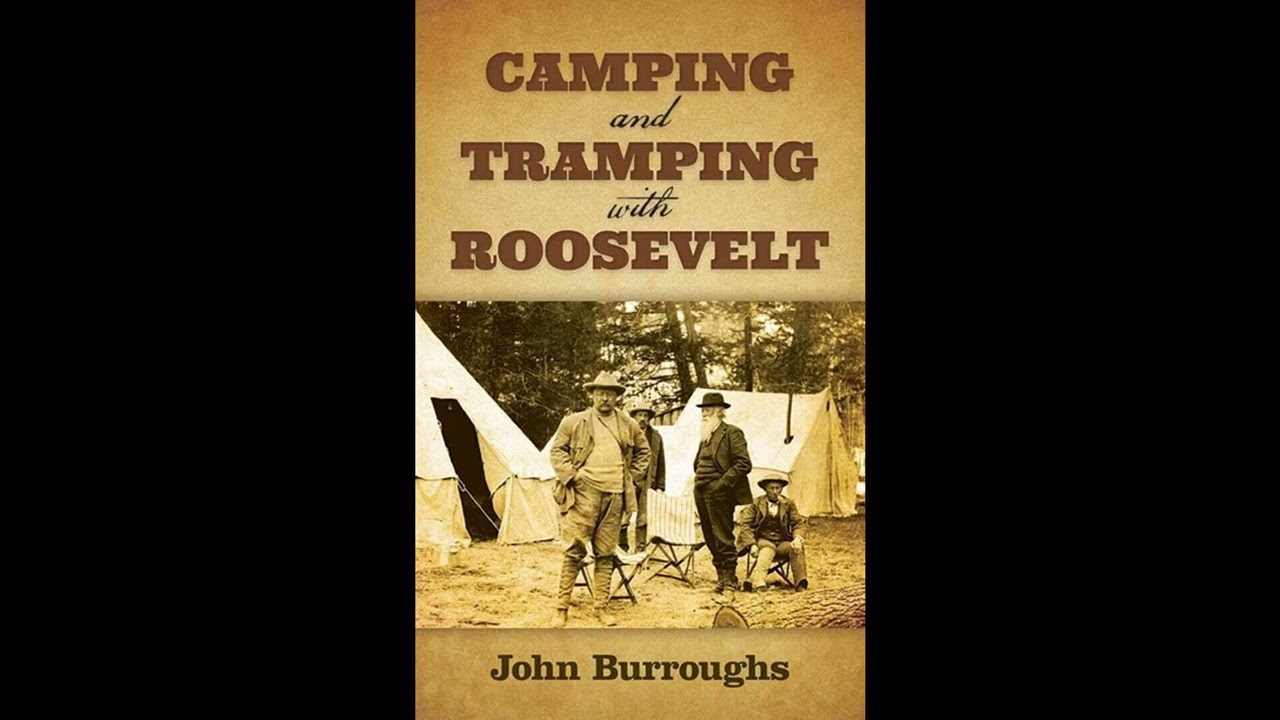
Camping and Tramping with Roosevelt
Step into the American wilderness of the early 20th century, not merely as an observer, but as a privileged companion to two of the era's most significant figures: the celebrated naturalist John Burroughs and President Theodore Roosevelt. Camping and Tramping with Roosevelt offers a rare, intimate look at the profound friendship between these men, forged amidst the grandeur of the nation's forests and rivers. This isn't just a historical document; it is a lively account of shared adventure, intellectual exchange, and a deep, mutual appreciation for the natural world. For anyone seeking a deeper connection to American history, environmentalism, and the simple yet profound joy of outdoor experience, this audiobook opens a window into a pivotal moment when the wild heart of a nation was being understood and championed like never before. It reminds us how powerful the connection to nature can be, even for those burdened by the highest office. The book unfurls as a series of distinct yet interconnected excursions, each a vivid snapshot of time spent away from the demands of civilization. Burroughs recounts two primary expeditions: a camping trip to the Virginia mountains and a more extensive scientific and recreational outing to the Yellowstone region with President Roosevelt. Listeners find themselves pitching tents alongside these figures, sharing simple meals cooked over crackling campfires, and walking for miles through pristine landscapes. Burroughs, with his keen eye for detail, chronicles not only the flora and fauna they encounter—the birds, the trees, the subtle changes in terrain—but also the dynamic personality of the President himself. Roosevelt emerges not just as a statesman, but as an enthusiastic and knowledgeable outdoorsman, brimming with energy and an almost boyish delight in discovery. The narrative arc follows the progression of these shared days, beginning with the anticipation of these unique meetings and moving through the relaxed camaraderie that develops. From their discussions of birds and mammals to broader philosophical musings on life and literature, the book captures the essence of their intellectual kinship. Burroughs details Roosevelt's impressive physical stamina, his encyclopedic knowledge of natural history, and his ability to shed the burdens of his office to fully immerse himself in the wild. The text is alive with observations of Roosevelt climbing rugged terrain, pointing out a hawk in flight, or reciting poetry around the campfire, painting a picture of a leader deeply rooted in the land he governed. It culminates not in a dramatic resolution, but in a quiet appreciation for the moments shared and the enduring bond formed between a president and his naturalist friend. John Burroughs (1837-1921) stands as one of America's most beloved naturalists and essayists, often considered a successor to Henry David Thoreau and Ralph Waldo Emerson. Born in Roxbury, New York, in the Catskill Mountains, Burroughs spent his early life immersed in the rural landscape that would become the lifelong subject of his writing. After a brief career as a teacher and a decade working as a clerk in the Treasury Department in Washington, D.C.—a period during which he formed a significant friendship with Walt Whitman—Burroughs returned to his roots. He purchased a farm near Esopus on the Hudson River, where he cultivated fruit and dedicated himself fully to writing and observing nature. His home, "Slabsides," became a retreat for prominent figures, including Theodore Roosevelt and Henry Ford. Burroughs's prolific output cemented his place in American letters. His first book, Notes on Walt Whitman as Poet and Person (1867), offered an early appreciation of the controversial poet. However, it was his nature essays that garnered him widespread fame. Works such as Wake-Robin (1871), Birds and Poets (1877), and Locusts and Wild Honey (1879) showcased his meticulous observations, clear prose, and gentle philosophy. He wrote with an accessible, personal voice, inviting readers to see the wonder in the everyday natural world around them. Burroughs played a crucial role in popularizing nature study in America and bridging the gap between scientific observation and literary expression, influencing generations of environmental writers and advocates. At its heart, Camping and Tramping with Roosevelt enacts several enduring themes. Firstly, it champions man's profound connection with nature. Burroughs's descriptions are filled with an almost reverential detail for the smallest bird or the grandest landscape. When he recounts Roosevelt's unbridled joy at spotting a rare warbler or identifying a distant mountain peak, the text illustrates how immersion in the wild can rejuvenate the spirit and sharpen the mind, offering a necessary counterpoint to the complexities of modern life. A second core theme is the power of friendship and intellectual companionship. The shared experiences transform the President and the naturalist from public figures into two men deeply engaged in conversation and mutual respect. Their discussions, ranging from the habits of local wildlife to the state of American literature, exemplify how shared passions can bridge differences in background and public role, fostering a rich intellectual bond. A third significant theme woven through the narrative is the value of simplicity and authenticity. Despite Roosevelt’s powerful position, the trips are characterized by humble accommodations – tents, simple food, and reliance on their own skills and observations. This stripping away of societal artifice highlights the inherent worth found in genuine experience and direct engagement with the environment. For instance, Burroughs notes how Roosevelt sheds the trappings of the presidency with ease, embracing the rough-and-tumble of camp life, demonstrating a conviction that true leadership and character are strengthened, not diminished, by such grounding experiences. Finally, the book subtly underscores the burgeoning conservation ethic in America. While not a direct plea, the very act of a sitting president and a celebrated naturalist spending time appreciating and documenting the wilderness implicitly argues for its preservation, a sentiment that Roosevelt himself would champion throughout his presidency, laying the groundwork for many of America's national parks and forests. This extraordinary account emerged during a period of immense change in American society. The early 20th century, often termed the Progressive Era, saw rapid industrialization, urbanization, and a growing awareness of the environmental consequences of unchecked development. Theodore Roosevelt, president from 1901 to 1909, stood at the forefront of the burgeoning conservation movement, advocating for the protection of vast tracts of public land and the establishment of national parks and forests. It was a time when the myth of inexhaustible natural resources was beginning to give way to a more scientific and responsible approach to land management. Burroughs, already a widely respected voice in nature writing, provided a literary counterpoint to this industrial push, reminding people of the intrinsic beauty and spiritual value of the natural world. His personal relationship with Roosevelt allowed him to offer a unique perspective on the President’s character and commitment to environmental causes, helping to humanize and popularize the conservation message at a crucial juncture in American history. Listening to Camping and Tramping with Roosevelt as an audiobook brings the reader directly into the experience, making the remote forests and distant mountains feel immediately present. The narrative's pacing is thoughtful and observational, perfectly suited for an unhurried voice that allows Burroughs’s detailed descriptions of birdsong, rustling leaves, and the subtle shifts of light in the wilderness to truly sink in. With a run length of several hours, this audiobook provides an ideal companion for long walks, quiet evenings, or moments when one seeks a tranquil escape from the everyday. Listen for the subtle nuances in how the narrator renders the informal, yet often profound, dialogue between Burroughs and Roosevelt, capturing the genuine camaraderie and intellectual spark. The overall atmosphere promises an immersive escape, transporting the listener to a bygone era of American wilderness and the company of two remarkable individuals, experiencing the majesty of nature through their eyes and ears.
Enjoyed Camping and Tramping with Roosevelt? A few ways to support us
Audible & Amazon links are affiliate; we may earn a small commission at no extra cost.
About this production
Human narration by a volunteer reader from LibriVox.org, the public-domain audiobook project. LibriVox volunteers record literary works whose copyright has expired in the United States, releasing the resulting recordings into the public domain.
Camping and Tramping with Roosevelt by John Burroughs. The underlying text is in the U.S. public domain. We do not republish any modern copyrighted edition, translation, or commentary.
The 4K cinematic visuals accompanying this audiobook are generated by an AI image model from prompts derived from the source text. No copyrighted photos, paintings, or stock footage are used. AI generation is disclosed on every video on our YouTube channel as required by YouTube's altered/synthetic content policy.
English subtitles are transcribed from the LibriVox recording with OpenAI Whisper. Translations into the 11 other supported languages are produced by Meta's NLLB-200 neural translation model. No human translator's copyrighted translation is used.
Questions about sourcing or rights? See our DMCA & Sourcing policy or contact us.
Enjoyed this audiobook?
If you'd like to own a copy of Camping and Tramping with Roosevelt or hear a professionally produced edition, the links below help support free audiobook production at no extra cost to you.
As an Amazon Associate we earn from qualifying purchases. Audible / print links are affiliate.