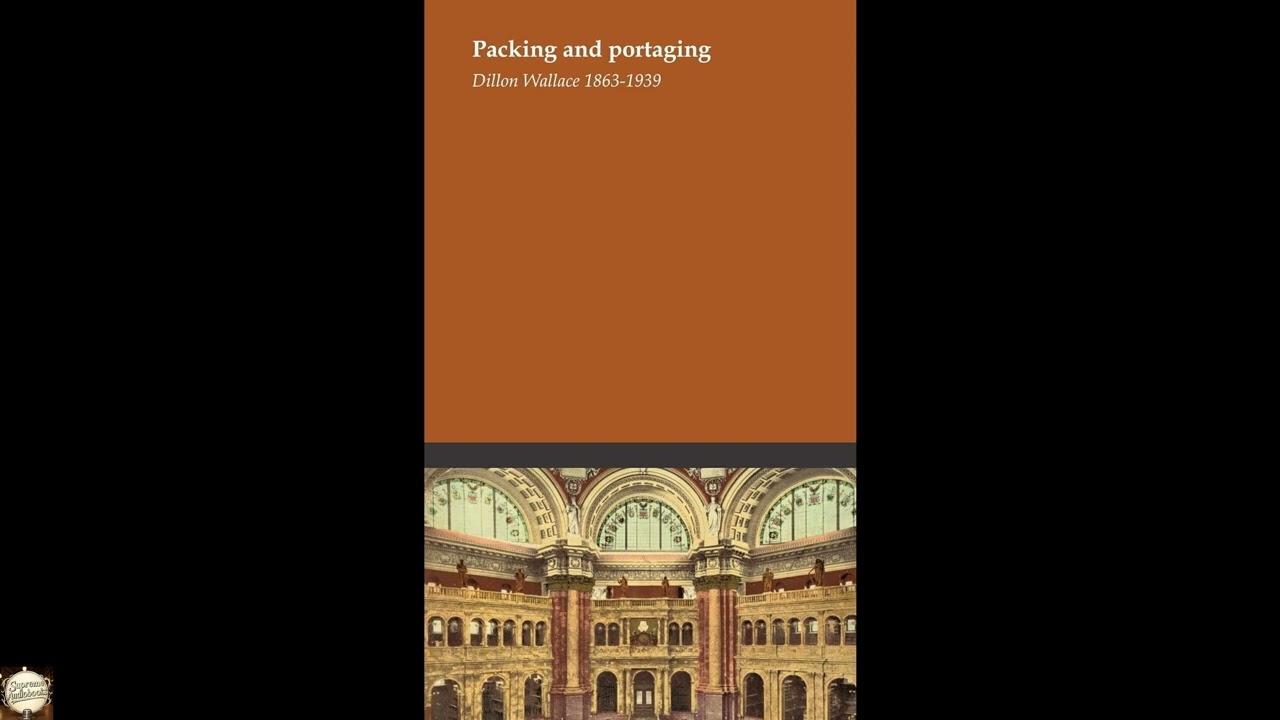
Packing and portaging
To truly comprehend the allure and rigors of the North American wilderness at the turn of the last century, one need look no further than Dillon Wallace’s foundational account, Packing and Portaging. This isn't merely a manual on how to move supplies through untamed lands; it is a profound testament to human resilience, a meditation on self-reliance, and a vivid painting of landscapes now irrevocably changed. Wallace pulls us into an era when vast tracts of forest and water remained largely uncharted, when survival depended entirely on wit, muscle, and an intimate understanding of nature's formidable power. For anyone who has ever felt the pull of the wild, or wondered about the mettle of those who first pushed beyond civilization's edge, this narrative offers an unfiltered, compelling window into a challenging, yet deeply rewarding, way of life. The story unfolds within the vast, silent stretches of North America’s subarctic regions, where the only roads are rivers and the only signs of human presence are the faint trails carved by generations of trappers and Indigenous peoples. Our unnamed narrator, driven by a desire for discovery and perhaps a measure of escape from the clamor of settled life, sets out with a small party to traverse a particularly difficult section of wilderness. Their objective is not just to reach a distant point on a map, but to survey an uncharted river system, pushing the boundaries of known geography. From the outset, the central conflict is clear: it is humanity against the relentless forces of nature. Every bend in the river presents a new obstacle—rapids that demand careful navigation, portages through mosquito-infested swamps, and steep climbs over rock-strewn ridges where canoes must be carried on aching shoulders. As the journey progresses, the initial enthusiasm gives way to a grinding routine of physical exertion and mental fortitude. The narrative details the meticulous process of breaking camp each morning, the precise method of loading a canoe to balance weight and stability, and the sheer grit required to shoulder a heavy pack over uneven terrain for hours on end. Moments of quiet beauty—the sunrise over a still lake, the cry of a loon echoing across the water—are interspersed with harrowing experiences: a sudden storm that threatens to capsize their craft, the constant struggle against biting insects, and the gnawing anxiety of dwindling provisions. The arc of the story follows their incremental progress, marked by small victories against the elements and the growing camaraderie forged in shared hardship, as they press deeper into the wilderness, far from the comforts and certainties of civilization. Dillon Wallace, born in 1863 in northern New York, was an American adventurer, writer, and lecturer whose life was defined by a relentless pursuit of the wild and unknown, particularly in the vast, unforgiving expanses of Labrador. He is most widely remembered for his harrowing account, The Lure of the Labrador Wild, published in 1905, which chronicled the tragic, ill-fated expedition of 1903 with Leonidas Hubbard Jr. and George Elson. This expedition, intended to map an unexplored region of Labrador, ended in starvation and Hubbard's death, an event that profoundly shaped Wallace's subsequent career and literary output. Wallace returned to Labrador years later, successfully completing the journey that had claimed his friend, a testament to his indomitable spirit, and documented this experience in The Long Labrador Trail (1907). Beyond his famous Labrador narratives, Wallace penned numerous other books and articles, often focusing on themes of wilderness adventure, survival, and the exploration of remote American and Canadian regions. Works like Saddle and Camp in the Rockies (1911) further cemented his reputation as a chronicler of outdoor life and an advocate for the rugged individual. His writing emerged from a tradition of American nature writers and explorers, placing him firmly among figures who sought to document and interpret the continent’s remaining wild spaces before their inevitable transformation. He was a product of an era that celebrated the "strenuous life" and the virtues of self-reliance, embodying these ideals through his personal exploits and powerful prose. Wallace passed away in 1939, leaving behind a legacy of compelling narratives that continue to inspire readers with their vivid depictions of wilderness challenge and human endurance. Packing and Portaging enacts several potent themes. Foremost among them is human endurance and resilience. The text repeatedly demonstrates the extreme physical and mental strain required to survive and progress in such an environment. When the narrator describes the ache in his shoulders from carrying a heavy canoe over a mile of rocky, uneven ground, or the psychological toll of days without solid food, the listener understands the profound depths of human fortitude being tested. Another central theme is man's relationship with nature. Rather than viewing nature as merely a backdrop, Wallace presents it as an active participant—a powerful, indifferent, and sometimes benevolent force that shapes every decision and outcome. We witness this theme in scenes where the party must read the subtle signs of changing weather, or when they find themselves humbled by the immense scale of the landscape, realizing their place within its grand design. The book also addresses the value of preparation and skill, highlighting how meticulous planning and learned expertise are not just helpful but absolutely critical for survival. The detailed descriptions of how to repair a damaged canoe in the field, or the proper method for lashing gear to prevent loss in rapids, serve as concrete examples of this theme. These moments are not merely technical instructions but underscore the difference between life and death in the wilderness. Finally, a significant theme is the spirit of discovery and the allure of the unknown. Despite the hardships, there is an underlying current of excitement and purpose that propels the characters forward. The narrator's descriptions of seeing a landscape no European eye has ever charted before—a new lake, a previously unmapped waterfall—convey a powerful sense of pioneering spirit, demonstrating humanity's innate drive to push beyond the perceived limits of the world. This work emerged during a fascinating period in American cultural history, roughly the first two decades of the twentieth century, a time marked by significant social and industrial change. With the formal closing of the American frontier officially declared in the 1890 census, a powerful sense of nostalgia for the wild and untamed began to permeate the national consciousness. Figures like Theodore Roosevelt championed "the strenuous life," advocating for physical vigor, moral fortitude, and a reconnection with nature as antidotes to what many perceived as the softening effects of modernization and urban living. There was a burgeoning interest in conservation and the establishment of national parks, reflecting a growing awareness of the finite nature of wilderness. Literary movements of the era, while diverse, often featured narratives that either romanticized the past or grappled with the implications of an industrializing world. Adventure literature, particularly stories set in remote wilderness, experienced a surge in popularity. Writers like Jack London and Rex Beach were creating fictional tales of northern hardship and heroism, while figures like Wallace provided authentic, firsthand accounts that often read with the dramatic tension of a novel. Packing and Portaging, whether a purely factual recounting or a composite narrative based on Wallace’s extensive experiences, speaks directly to this cultural moment, offering both practical insights into wilderness travel and a profound, reflective look at the human spirit when confronted with the raw power of the natural world. It became a touchstone for those seeking to understand and engage with the wilderness not just as an external challenge, but as a crucible for self-discovery. As an audiobook, Packing and Portaging takes on a new dimension, allowing the listener to truly immerse themselves in the soundscape of the narrative. The narrator’s voice becomes the guiding force through dense forests and across vast waters, conveying not just the factual details of the expedition but also the emotional weight of each moment. Listen for the subtle shifts in pacing when describing the painstaking effort of a portage versus the quiet awe of a remote sunset. The rhythmic descriptions of paddling, the tension in dialogue during a crisis, and the sheer fatigue communicated through a well-chosen vocal inflection all serve to enhance the atmosphere. This format allows the listener to feel the isolation, the beauty, and the profound challenges almost viscerally, making the struggles and triumphs of this wilderness adventure resonate with an uncommon immediacy, drawing you into the very heart of the North American wild.
Enjoyed Packing and portaging? A few ways to support us
Audible & Amazon links are affiliate; we may earn a small commission at no extra cost.
About this production
Human narration by a volunteer reader from LibriVox.org, the public-domain audiobook project. LibriVox volunteers record literary works whose copyright has expired in the United States, releasing the resulting recordings into the public domain.
Packing and portaging by Dillon Wallace. The underlying text is in the U.S. public domain. We do not republish any modern copyrighted edition, translation, or commentary.
The 4K cinematic visuals accompanying this audiobook are generated by an AI image model from prompts derived from the source text. No copyrighted photos, paintings, or stock footage are used. AI generation is disclosed on every video on our YouTube channel as required by YouTube's altered/synthetic content policy.
English subtitles are transcribed from the LibriVox recording with OpenAI Whisper. Translations into the 11 other supported languages are produced by Meta's NLLB-200 neural translation model. No human translator's copyrighted translation is used.
Questions about sourcing or rights? See our DMCA & Sourcing policy or contact us.
Enjoyed this audiobook?
If you'd like to own a copy of Packing and portaging or hear a professionally produced edition, the links below help support free audiobook production at no extra cost to you.
As an Amazon Associate we earn from qualifying purchases. Audible / print links are affiliate.