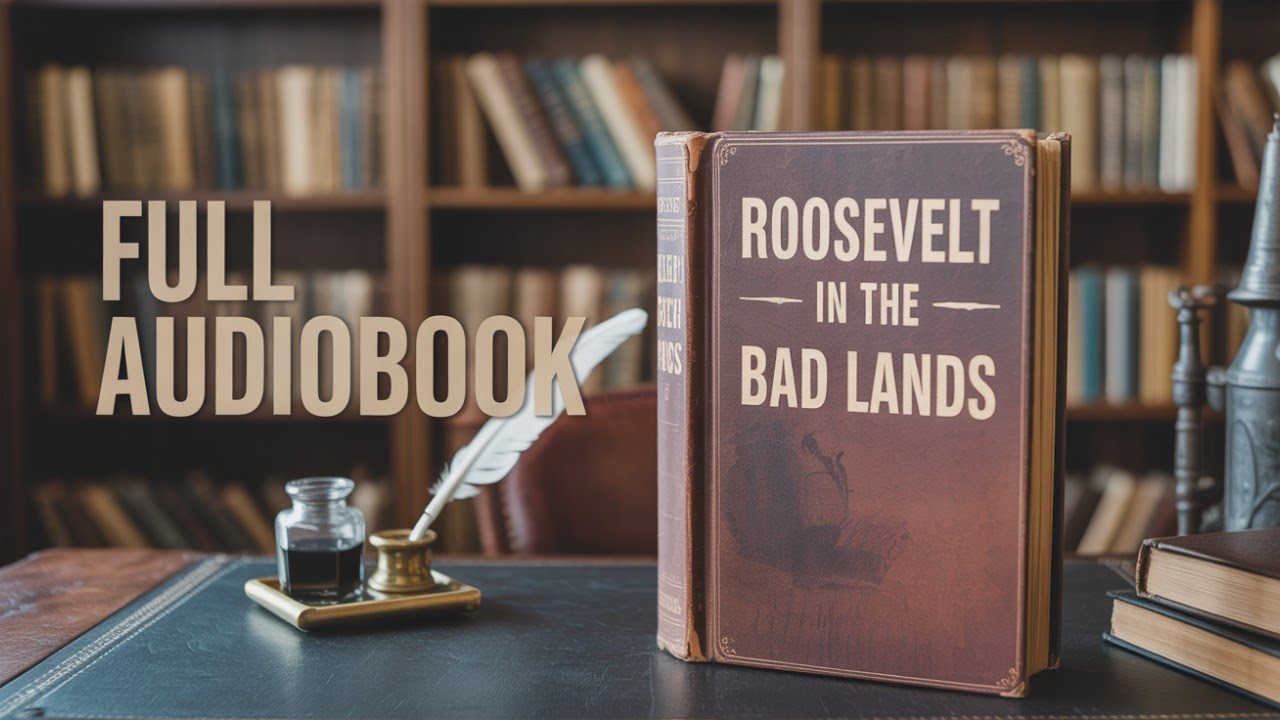
Roosevelt in the Bad Lands
Before he became the twenty-sixth President of the United States, a Nobel Peace Prize laureate, or even a Rough Rider, Theodore Roosevelt was a young, grief-stricken New Yorker who sought solace and reinvention in the raw, untamed landscape of the Dakota Territory. Hermann Hagedorn’s "Roosevelt in the Bad Lands" transports listeners to this pivotal period, offering a vivid portrait of the nascent statesman as he grappled with personal tragedy and forged a new identity amidst the challenges of the American frontier. This isn't just a biography; it's a foundational story of American character, a testament to the shaping power of nature, and an inspiring account of how adversity can forge greatness—a narrative as relevant today for understanding leadership and resilience as it was a century ago. The story opens in the spring of 1883, when Theodore Roosevelt, still in his mid-twenties, first arrived in the wild country near Medora, North Dakota. He was a Harvard-educated gentleman, a burgeoning politician from a prominent family, whose life had been recently shattered by the simultaneous deaths of his wife and mother. Seeking escape and a chance to rebuild himself, Roosevelt purchased cattle interests, establishing the Chimney Butte and Elkhorn ranches. Hagedorn meticulously chronicles Roosevelt’s immersion into this rugged world, detailing his transformation from a spectacles-wearing Easterner into a hardened rancher and intrepid hunter. Listeners follow Roosevelt as he learns the ropes of ranch life, herding cattle across vast plains, enduring harsh winters, and facing down dangerous wildlife. He becomes adept with a rifle, spending weeks alone in the wilderness hunting buffalo, grizzly bears, and elk. The Badlands, with their stark beauty and unforgiving terrain, become his crucible. The narrative paints a compelling picture of his interactions with the colorful characters of the frontier—cowboys, outlaws, and fellow ranchers—learning their ways and earning their respect through sheer will and physical courage. His dedication to justice on the frontier is particularly highlighted, showing his early commitment to law and order as he personally pursues cattle rustlers, demonstrating a nascent presidential resolve. Hermann Hagedorn, the author, was born in New York City in 1882 and became a distinguished American poet, biographer, and playwright. Educated at Harvard University, he developed a profound admiration for Theodore Roosevelt, which would define a significant portion of his literary career. Hagedorn’s early work included poetry collections like "The Silver Blade" and plays such as "Makers of Earth," showcasing his versatile talent and a keen interest in historical and patriotic themes. His friendship and professional relationship with the Roosevelt family provided him with unparalleled access to personal papers and anecdotes, allowing him to craft intimate and authoritative accounts of the former president's life. "Roosevelt in the Bad Lands," published in 1921, stands as one of Hagedorn's most important contributions, building upon his earlier, widely popular "The Boys' Life of Theodore Roosevelt" (1918) and preceding his detailed work on the Rough Riders. Hagedorn’s literary legacy is firmly rooted in his role as Roosevelt’s principal biographer, a chronicler who not only documented facts but also illuminated the spirit and ideals of an iconic American figure, securing his own place as a prominent voice in early 20th-century American letters. The book powerfully illustrates the theme of personal transformation, showing how the crucible of the frontier reshaped a refined Easterner into a robust individual ready for national leadership. For instance, Hagedorn describes Roosevelt's relentless pursuit of three boat thieves down the ice-choked Little Missouri River, a several-day ordeal that tested his endurance and resolve, far beyond what any comfortable city life could have prepared him for. This episode exemplifies his growing physical toughness and his uncompromising commitment to justice. Another prominent theme is the enduring spirit of American individualism and self-reliance, which Roosevelt both embodied and championed. He arrived in the Badlands seeking personal redemption, but he also embraced the hard work and communal cooperation necessary for survival in a challenging environment, learning from the cowboys and frontiersmen who lived by their wits and strength. A third theme woven through the narrative is the budding conservation ethic that would define Roosevelt’s presidency. Though he was a passionate hunter, his time spent in close proximity to the disappearing wildlife and pristine landscapes of the West instilled in him a profound appreciation for natural resources. Hagedorn captures moments where Roosevelt reflects on the vastness and fragility of the wilderness, observations that foreshadow his later monumental efforts to protect American lands. The book also touches upon the clash between civilization and wilderness, as Roosevelt witnesses the rapid settlement and changes sweeping through the West, grappling with the complex implications for both the land and its inhabitants. When "Roosevelt in the Bad Lands" was published in 1921, America was still grappling with the aftermath of World War I and the recent passing of Theodore Roosevelt in 1919. The nation was in a period of reflection, looking back at figures who embodied strength, moral conviction, and a distinct American identity. The "closing of the frontier" had been officially declared decades earlier, but the romance and mythology of the West continued to hold a powerful sway over the national imagination. Hagedorn’s book emerged at a time when there was a deep desire to understand the forces that shaped leaders like Roosevelt, presenting his Western sojourn as a vital period of character development, a formative experience that prepared him for the monumental tasks ahead. It served to solidify the image of Roosevelt as a man forged in the fires of the American wilderness, appealing to a public eager for stories of courage and national purpose. Listening to "Roosevelt in the Bad Lands" as an audiobook brings an added dimension to Hagedorn’s evocative prose. The narration allows the listener to fully immerse themselves in the desolate beauty and rugged reality of the Dakota Territory. The pacing of the spoken word can highlight the starkness of the Badlands, the rhythmic gallop of horses across the plains, or the tension of a standoff with cattle rustlers. A skilled narrator can bring out the earnestness in Hagedorn’s descriptions of Roosevelt’s transformation and the grit in the frontier dialogue, whether it’s the laconic wisdom of an old cowboy or Roosevelt’s own determined pronouncements. The multi-hour length makes it an ideal companion for long drives or quiet evenings, allowing for a sustained engagement with a story that feels both epic and intimately personal, inviting listeners to truly hear the making of a president.
Enjoyed Roosevelt in the Bad Lands? A few ways to support us
Audible & Amazon links are affiliate; we may earn a small commission at no extra cost.
About this production
Human narration by a volunteer reader from LibriVox.org, the public-domain audiobook project. LibriVox volunteers record literary works whose copyright has expired in the United States, releasing the resulting recordings into the public domain.
Roosevelt in the Bad Lands by Hermann Hagedorn. The underlying text is in the U.S. public domain. We do not republish any modern copyrighted edition, translation, or commentary.
The 4K cinematic visuals accompanying this audiobook are generated by an AI image model from prompts derived from the source text. No copyrighted photos, paintings, or stock footage are used. AI generation is disclosed on every video on our YouTube channel as required by YouTube's altered/synthetic content policy.
English subtitles are transcribed from the LibriVox recording with OpenAI Whisper. Translations into the 11 other supported languages are produced by Meta's NLLB-200 neural translation model. No human translator's copyrighted translation is used.
Questions about sourcing or rights? See our DMCA & Sourcing policy or contact us.
Enjoyed this audiobook?
If you'd like to own a copy of Roosevelt in the Bad Lands or hear a professionally produced edition, the links below help support free audiobook production at no extra cost to you.
As an Amazon Associate we earn from qualifying purchases. Audible / print links are affiliate.
More Audiobooks
Reminiscences of Sixty Years in Public Affairs, Volume 2
Memoirs of General Lafayette: With an Account of His Visit to America and of His Rec- Full Audiobook
Life and Public Services of John Quincy Adams: Sixth President of the Unied States

"Abe" Lincoln's Anecdotes and Stories