Before Adam
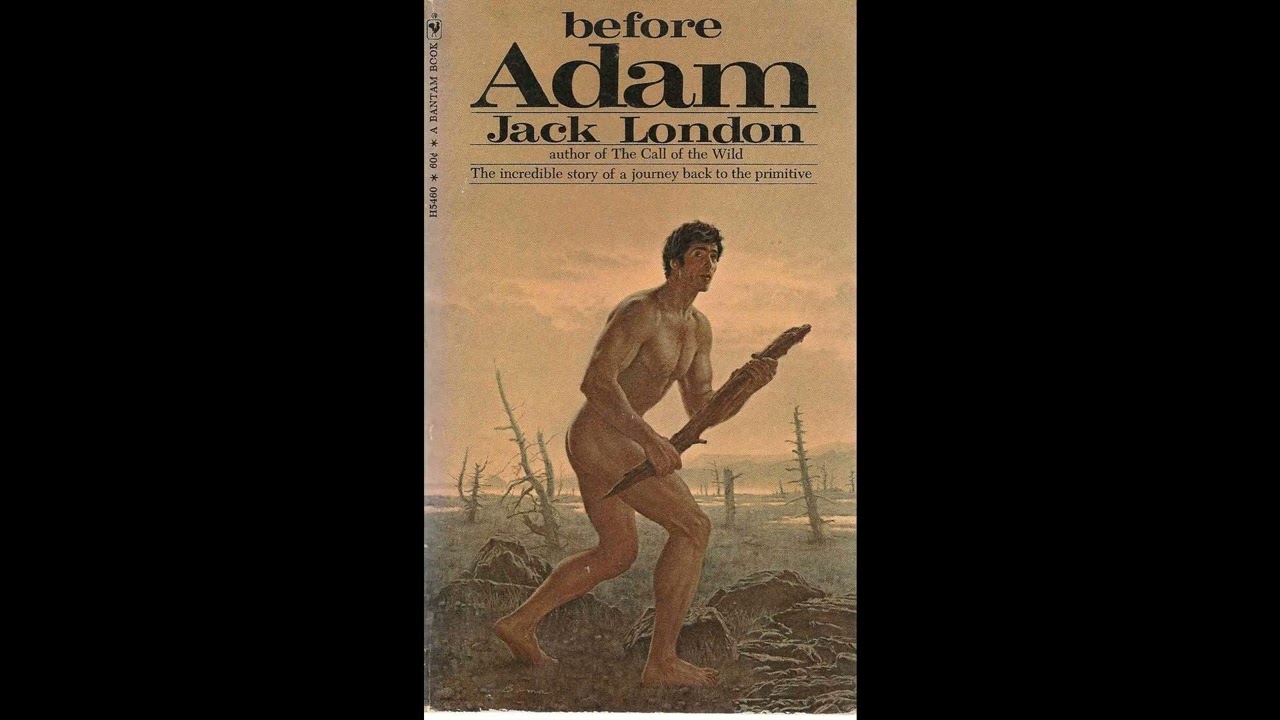
Imagine a world before recorded history, before the written word, before tools shaped by skilled hands — a world glimpsed not through dusty archeological digs, but through the vivid, primal memory of a man's dreams. Jack London's Before Adam reaches back into the earliest stirrings of human consciousness, inviting listeners to confront the raw, untamed essence of our ancestors. It is a story that forces us to question how far we have truly come from our primeval past, and why the echoes of savagery, instinct, and the struggle for survival still resonate within us today, making it a compelling listen for anyone pondering the depths of human nature and our shared origins. The story unfolds through the recurring dreams of a modern, unnamed narrator, who finds himself transported to a prehistoric landscape. In these nocturnal visions, he becomes "Big-Tooth," a member of an early humanoid species living in a dense, primeval forest. This is a world ruled by instinct and immediate necessity. The setting is stark and unforgiving: immense trees, shadowy caves, vast stretches of untamed wilderness populated by terrifying creatures like saber-toothed tigers and dire wolves, and the constant, gnawing threat of hunger. Big-Tooth is not quite human as we understand it, but a creature on the cusp of evolving, displaying flashes of rudimentary intelligence and developing social bonds alongside deeply ingrained animalistic behaviors. Big-Tooth's life is a relentless fight for existence. His tribe—a small, loosely organized band—scavenges for food, seeks shelter in caves or the protective branches of trees, and constantly watches for danger. Key figures in his world include Lop-Ear, a slightly more advanced and cooperative companion, and Red-Eye, a fierce, aggressive rival whose dominance within the tribe is a constant challenge. The central conflict revolves around survival: the desperate hunt for prey, the brutal defense against predators, and the often-deadly clashes with other primitive groups, such as the more advanced "Fire People" or the tree-dwelling "Tree People." Big-Tooth experiences the primal emotions of fear, hunger, loyalty, and nascent love, learning the harsh lessons of his environment as he grows from a vulnerable young pre-man into a resilient and cunning survivor, all while the narrator's modern consciousness grapples with the visceral reality of these ancient experiences. The author, Jack London, was born John Griffith London in San Francisco, California, in 1876, and lived a life as dramatic and adventurous as many of his fictional characters. Growing up in poverty in Oakland, London’s youth was marked by hard labor and self-education. He worked in various demanding trades, including oyster pirating on San Francisco Bay, sailing the Pacific, and hoboing across the United States. These formative experiences fueled his realist and naturalist writing, giving him firsthand knowledge of the struggle for survival against harsh conditions and societal injustice. His brief, intense participation in the Klondike Gold Rush in the late 1890s, though it yielded no gold, provided him with invaluable material for his most acclaimed stories about humanity's conflict with nature. London became one of the most popular and highest-paid writers of his time, producing an astonishing volume of work before his premature death in 1916 at the age of 40. His literary output includes enduring classics such as The Call of the Wild, which introduced the heroic dog Buck and remains a staple of American literature; White Fang, a powerful counterpoint to his earlier work, focusing on a wolf-dog's taming; and the autobiographical novel Martin Eden, which dissects the struggles of an ambitious working-class writer. London was a prominent figure in the naturalist literary movement, a branch of realism that emphasized environmental and hereditary influences on human behavior, often portraying characters locked in a struggle against forces beyond their control. He holds a significant place in the American literary canon as a storyteller who captured the wildness of nature and the complexities of the human spirit. Before Adam enacts several profound themes. One prominent idea is primitivism, showing the raw, animalistic core that London suggests lies beneath human civilization. The book constantly contrasts Big-Tooth's immediate, instinctual reactions—the sudden flash of fear, the automatic lunge for food, the aggressive defense of territory—with the narrator's modern, contemplative perspective. For instance, Big-Tooth's terror at the rustle of leaves or the scent of a predator is a visceral, all-consuming experience that leaves no room for thought, reminding us of the urgent survival mechanisms that still exist in our biological makeup. Another central idea is the theme of evolution and human development. The story illustrates, in fictionalized form, the gradual emergence of intelligence, cooperation, and early societal structures. Big-Tooth, through trial and error, learns about his environment, the behavior of other creatures, and the benefits of working with his small group. The rudimentary communication, the shared hunts, and the slow development of tools—like sharpened sticks or thrown stones—demonstrate the painstaking steps our ancestors took in their long ascent, suggesting that even simple innovations represented significant leaps in survival capability. The story also touches on ancestral memory, using the dream framework to propose that echoes of our primeval past are somehow retained within the modern human psyche, influencing our fears, instincts, and perhaps even our deepest desires. Before Adam was published in 1907, a period ripe with scientific and cultural shifts. Charles Darwin’s theories of evolution, though decades old, continued to spark debate and inspire new thought, influencing fields from biology to sociology. The early 20th century saw a burgeoning interest in anthropology and paleontology, with new discoveries about prehistoric humans fascinating the public. London, a keen reader of science and philosophy, was directly influenced by these intellectual currents, particularly the works of Darwin, Herbert Spencer, and Karl Marx. He combined these scientific ideas with his own observations of social injustice and the competitive struggles he witnessed in both nature and society. The book emerged as London's fictional exploration of the "beast within," a counterpoint to the prevailing optimism about human progress and civilization at the height of the industrial age, questioning the veneer of modernity by reminding his readers of their ancient, brutal lineage. Listening to Before Adam as an audiobook offers a singular opportunity to fully immerse oneself in its unique premise. The narrative, presented as a man’s recurring dreams, benefits immensely from a skilled narrator who can differentiate between the modern consciousness of the sleep-waker and the primal experiences of Big-Tooth. The several hours of listening time allow for the gradual, atmospheric build-up of the prehistoric world, letting the listener settle into the rhythm of survival, the quiet tension of the hunt, and the sudden, explosive bursts of violence. A good narration brings out the stark sounds of the primeval forest – the snapping twigs, the distant roars, the rustling leaves – and conveys the raw emotions of fear, hunger, and dawning awareness that define Big-Tooth's existence, making the experience immediate and impactful.
Enjoyed Before Adam? A few ways to support us
Audible & Amazon links are affiliate; we may earn a small commission at no extra cost.
About this production
Human narration by a volunteer reader from LibriVox.org, the public-domain audiobook project. LibriVox volunteers record literary works whose copyright has expired in the United States, releasing the resulting recordings into the public domain.
Before Adam by Jack London. The underlying text is in the U.S. public domain. We do not republish any modern copyrighted edition, translation, or commentary.
The 4K cinematic visuals accompanying this audiobook are generated by an AI image model from prompts derived from the source text. No copyrighted photos, paintings, or stock footage are used. AI generation is disclosed on every video on our YouTube channel as required by YouTube's altered/synthetic content policy.
English subtitles are transcribed from the LibriVox recording with OpenAI Whisper. Translations into the 11 other supported languages are produced by Meta's NLLB-200 neural translation model. No human translator's copyrighted translation is used.
Questions about sourcing or rights? See our DMCA & Sourcing policy or contact us.
Enjoyed this audiobook?
If you'd like to own a copy of Before Adam or hear a professionally produced edition, the links below help support free audiobook production at no extra cost to you.
As an Amazon Associate we earn from qualifying purchases. Audible / print links are affiliate.