A Short History of The World
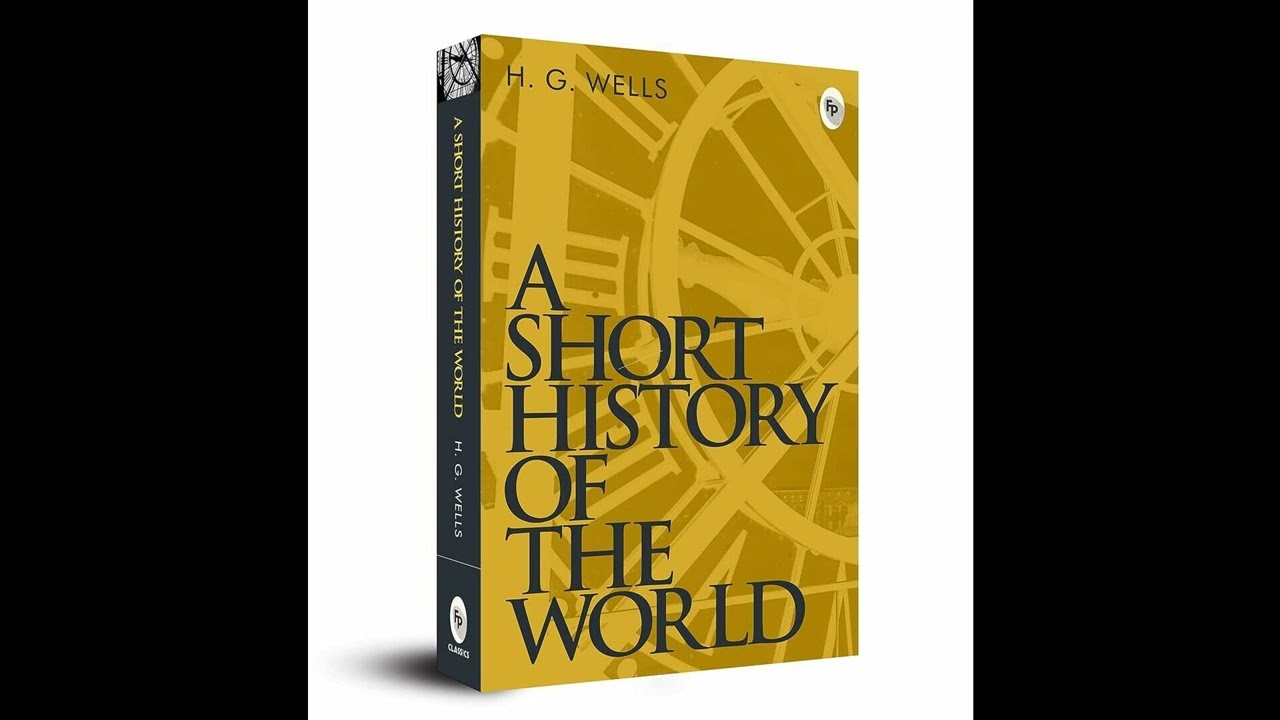
Imagine a single, continuous narrative stretching from the swirling dust of primordial creation to the complex, uncertain present of humanity. H. G. Wells, the visionary author known for his scientific romances, offers precisely that in A Short History of The World. This remarkable undertaking isn't merely a dry recitation of facts and dates; it is a grand, sweeping story, a dramatic account of our species' improbable rise, its triumphs, its follies, and its enduring quest for meaning. More than a century after its initial publication, Wells's audacious attempt to frame all of human existence within a coherent, readable narrative remains profoundly relevant, urging us to consider our shared origins and collective destiny in an age that often seems intent on dividing us. Wells begins his ambitious account not with the first written word, nor even the first human step, but with the very formation of the Earth itself – a planet emerging from cosmic chaos, cooling, and slowly becoming hospitable to life. He takes us through the immense stretches of geological time, introducing the earliest unicellular organisms, then the burgeoning complexity of plant and animal life, culminating in the appearance of early hominids. The narrative then shifts its focus to the slow, painstaking development of human consciousness, tool-making, language, and the first glimmerings of society. We witness the migration of peoples across continents, the rise and fall of ancient civilizations in Mesopotamia, Egypt, India, and China, and the profound impact of figures like Buddha, Confucius, and the prophets of the Abrahamic faiths. The story progresses through the classical eras of Greece and Rome, detailing their philosophical innovations, their political structures, and their eventual declines. Wells recounts the spread of Christianity, the rise of Islam, the medieval period with its feudal systems and intellectual ferment, and the transformative power of the Renaissance. He paints a picture of humanity constantly striving, adapting, and innovating, sometimes through brutal conquest, sometimes through quiet invention. The arc of the story carries us through the age of exploration, the scientific revolution, the Enlightenment, and the industrial transformations that reshaped global society. Wells brings his history right up to his own time, reflecting on the tumultuous early 20th century and posing profound questions about the future path of civilization, emphasizing the need for global cooperation and understanding. H. G. Wells, born Herbert George Wells in Bromley, Kent, England, in 1866, was a prodigious writer whose output spanned over fifty years. His early life was marked by financial struggles, which he largely overcame through hard work and a scholarship to the Normal School of Science in London, where he studied biology under T. H. Huxley. This scientific background profoundly influenced his worldview and his fiction, providing a foundation for his imaginative leaps into future technologies and societal structures. Wells's early success came with pioneering works of science fiction, such as The Time Machine (1895), The Island of Doctor Moreau (1896), The Invisible Man (1897), and The War of the Worlds (1898), which cemented his reputation as a master of speculative fiction and a keen social commentator. Beyond his groundbreaking science fiction, Wells was a prolific social critic, historian, and prophet. He was a committed socialist, advocating for a more equitable and scientifically governed world. His later works often blended fictional narrative with philosophical discourse and overt political commentary, reflecting his growing concern for humanity's future. He wrote numerous non-fiction books on social and political issues, as well as several satirical novels. Wells was nominated for the Nobel Prize in Literature four times, recognized not only for his narrative abilities but also for his profound influence on public thought and his relentless pursuit of a better world. He passed away in London in 1946, leaving behind a literary legacy that continues to resonate with readers and inspire new generations of writers and thinkers. Several core themes animate Wells’s monumental historical narrative. One significant theme is the concept of progress and evolution. Wells, steeped in Darwinian thought, views human history as a continuous, if sometimes halting, process of development. He illustrates this by detailing the gradual refinement of tools, the evolution of social structures from tribal groups to complex states, and the expansion of human knowledge from rudimentary observations to scientific inquiry. For instance, he highlights how the invention of writing fundamentally changed human capacity for collective memory and organization, demonstrating a clear step forward in our species' ability to shape its environment and future. Another crucial theme Wells develops is the interconnectedness of human civilization. Throughout his history, he consistently pushes back against narrow nationalist perspectives, showing how cultures and societies have always influenced one another through trade, migration, and the diffusion of ideas. He vividly describes the ancient Silk Road, not just as a route for goods, but as a conduit for philosophies, religions, and technologies that shaped disparate peoples across Asia and Europe. Wells argues that humanity’s shared story is far more compelling and significant than any individual nation’s particular history, advocating for a unified global perspective essential for peace and advancement. When Wells set out to write A Short History of The World, the global landscape was reeling from the cataclysmic events of World War I, a conflict that exposed the devastating potential of modern warfare and the fragility of established political orders. The book was published in 1922, a period marked by profound introspection and a widespread desire to understand how such a global tragedy could have occurred. There was a burgeoning interest in international cooperation, epitomized by the nascent League of Nations, and a fervent hope that humanity could learn from its past mistakes. Wells’s work emerged directly from this intellectual and social ferment, offering a comprehensive historical framework intended to foster a sense of shared human identity and purpose, rather than one fragmented by nationalistic rivalries. He felt a moral imperative to provide a coherent story of humanity that could guide future generations towards peace and mutual understanding. Listening to A Short History of The World as an audiobook transforms this ambitious text into a truly immersive experience. The "several hours" of run time allow for a deep, continuous engagement with Wells’s narrative, making it ideal for extended listening sessions during commutes, while exercising, or during quiet evenings at home. A skilled narrator brings clarity and authority to the vast sweep of history, guiding the listener through complex periods and diverse civilizations with a consistent, thoughtful voice. The pacing allows ample time to absorb the philosophical implications of Wells’s account, making the connections between past and present feel immediate and profound. It is an opportunity to not merely read history, but to truly listen to the story of ourselves unfold, presented by a writer who believed deeply in humanity’s potential to learn and grow.
Enjoyed A Short History of The World? A few ways to support us
Audible & Amazon links are affiliate; we may earn a small commission at no extra cost.
About this production
Human narration by a volunteer reader from LibriVox.org, the public-domain audiobook project. LibriVox volunteers record literary works whose copyright has expired in the United States, releasing the resulting recordings into the public domain.
A Short History of The World by H. G. Wells. The underlying text is in the U.S. public domain. We do not republish any modern copyrighted edition, translation, or commentary.
The 4K cinematic visuals accompanying this audiobook are generated by an AI image model from prompts derived from the source text. No copyrighted photos, paintings, or stock footage are used. AI generation is disclosed on every video on our YouTube channel as required by YouTube's altered/synthetic content policy.
English subtitles are transcribed from the LibriVox recording with OpenAI Whisper. Translations into the 11 other supported languages are produced by Meta's NLLB-200 neural translation model. No human translator's copyrighted translation is used.
Questions about sourcing or rights? See our DMCA & Sourcing policy or contact us.
Enjoyed this audiobook?
If you'd like to own a copy of A Short History of The World or hear a professionally produced edition, the links below help support free audiobook production at no extra cost to you.
As an Amazon Associate we earn from qualifying purchases. Audible / print links are affiliate.