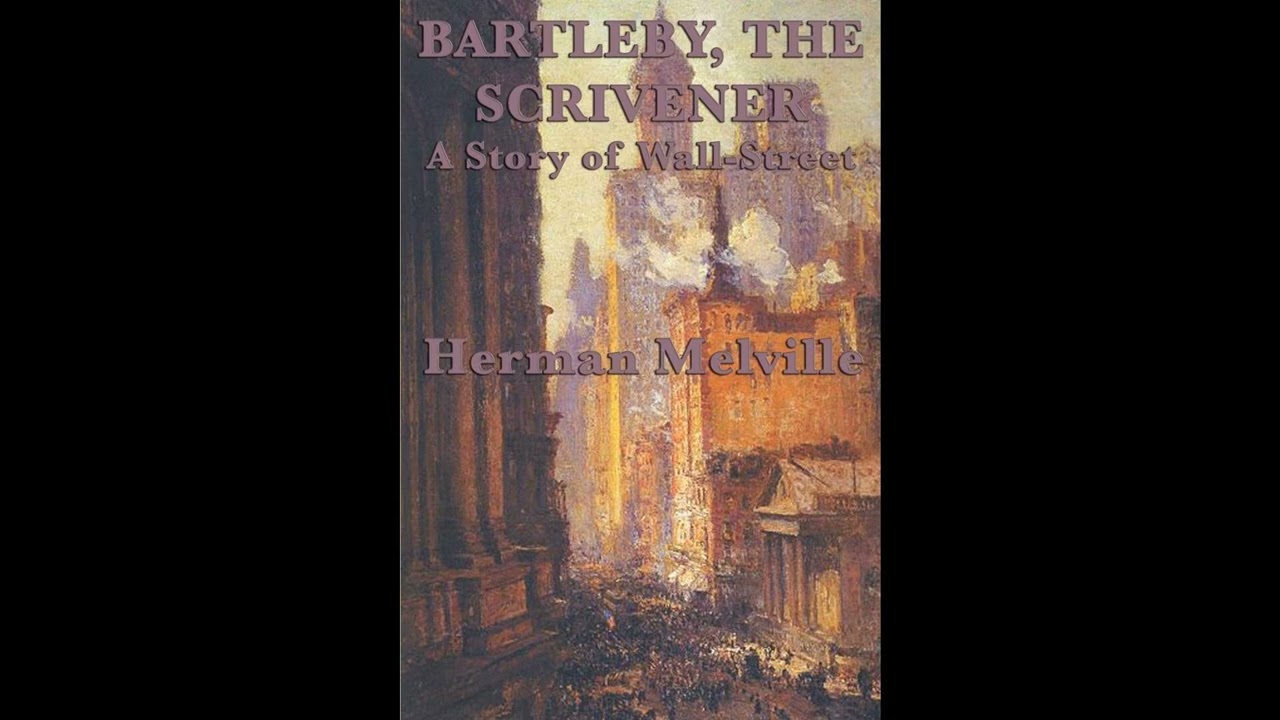
Bartleby, the Scrivener a Story of Wall-street
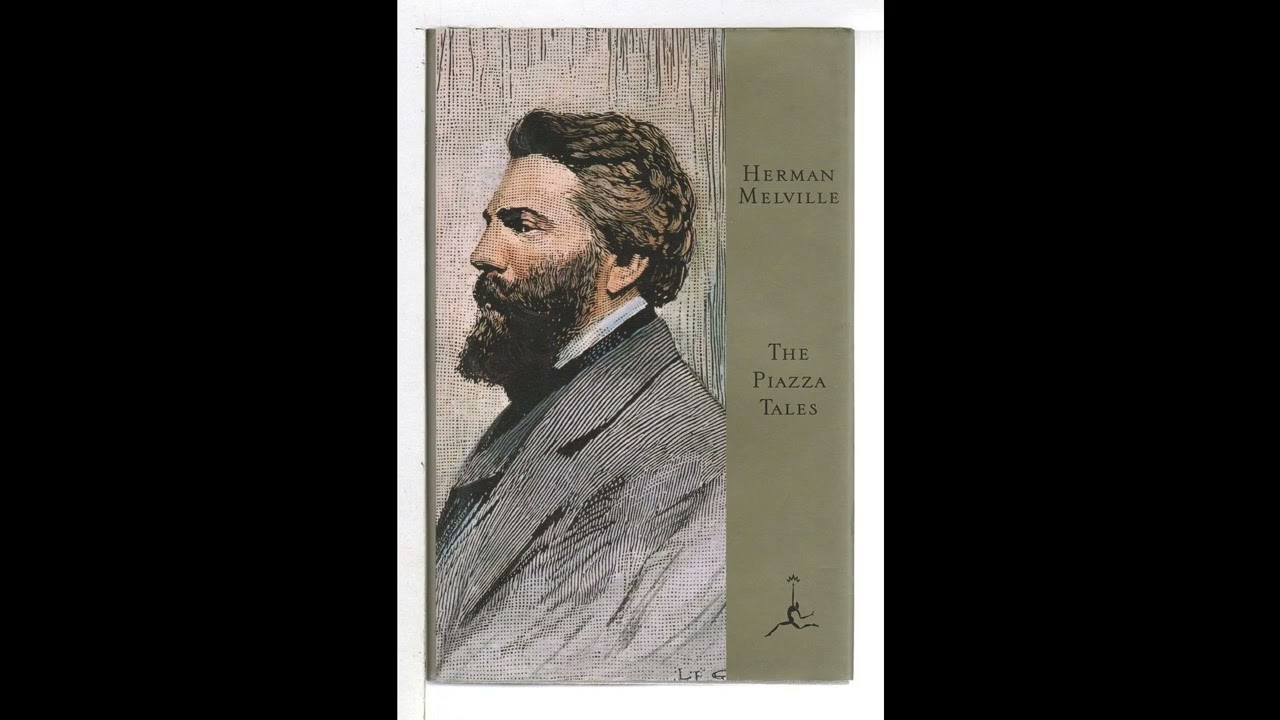
In the bustling heart of nineteenth-century Wall Street, a quiet rebellion takes root, not with shouts or grand gestures, but with three simple, perplexing words: "I would prefer not to." Herman Melville's "Bartleby, the Scrivener" plunges listeners into a world where efficiency reigns supreme, only to confront them with an enigma—a man who refuses to engage with the demands of his existence. This is a story that forces us to question the very fabric of work, compassion, and what it means to be an individual in a society that values conformity above all else. Its peculiar charm and unsettling questions resonate powerfully even today, as we grapple with productivity, mental well-being, and the challenge of understanding those who choose a different path. The story unfolds through the bemused, often exasperated, perspective of an unnamed, elderly lawyer. His Wall Street law office is a haven of measured routine, peopled by characters whose eccentricities—like Turkey, prone to afternoon inebriation and blotches, or Nippers, suffering from morning dyspepsia and perpetual office rearrangement—are at least predictable. The lawyer himself is a man of mild temperament, valuing ease and quietude, his business transactions "smooth, easy, respectable." This carefully constructed world of order is disrupted by the arrival of Bartleby, a new scrivener or copyist, hired to keep up with the increasing workload. Initially, Bartleby proves to be an exceptionally diligent worker, copying documents with silent, unwavering focus. He works through daylight and twilight, a phantom figure tirelessly penning away within the office's partitioned space. But then, a subtle shift occurs. When asked to proofread his work, Bartleby responds, "I would prefer not to." This seemingly innocuous phrase becomes his steadfast reply to every subsequent request—from copying and running errands to leaving the office altogether. The lawyer's attempts to reason, to threaten, to cajole, all meet with the same calm, unyielding refusal. Bartleby becomes a silent, immovable fixture in the office, his presence paralyzing the lawyer's operations and baffling his staff, eventually prompting the lawyer to consider drastic measures regarding his very place of business. Herman Melville, the author of this haunting tale, was born in New York City in 1819. His early life was marked by financial hardship following his father's death, which forced him to leave school and seek work. He spent several transformative years at sea, serving on a merchant ship, then a whaling ship, and finally the U.S. Navy frigate United States. These experiences profoundly shaped his perspective and provided the raw material for his early, popular adventure novels like Typee and Omoo, which drew on his time in the South Pacific. However, Melville's literary ambitions soon expanded beyond thrilling travelogues. He sought to grapple with deeper philosophical and psychological questions, culminating in his monumental whaling epic, Moby-Dick, published in 1851. Though now considered one of the greatest American novels, Moby-Dick was not a commercial or critical success in its time, leaving Melville in a period of financial strain and artistic disillusionment. "Bartleby, the Scrivener," appearing in 1853, emerged from this challenging phase of his career, reflecting perhaps his own feelings of being an outsider in a commercialized literary world. Despite the genius evident in his later works, Melville spent the last decades of his life working as a customs inspector in New York City, largely forgotten by the literary world until a widespread rediscovery of his work in the early twentieth century cemented his place as a giant of American letters. The story enacts several powerful themes. One central idea is alienation and existential detachment. Bartleby’s complete withdrawal from the expected norms of society and his refusal to participate in the most basic human interactions—even eating or leaving the office—speaks to a profound sense of isolation. His quiet, unmoving presence in the office, described almost as a part of the furniture, embodies the feeling of being a stranger in one’s own environment, a "dead letter" to the bustling world around him. Another prominent theme is passive resistance. Bartleby's signature phrase, "I would prefer not to," is not an aggressive defiance but a gentle, unwavering non-compliance. It is a refusal that subverts authority precisely because it offers no grounds for argument, no direct opposition, leaving those around him utterly disarmed and bewildered by its quiet power. Furthermore, Melville examines the dehumanizing effects of bureaucracy and capitalism. The Wall Street setting, a symbol of burgeoning commerce and financial exchange, provides a stark backdrop for Bartleby's quiet protest. The scriveners, engaged in the monotonous task of copying, are treated as mere extensions of the legal machine, their individuality secondary to their utility. Bartleby's refusal to perform this task highlights the mechanical nature of such work and the way it can strip individuals of their agency and spirit. Finally, the story probes the complexities of compassion versus indifference. The narrator, initially irritated by Bartleby's behavior, finds himself caught between his desire for efficiency and his stirrings of pity. His internal struggle to deal with Bartleby—his attempts to understand, to help, and ultimately, to distance himself—underscores the difficult choices people face when confronted with someone who simply does not fit into the established order. When Melville penned this story in the mid-nineteenth century, America was undergoing significant transformations. The nation was in the throes of rapid industrialization and urbanization, particularly in cities like New York, which saw a dramatic expansion of its financial sector. Wall Street was becoming the formidable economic engine it is today, giving rise to a new class of clerks and office workers whose lives were increasingly defined by routine and the demands of emerging corporate structures. This era fostered anxieties about conformity, the individual's place within an expanding bureaucracy, and the potential loss of personal identity in a world increasingly driven by commerce and efficiency. Melville, having experienced the harsh realities of sea life and the unforgiving nature of the literary marketplace, was keenly attuned to the psychological pressures and existential questions emerging from this changing social landscape, allowing him to craft a narrative that spoke to the hidden costs of progress. Listening to "Bartleby, the Scrivener" as an audiobook offers a unique and compelling experience, allowing the story's subtle power to unfold directly into the listener's imagination. The narrator's voice becomes crucial, capturing the lawyer's increasingly bewildered, yet ultimately compassionate, tone as he grapples with his inexplicable clerk. The deliberate pacing of the narrative allows the listener to fully absorb the slow, unsettling build of Bartleby's passive rebellion, making the quiet impact of his "I would prefer not to" resonate with greater force each time it is uttered. The audio format also highlights the stark contrast between the external bustle of Wall Street and the suffocating, static atmosphere within the office, intensifying the claustrophobic feeling as Bartleby entrenches himself further. The relatively focused length of this story, presented over several hours, makes it an ideal listen for a thoughtful afternoon, inviting reflection on its enduring questions long after the final words are spoken.
Enjoyed Bartleby, the Scrivener a Story of Wall-street? A few ways to support us
Audible & Amazon links are affiliate; we may earn a small commission at no extra cost.
About this production
Human narration by a volunteer reader from LibriVox.org, the public-domain audiobook project. LibriVox volunteers record literary works whose copyright has expired in the United States, releasing the resulting recordings into the public domain.
Bartleby, the Scrivener a Story of Wall-street by Herman Melville. The underlying text is in the U.S. public domain. We do not republish any modern copyrighted edition, translation, or commentary.
The 4K cinematic visuals accompanying this audiobook are generated by an AI image model from prompts derived from the source text. No copyrighted photos, paintings, or stock footage are used. AI generation is disclosed on every video on our YouTube channel as required by YouTube's altered/synthetic content policy.
English subtitles are transcribed from the LibriVox recording with OpenAI Whisper. Translations into the 11 other supported languages are produced by Meta's NLLB-200 neural translation model. No human translator's copyrighted translation is used.
Questions about sourcing or rights? See our DMCA & Sourcing policy or contact us.
Enjoyed this audiobook?
If you'd like to own a copy of Bartleby, the Scrivener a Story of Wall-street or hear a professionally produced edition, the links below help support free audiobook production at no extra cost to you.
As an Amazon Associate we earn from qualifying purchases. Audible / print links are affiliate.