Richard Carvel
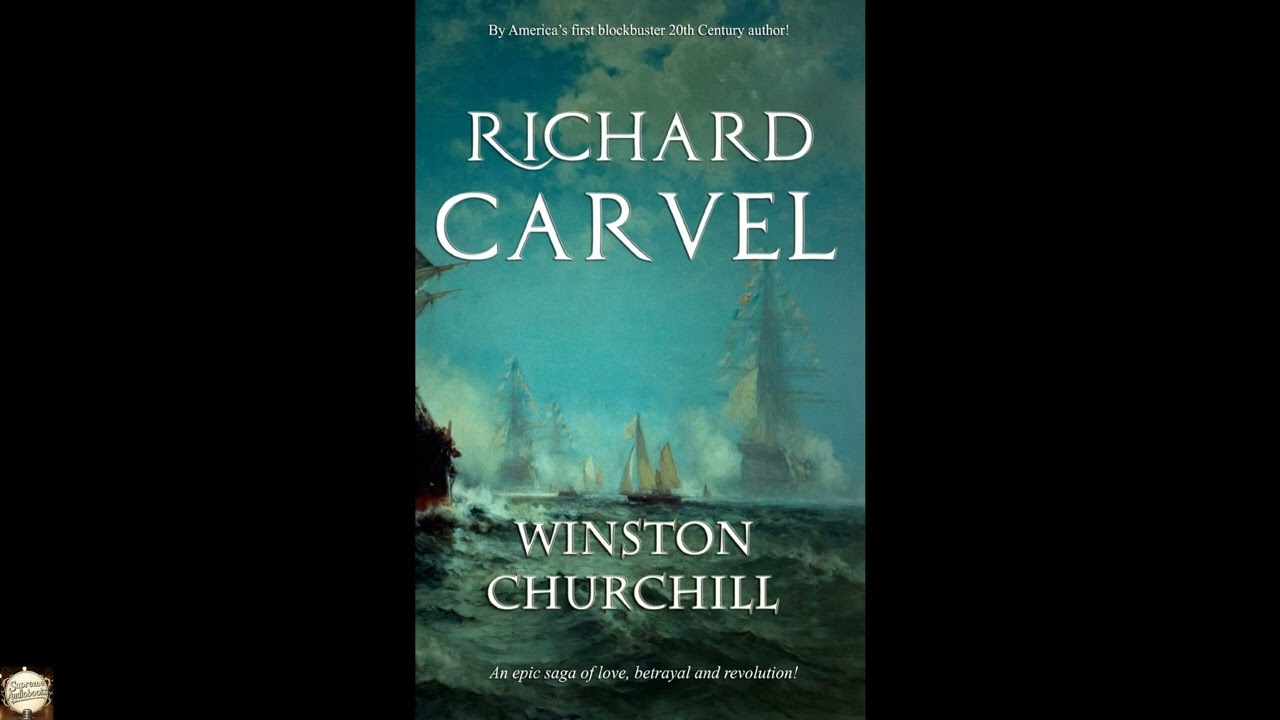
Set against the tumultuous backdrop of the American Revolution, Winston Churchill’s Richard Carvel invites listeners into a world teetering on the precipice of profound change. This sprawling historical novel, a monumental achievement in its day, captures the spirit of a nascent nation grappling with its identity, mirroring the personal trials of its protagonist as he navigates loyalty, love, and the shifting sands of political upheaval. More than a simple period piece, it remains a resonant examination of courage, justice, and the birth pangs of a republic, offering a window into the human drama that underlies grand historical movements and speaks to the enduring search for freedom and self-determination. The narrative unfolds from the idyllic yet rigid society of colonial Maryland, where young Richard Carvel, an orphaned heir, finds himself entangled in the complex web of family expectations and societal strictures. Raised under the guardianship of his stern but well-meaning grandfather, Grafton Carvel, a staunch Loyalist, Richard’s early life is marked by the privileged but confining atmosphere of his ancestral estate. His closest companion is Dorothy Manners, a spirited and independent young woman whose wit and beauty quickly win Richard’s devotion, forming the central romantic thread that weaves through the dramatic events to come. Their love, however, is complicated by the machinations of others, particularly Richard’s scheming cousin, Clarence Carvel, whose jealousy and ambition drive much of the initial conflict, threatening Richard’s inheritance and his very freedom. Richard's personal struggles quickly become intertwined with the larger political currents sweeping through the colonies. As the simmering tensions with Great Britain escalate, loyalties are tested, and friends often find themselves on opposing sides. A pivotal turn in Richard's life sees him unjustly deprived of his rights and forced to flee his home, finding refuge and adventure at sea. His experiences abroad—including a period spent in London, where he encounters prominent figures of the age and gains a broader perspective on the burgeoning conflict—shape him from an untested youth into a man of conviction. He returns to America transformed, ready to confront his adversaries and play his part in the revolutionary cause, all while striving to reclaim his rightful place and win the heart of the woman he cherishes amidst the gathering storm of war. The author of this compelling saga, Winston Churchill, was an American novelist (1871–1947), a distinction often necessary to differentiate him from his famous British contemporary, the statesman. Born in St. Louis, Missouri, Churchill graduated from the U.S. Naval Academy before turning his talents to writing, eventually becoming one of America's most popular authors at the turn of the 20th century. He settled in Cornish, New Hampshire, where he later pursued a political career, serving in the state legislature and even running for governor. His deep interest in American history, politics, and social reform infused his literary output, establishing him as a significant voice in American letters during the Progressive Era. Beyond Richard Carvel, which was his breakthrough success in 1899, Churchill penned a string of bestsellers that often combined historical detail with social commentary. His later works, such as The Crisis (1901), which examined the Civil War, and Coniston (1913), a political novel based loosely on New Hampshire politics, further cemented his reputation. Churchill was known for his meticulously researched settings and his ability to weave grand historical narratives around intimate human experiences, placing him firmly within the tradition of American historical romance novelists who sought to illuminate national character through fictionalized retellings of pivotal periods. His narratives often reflected the progressive ideals of his time, advocating for social justice and democratic principles, even when set in earlier centuries. Richard Carvel enacts several profound themes that resonate far beyond its specific historical moment. One central theme is the development of individual identity against a backdrop of societal upheaval. Richard's personal transformation, from a naïve young man constrained by his grandfather's Tory views to a self-possessed figure fighting for American independence, vividly illustrates this. For instance, his experiences abroad, particularly his time in London, broaden his understanding of British rule and colonial grievances, forcing him to question inherited loyalties and forge his own convictions, a crucial step in his maturation. Another prominent theme is the enduring power of love and loyalty in the face of adversity. Richard's unwavering devotion to Dorothy Manners, despite separations, misunderstandings, and the constant interference of his rival, serves as a steady anchor throughout his trials, highlighting the steadfastness of human connection amid chaos. Furthermore, the novel powerfully portrays the theme of social justice and the pursuit of freedom. Richard's struggle to reclaim his inheritance and clear his name mirrors the broader colonial fight against tyranny and injustice, tying his personal plight directly to the revolutionary cause. The legal battles and personal vendettas he faces underscore the arbitrary nature of power and the necessity of fighting for fundamental rights. The book’s emergence in 1899 placed it squarely within a burgeoning American literary trend: the historical romance revival. Following the economic depression of the 1890s and the recent Spanish-American War, American readers found solace and national pride in stories that revisited heroic moments in their nation's past. Authors like Churchill offered a blend of adventure, romance, and patriotic sentiment, often in reaction to the more somber realism and naturalism that had dominated earlier literary currents. This period saw a surge in popular novels drawing upon American history, celebrating foundational myths and national identity at a time when the country was asserting its presence on the world stage. Richard Carvel, with its grand sweep, engaging characters, and dramatic retelling of the American Revolution, perfectly fit this cultural appetite, offering readers an escape into a romanticized yet deeply felt version of their heritage, shaping popular perception of the nation's formative years. To experience Richard Carvel as an audiobook is to immerse oneself in a grand, sweeping narrative that benefits immensely from spoken delivery. The several hours of its duration allow ample time for the listener to become fully absorbed in the intricate world of colonial Maryland, the bustling streets of London, and the battlefields of the Revolution. A skilled narrator can breathe life into Churchill's carefully crafted dialogue, distinguishing between the refined accents of the aristocracy, the earnest tones of the patriots, and the colorful speech of common folk, enhancing the sense of period authenticity. Listen for the subtle shifts in pacing that mark moments of quiet introspection versus dramatic action, and how the narrator builds atmosphere, whether it’s the genteel calm of a colonial drawing-room or the tension of impending conflict. The spoken word allows the listener to fully appreciate the novel’s scope, the depth of its characterizations, and the rich historical detail that makes this classic tale so enduring.
Enjoyed Richard Carvel? A few ways to support us
Audible & Amazon links are affiliate; we may earn a small commission at no extra cost.
About this production
Human narration by a volunteer reader from LibriVox.org, the public-domain audiobook project. LibriVox volunteers record literary works whose copyright has expired in the United States, releasing the resulting recordings into the public domain.
Richard Carvel by Winston Churchill. The underlying text is in the U.S. public domain. We do not republish any modern copyrighted edition, translation, or commentary.
The 4K cinematic visuals accompanying this audiobook are generated by an AI image model from prompts derived from the source text. No copyrighted photos, paintings, or stock footage are used. AI generation is disclosed on every video on our YouTube channel as required by YouTube's altered/synthetic content policy.
English subtitles are transcribed from the LibriVox recording with OpenAI Whisper. Translations into the 11 other supported languages are produced by Meta's NLLB-200 neural translation model. No human translator's copyrighted translation is used.
Questions about sourcing or rights? See our DMCA & Sourcing policy or contact us.
Enjoyed this audiobook?
If you'd like to own a copy of Richard Carvel or hear a professionally produced edition, the links below help support free audiobook production at no extra cost to you.
As an Amazon Associate we earn from qualifying purchases. Audible / print links are affiliate.