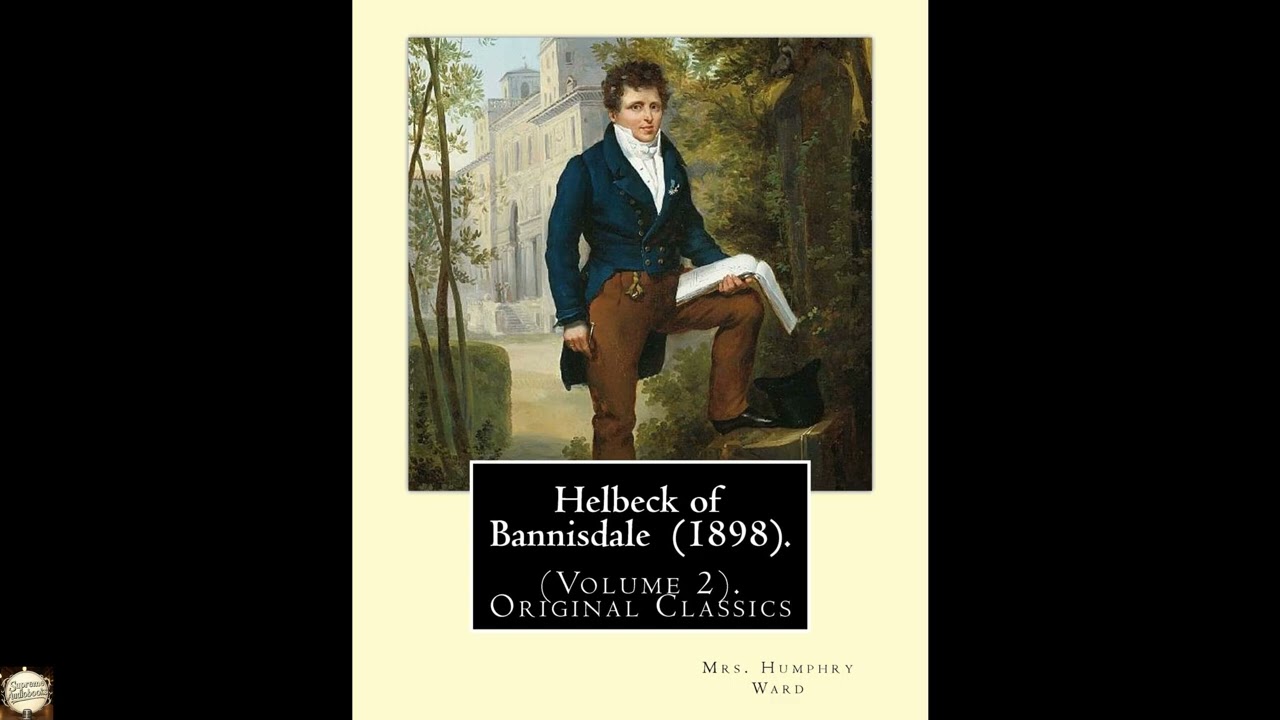
Helbeck of Bannisdale (1898). By: Mrs. Humphry Ward (Volume 2).Original Classics: H
Step into the austere yet deeply compelling world of Helbeck of Bannisdale, a profound and emotionally resonant novel from 1898 that challenges the very foundations of belief, love, and societal expectation. Mrs. Humphry Ward's powerful narrative draws listeners into a dramatic confrontation between rigid faith and burgeoning skepticism, set against the breathtaking, brooding landscape of the English Lake District. This is more than a romance; it is an incisive examination of the human spirit grappling with incompatible worldviews, a story that still echoes with urgency today as individuals navigate the complexities of identity and conviction in a rapidly changing world. It asks: can love truly bridge an unbridgeable chasm of belief, or is some ground simply too sacred for compromise? The story unfolds within the ancient, isolated walls of Bannisdale, a remote Catholic estate nestled amidst the wild fells and valleys of Cumbria. This venerable home belongs to Alan Helbeck, a man whose life is utterly defined by his unwavering devotion to his ancestral Roman Catholic faith. His existence is one of rigid observance, quiet sacrifice, and an almost monastic dedication to tradition. Into this cloistered world arrives Laura Fountain, his niece and ward, a young woman of keen intellect and independent spirit, raised by agnostic parents who imbued her with a rational, questioning mind. Laura’s presence at Bannisdale immediately creates a stark contrast—her modern, free-thinking sensibilities are a jarring counterpoint to the estate’s centuries-old rituals and steadfast beliefs. As Laura acclimatizes to the hushed rhythms and strictures of Bannisdale, a complex and unexpected attraction blossoms between her and Helbeck. Despite their profound ideological differences, a powerful emotional bond begins to form, drawing them into a forbidden love. Helbeck, deeply religious, finds himself torn between his sacred vows and his burgeoning affection for a woman whose very being represents a challenge to his faith. Laura, meanwhile, struggles to reconcile her love for Helbeck with her inability to accept his dogmatic worldview, finding herself suffocated by the religious intensity that permeates every aspect of his life and home. The novel meticulously charts their intensifying romance and the escalating internal and external pressures that threaten to tear them apart, revealing the painful sacrifices demanded by both love and belief. The author, Mary Augusta Ward—better known by her married name, Mrs. Humphry Ward—was a towering literary figure in late Victorian England. Born in 1851 into the intellectually distinguished Arnold family (she was the granddaughter of Thomas Arnold of Rugby fame and niece of poet Matthew Arnold), she inherited a formidable intellect and a deep engagement with the cultural currents of her era. Her early life in Oxford exposed her to leading thinkers and academic debates, shaping her incisive understanding of social and religious questions. Married to Humphry Ward, an art critic, she became a prolific novelist and a prominent public figure, often engaging in social reform efforts and, notably, a vocal leader of the anti-suffrage movement. Ward’s literary career began to flourish in the 1880s, gaining immense popularity with novels like Robert Elsmere (1888), which sensationally tackled issues of religious doubt and the crisis of faith. Other notable works include Marcella (1894), addressing social justice, and Lady Rose's Daughter (1908). Her novels consistently explored contemporary social and ethical dilemmas, often focusing on the struggles of individuals grappling with changing Victorian values. She positioned herself as a realist, crafting narratives that meticulously detailed the psychological landscapes of her characters and the societal forces acting upon them, earning her a significant, if somewhat dimmed after her death in 1920, place in the literary canon as a chronicler of a society in flux. Helbeck of Bannisdale compellingly enacts several vital themes, first and foremost being the intractable conflict between inherited faith and intellectual skepticism. The novel vividly illustrates this through the poignant relationship of Helbeck, who embodies an ancient, unyielding Catholicism, and Laura, the embodiment of modern, questioning thought. One powerful scene shows Laura attempting to understand the significance of a Catholic relic, only to find herself alienated by its symbolic weight, while Helbeck regards it with profound reverence, highlighting their irreconcilable perspectives. Another central theme is the nature of forbidden love and the incompatibility of deeply held values. The tender moments between Laura and Helbeck are constantly shadowed by the knowledge that their differing beliefs create an insurmountable barrier, emphasizing the pain of loving someone whose core being fundamentally opposes your own. Furthermore, the novel examines the evolving role of women in society and the demands placed upon them. Laura Fountain, with her independence and intellectual curiosity, represents the "new woman" ideal, struggling against the societal expectations that would have her conform or convert. Her resistance to abandoning her principles, even for love, underscores a growing desire for personal agency. The tension between tradition and modernity also runs through the narrative, with Bannisdale serving as a literal and metaphorical stronghold of the past, threatened by the encroaching tide of secularism and scientific thought that Laura represents. Ward uses detailed descriptions of the estate’s rituals and the intellectual debates between characters to show how these opposing forces contend for the future of individual souls and society itself. This novel emerged from a specific, potent moment in late Victorian England—a period characterized by significant cultural and intellectual upheaval. The latter half of the nineteenth century witnessed the profound impact of Darwinian science, higher criticism of the Bible, and a general erosion of traditional religious authority. This gave rise to widespread religious doubt and a vigorous public discourse concerning faith, morality, and the search for new meaning. Simultaneously, social conventions were being challenged, particularly concerning women's rights and their place within society, leading to discussions about education, work, and personal freedom. Mrs. Humphry Ward was deeply attuned to these seismic shifts, and Helbeck of Bannisdale can be understood as her literary response to these anxieties. It reflects the generational struggle between those who clung to established religious and social orders and those who embraced rationalism and a more individualistic approach to life. The novel's stark portrayal of this clash resonated profoundly with contemporary readers who were themselves grappling with these very questions, making it a timely and significant work that captured the intellectual and emotional pulse of its era. It offered a lens through which to examine the personal cost of these broader societal transformations. Listening to Helbeck of Bannisdale as an audiobook offers an immersive experience, allowing the nuanced language and emotional intensity of Ward's prose to truly unfold. A skilled narrator breathes life into Helbeck's solemn gravity, Laura's intellectual fire, and the supporting cast's diverse perspectives, making the debates and internal conflicts strikingly immediate. The length, spanning several hours, is ideal for extended listening sessions, whether during a long journey, while walking through nature, or as an engaging companion during quiet evenings. Listen for the narrator's pacing, which can subtly convey the mounting tension between the characters and the oppressive atmosphere of Bannisdale, as well as the eloquent dialogue that reveals their deeply held convictions. The audiobook format allows the listener to become fully absorbed in the story's atmospheric setting and the heart-wrenching emotional landscape, appreciating the descriptive power of Ward’s writing and the psychological depth of her unforgettable characters.
Enjoyed Helbeck of Bannisdale (1898). By: Mrs. Humphry Ward (Volume 2).Original Classics: H? A few ways to support us
Audible & Amazon links are affiliate; we may earn a small commission at no extra cost.
About this production
Human narration by a volunteer reader from LibriVox.org, the public-domain audiobook project. LibriVox volunteers record literary works whose copyright has expired in the United States, releasing the resulting recordings into the public domain.
Helbeck of Bannisdale (1898). By: Mrs. Humphry Ward (Volume 2).Original Classics: H by Mrs. Humphry Ward. The underlying text is in the U.S. public domain. We do not republish any modern copyrighted edition, translation, or commentary.
The 4K cinematic visuals accompanying this audiobook are generated by an AI image model from prompts derived from the source text. No copyrighted photos, paintings, or stock footage are used. AI generation is disclosed on every video on our YouTube channel as required by YouTube's altered/synthetic content policy.
English subtitles are transcribed from the LibriVox recording with OpenAI Whisper. Translations into the 11 other supported languages are produced by Meta's NLLB-200 neural translation model. No human translator's copyrighted translation is used.
Questions about sourcing or rights? See our DMCA & Sourcing policy or contact us.
Enjoyed this audiobook?
If you'd like to own a copy of Helbeck of Bannisdale (1898). By: Mrs. Humphry Ward (Volume 2).Original Classics: H or hear a professionally produced edition, the links below help support free audiobook production at no extra cost to you.
As an Amazon Associate we earn from qualifying purchases. Audible / print links are affiliate.