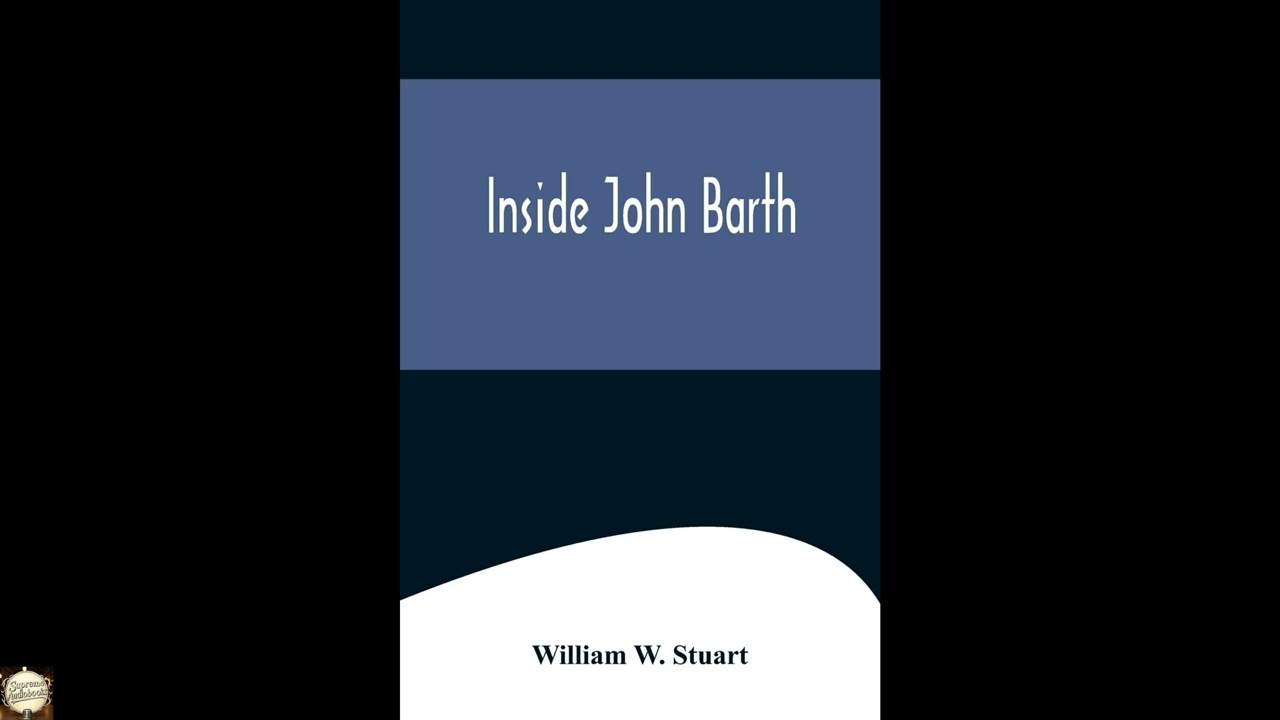
Inside John Barth
Step into the labyrinthine mind of one of America's most innovative writers with William W Stuart's "Inside John Barth." This seminal work of literary criticism offers not merely a commentary on John Barth's prodigious output, but a crucial roadmap for anyone seeking to comprehend the revolutionary shifts that reshaped American fiction in the latter half of the twentieth century. Stuart’s profound examination provides a lens through which to appreciate Barth's unique blend of intellectual rigor, linguistic play, and deep engagement with the very nature of storytelling. For anyone wrestling with the complexities of postmodern literature, or simply curious about the forces that forged a distinct literary era, this foundational study remains as vital and insightful today as it was upon its original publication, unraveling the intricate structures and philosophical underpinnings of a true literary titan. Stuart's book systematically deconstructs John Barth’s major works, moving beyond surface-level readings to reveal the intricate mechanisms at play. The author guides listeners through Barth's early, more conventional—yet still darkly philosophical—novels such as The Floating Opera and The End of the Road, highlighting the existential angst and absurd humor that would become hallmarks of his later, more overtly experimental fiction. Stuart then expertly transitions into Barth's groundbreaking postmodern period, dedicating significant attention to the sprawling historical parodies like The Sot-Weed Factor and the ambitious allegorical satire of Giles Goat-Boy. He illuminates how Barth's narratives began to self-consciously reflect on their own construction, challenging traditional notions of plot, character, and authorial voice. The analytical arc of "Inside John Barth" culminates with a meticulous examination of Barth's metafictional experiments in works such as Lost in the Funhouse and Chimera. Here, Stuart meticulously unpacks Barth's innovative use of nested narratives, self-referential commentary, and the explicit questioning of fiction's purpose in a world seemingly exhausted of new stories. Stuart doesn’t just describe these techniques; he reveals their philosophical weight and the profound intellectual questions Barth sought to pose about reality, illusion, and the artist's role in creating meaning. The "central conflict" Stuart addresses is arguably the very challenge Barth's work presents to literary critics: how does one adequately analyze and interpret fiction that deliberately resists easy categorization and continually draws attention to its own artificiality? Stuart's approach offers a compelling answer, providing clarity without diminishing the essential strangeness of Barth's vision. William W Stuart established himself as a respected voice in literary scholarship during a period of significant intellectual ferment. While specific biographical details like birth and death dates may not be widely documented, his contribution to the field of literary criticism, particularly concerning postmodern American literature, is undeniable. Stuart distinguished himself through an uncommon ability to bridge the gap between complex theoretical concepts and the practical analysis of literary texts. His methodology was often praised for its lucidity and its unwavering commitment to illuminating the author's intent and impact without resorting to overly dense academic jargon. Stuart's work on John Barth cemented his reputation as a critic who not only understood the intricacies of experimental fiction but could also articulate its importance to a broader audience of serious readers and fellow scholars. His influence is felt in subsequent generations of literary analysis, where his frameworks for understanding self-conscious narrative and textual play continue to resonate. Among the specific themes Stuart masterfully unpacks within Barth’s body of work are the “exhaustion of narrative possibilities,” metafiction, the role of myth and parody, and the concept of the unreliable narrator. Stuart demonstrates the theme of narrative exhaustion by pointing to Barth’s consistent return to ancient forms—such as the epic poem or the Arabian Nights—not merely as sources of inspiration, but as explicit acknowledgments of the difficulty of creating truly new stories. For example, Stuart might highlight how Lost in the Funhouse contains stories about writing stories, or how characters explicitly discuss the dilemma of how to proceed with their own narratives. He shows how Barth, far from surrendering to this exhaustion, transforms it into a generative force for his own unique brand of storytelling. Furthermore, Stuart deftly illustrates Barth's deployment of metafiction—fiction that openly draws attention to its status as a fabricated construct. He might cite scenes from Giles Goat-Boy where the text itself comments on its own making, or how the reader is deliberately made aware of the author's hand. This technique, Stuart argues, isn't simply a clever trick, but a profound philosophical stance questioning the nature of reality and representation. Stuart’s analysis further examines Barth’s pervasive use of parody, demonstrating how the author doesn't just mock existing genres or historical narratives, but re-animates them, revealing their inherent artifice while simultaneously investing them with new meaning. The book underscores how Barth's narrators often stand as unreliable guides, forcing the reader into an active, critical role, making the act of interpretation itself a central concern. The period in which John Barth rose to prominence, roughly from the mid-1950s through the 1970s, was a time of immense cultural and intellectual upheaval. Post-World War II disillusionment had given way to an era of questioning established norms, whether political, social, or artistic. The rise of postmodern thought challenged Enlightenment ideals of objective truth and universal meaning, fostering skepticism towards grand narratives. In the literary world, authors like Barth reacted against the perceived limitations of realism and naturalism, seeking new forms to capture the fragmentation and complexity of modern experience. This was the landscape of intellectual debates around structuralism, post-structuralism, and the very "death of the author" that Stuart’s analysis so incisively navigates, showing how Barth’s work emerged not in a vacuum, but as a direct engagement with these pressing philosophical and artistic concerns. His experimental approach was a bold declaration that the novel could still reinvent itself, even when explicitly acknowledging its own historical burdens. Listening to "Inside John Barth" as an audiobook offers a singular opportunity to absorb Stuart's intricate arguments at a comfortable pace. The spoken word allows for a deeper processing of complex theoretical concepts, transforming potentially dense academic prose into an engaging narrative of intellectual discovery. With a runtime of several hours, this allows for dedicated listening sessions where Stuart’s careful build-up of ideas can unfold naturally. Pay close attention to the narrator’s pacing and intonation, which can often illuminate the nuanced shifts in Stuart's analytical focus, whether he is building a general theoretical framework or dissecting a specific passage from Barth’s fiction. The auditory format brings a particular clarity to the discussion of narrative structures and metafictional devices, enabling the listener to internalize Stuart's insights as they might a well-delivered lecture from a trusted scholar.
Enjoyed Inside John Barth? A few ways to support us
Audible & Amazon links are affiliate; we may earn a small commission at no extra cost.
About this production
Human narration by a volunteer reader from LibriVox.org, the public-domain audiobook project. LibriVox volunteers record literary works whose copyright has expired in the United States, releasing the resulting recordings into the public domain.
Inside John Barth by William W Stuart. The underlying text is in the U.S. public domain. We do not republish any modern copyrighted edition, translation, or commentary.
The 4K cinematic visuals accompanying this audiobook are generated by an AI image model from prompts derived from the source text. No copyrighted photos, paintings, or stock footage are used. AI generation is disclosed on every video on our YouTube channel as required by YouTube's altered/synthetic content policy.
English subtitles are transcribed from the LibriVox recording with OpenAI Whisper. Translations into the 11 other supported languages are produced by Meta's NLLB-200 neural translation model. No human translator's copyrighted translation is used.
Questions about sourcing or rights? See our DMCA & Sourcing policy or contact us.
Enjoyed this audiobook?
If you'd like to own a copy of Inside John Barth or hear a professionally produced edition, the links below help support free audiobook production at no extra cost to you.
As an Amazon Associate we earn from qualifying purchases. Audible / print links are affiliate.