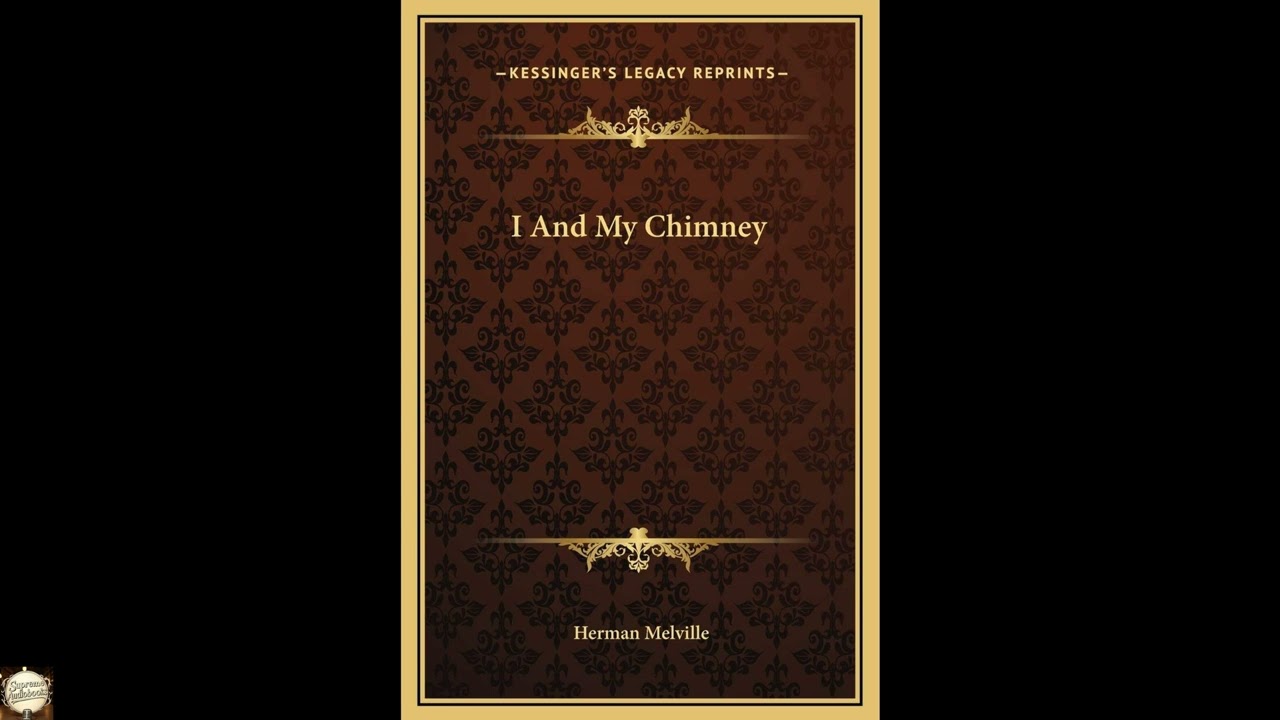
I And My Chimney
Step into the peculiar, quietly profound world of Herman Melville's "I And My Chimney," a short story that, like its namesake structure, stands as a curious monument in the landscape of American letters. First published in 1856, this understated work may lack the epic scope of Melville's whaling sagas, yet it hums with the same distinctive intelligence and a dry, often satirical wit. It offers a fascinating window into the mind of a reclusive homeowner and, perhaps, the author himself, grappling with the relentless pressures of domesticity and the stubborn, sometimes absurd, attachment to the past. Listeners today will find its subtle exploration of obsession, marital dynamics, and the hidden corners of one's own dwelling remarkably resonant, speaking to the universal impulse to guard our private worlds against external intrusion, no matter how well-meaning. The story unfolds within the confines of an old, rambling country house, the pride and obsession of its nameless narrator. Dominating the structure, both physically and metaphorically, is an enormous chimney, so vast and central that the house seems to have been built around it, rather than the other way around. This ancient, smoke-stained behemoth is the narrator's constant companion, a silent, comforting presence, and the object of his deep, almost spiritual reverence. His wife, however, a woman of practicality and, frankly, exasperation, views the colossal flue as an inconvenience, an anachronism, and a structural anomaly. She sees it as a source of drafts, wasted space, and an impediment to a more modern, efficient household. The central conflict ignites as the wife, with increasing determination, begins to plot the chimney's removal. Her campaign is a slow burn of passive-aggression and calculated maneuvers. She brings in architects and builders, disguised as friendly callers, who subtly suggest alterations. She hires a peculiar Dr. Cuticle, a "medical man" specializing in lumps and excrescences, to "diagnose" the chimney, treating it almost as a sick patient requiring radical surgery. The narrator, meanwhile, remains steadfast in his defense, inventing elaborate justifications for its preservation, even attributing a personality and a unique "soul" to the brick and mortar. The story charts this escalating domestic skirmish, a quiet battle of wills played out over an inanimate object, as the wife’s suspicions deepen about what forgotten secrets or even living entities might be concealed within the chimney's ancient depths. Herman Melville, born in New York City in 1819, began his life as the son of a successful merchant, but his family faced financial ruin early on. This abrupt downturn forced Melville to seek his fortune at sea, an experience that would profoundly shape his literary output. From an 1839 voyage as a cabin boy to Liverpool to his famed whaling trips in the early 1840s, his time among sailors, exotic islands, and the vast, indifferent ocean provided the raw material for his early, popular works. Typee (1846) and Omoo (1847) brought him initial fame with their semi-autobiographical accounts of life among South Sea islanders. However, Melville's literary ambition soon outgrew the adventure genre. His career took a dramatic turn with Moby Dick; or, The Whale (1851), a work of epic scope and profound philosophical depth. Though now considered one of the greatest American novels, it was largely misunderstood and commercially unsuccessful in its time, pushing Melville into obscurity and financial strain. He continued to write novels and short stories, including "Bartleby, the Scrivener," "Benito Cereno," and "The Encantadas," grappling with themes of good and evil, isolation, and the complexities of human nature. Later in life, he largely withdrew from the literary world, serving for many years as a customs inspector in New York and turning to poetry. His extraordinary genius was only truly recognized decades after his death in 1891, when a resurgence of interest in American literature brought his unique contributions back into the spotlight, firmly establishing him as a giant of American letters, a true innovator who challenged the conventions of his time. "I And My Chimney" enacts several fascinating themes, chief among them the idea of obsession and the human need for sanctuary. The narrator's almost fanatical devotion to his chimney transcends mere sentimentality; it becomes a symbol of his identity, his history, and his resistance to change. He describes the chimney with a tenderness usually reserved for a loved one, finding solace and identity in its steadfast presence, much like a person might cling to a deeply personal ritual or belief in the face of societal pressures. This intense fixation showcases the psychological drive to protect one's inner world. Another prominent theme is domestic conflict and the subtle power struggles within a marriage. The battle over the chimney serves as a clever proxy for the unspoken tensions between the narrator and his wife. Her relentless, almost conspiratorial efforts to remove it, and his equally stubborn defense, reveal a deep-seated clash of personalities and values. It highlights how seemingly mundane domestic issues can become battlegrounds for much larger arguments about control, tradition versus modernity, and individual autonomy within a shared life. The story also hints at the unsettling nature of hidden truths and the secrets we keep, suggesting that the chimney's obscured interior might hold something more than just soot and bricks, fueling the wife's persistent, almost paranoid, curiosity about what lies beneath the surface. The mid-19th century in America was a period of immense change and cultural ferment. When Melville penned "I And My Chimney" in 1856, the nation was hurtling towards the precipice of the Civil War, though the conflict itself had not yet erupted. This era, often called the American Renaissance, saw a blossoming of literary talent, with authors like Ralph Waldo Emerson, Henry David Thoreau, Nathaniel Hawthorne, and Walt Whitman shaping a distinctive American voice. Melville, however, often stood apart from the prevailing optimism of Transcendentalism, offering a darker, more skeptical view of human nature and society. Following the commercial disappointment of Moby Dick, Melville faced increasing financial difficulties and a dwindling readership. "I And My Chimney" emerged during this challenging period in his career, when he was turning away from grand-scale narratives to shorter, more personal, often allegorical stories published in magazines like Putnam's Monthly. These works frequently reflected his own feelings of alienation, his struggles with critical reception, and a turning inward to more domestic or psychological concerns. The story's focus on an old, perhaps outdated structure being threatened by modern sensibilities can be seen as a subtle commentary on his own position as an artist out of step with the prevailing tastes, a solitary figure guarding his unique vision against a world eager to tear it down or repurpose it. Listening to "I And My Chimney" as an audiobook offers a unique opportunity to immerse oneself in Melville's distinct prose and the story's carefully crafted atmosphere. With a runtime of several hours, a skilled narrator can bring to life the dry, observational humor and the underlying tension that builds throughout the narrative. Pay close attention to the pacing, which often mirrors the narrator's own measured, almost philosophical contemplations, punctuated by his wife's more agitated, practical interventions. The nuances of voice will be crucial in distinguishing the narrator's understated wit from the exasperation or thinly veiled malice of the other characters, particularly Dr. Cuticle and the insistent wife. The descriptive passages, particularly those detailing the chimney's grandeur and the old house's eccentricities, will paint vivid pictures for the imagination, allowing the listener to fully appreciate the story's quiet charm and the peculiar depth of its domestic conflict.
Enjoyed I And My Chimney? A few ways to support us
Audible & Amazon links are affiliate; we may earn a small commission at no extra cost.
About this production
Human narration by a volunteer reader from LibriVox.org, the public-domain audiobook project. LibriVox volunteers record literary works whose copyright has expired in the United States, releasing the resulting recordings into the public domain.
I And My Chimney by Herman Melville. The underlying text is in the U.S. public domain. We do not republish any modern copyrighted edition, translation, or commentary.
The 4K cinematic visuals accompanying this audiobook are generated by an AI image model from prompts derived from the source text. No copyrighted photos, paintings, or stock footage are used. AI generation is disclosed on every video on our YouTube channel as required by YouTube's altered/synthetic content policy.
English subtitles are transcribed from the LibriVox recording with OpenAI Whisper. Translations into the 11 other supported languages are produced by Meta's NLLB-200 neural translation model. No human translator's copyrighted translation is used.
Questions about sourcing or rights? See our DMCA & Sourcing policy or contact us.
Enjoyed this audiobook?
If you'd like to own a copy of I And My Chimney or hear a professionally produced edition, the links below help support free audiobook production at no extra cost to you.
As an Amazon Associate we earn from qualifying purchases. Audible / print links are affiliate.