Bab: A Sub-Deb
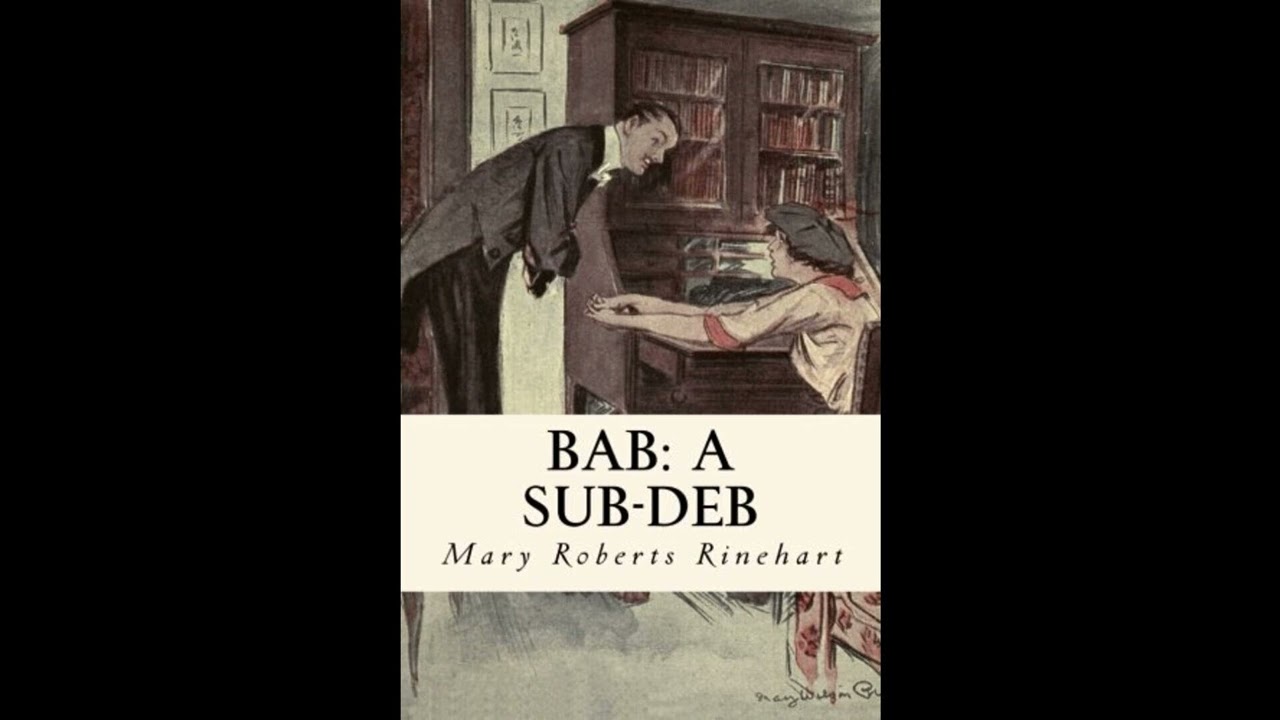
Step into the world of Bab, a spirited seventeen-year-old on the precipice of young womanhood, whose diary chronicles her often-hilarious, sometimes-heartbreaking attempts to navigate the perplexing landscape of early 20th-century social graces. "Bab: A Sub-Deb" by Mary Roberts Rinehart offers a charmingly candid glimpse into the mind of a girl desperate to shed her "sub-deb" status and embrace the glamorous life of a debutante. More than just a period piece, Bab’s earnest longing for independence, her dramatic pronouncements, and her comical missteps resonate with anyone who remembers the bewildering intensity of adolescence, making her story a delightful and surprisingly relevant listen even today. It's a reminder that the struggles and triumphs of growing up are truly universal, regardless of the era. The story unfolds through the pages of Bab’s diary, a confessional space where she records every perceived slight, every romantic hope, and every grand scheme. Living with her well-meaning but often exasperated parents, her older, more socially adept sister, and her perpetually amused brother, Bab feels perpetually overlooked. Her greatest torment is her designation as a "sub-deb," a social limbo that keeps her from the dances, the attention, and, most importantly, the boy she desperately wants to attract. Carter Brooks, a handsome young man, initially seems utterly oblivious to Bab's charms, much to her dramatic despair. Bab’s determination to win his affection, secure her social standing, and simply be taken seriously drives the narrative, leading her into a series of increasingly elaborate and often ill-fated plots. From attempting to orchestrate elaborate social events to feigning illnesses for sympathy, Bab's ingenuity knows no bounds, even if her execution often leaves much to be desired. Her schemes frequently backfire, creating comedic chaos for her family and the local community, but always in a way that highlights her underlying vulnerability and fierce desire to connect. Each diary entry reveals Bab's unique perspective on the world, colored by her youthful melodrama and an endearing self-importance. While the primary quest for social acceptance and romance propels the plot, Rinehart masterfully weaves in smaller, everyday anxieties and observations that paint a vivid picture of a young woman discovering her own voice amidst the expectations of her time. Mary Roberts Rinehart (1876-1958) stands as a towering figure in American popular literature of the early 20th century. Born in Pittsburgh, Pennsylvania, she trained as a nurse before marrying and starting a family. It was a financial crisis within her husband’s family that spurred her to begin writing seriously, publishing her first stories in 1903. Over a prolific career spanning more than half a century, Rinehart authored over fifty novels, numerous short stories, plays, and even a memoir, earning her immense popularity and significant wealth. She gained particular renown for her mysteries, often credited with pioneering the "had-I-but-known" school of detective fiction, where the narrator retrospectively recounts ominous signs. Her thrillers, like "The Circular Staircase" (1908) and "The Man in Lower Ten" (1909), cemented her reputation as a master of suspense, frequently earning her comparisons to Agatha Christie. However, Rinehart was far from a one-genre writer; her versatility extended to adventure stories, wartime journalism, and the kind of light, humorous social comedies exemplified by "Bab: A Sub-Deb." Her ability to craft engaging plots, develop relatable characters, and infuse her stories with both wit and sentiment allowed her to maintain a massive readership for decades, establishing her as one of America's most successful and beloved authors of her era. "Bab: A Sub-Deb" beautifully enacts several compelling themes that give it enduring appeal. Foremost among them is the coming-of-age experience, particularly the intense, often awkward transition from girlhood to young womanhood. Bab's struggle with her identity, her desperate wish to be seen as an adult, and her fluctuating self-esteem perfectly capture the turbulence of adolescence. For instance, her dramatic pronouncements in her diary about her unrequited love for Carter, or her despair over her mother's perceived lack of understanding, are concrete examples of this universal phase of self-discovery and emotional highs and lows. The novel also serves as a keen commentary on social expectations and gender roles for young women in the early 1900s. Bab's entire conflict stems from her "sub-deb" status, a classification that dictates her social life and opportunities. Her constant striving for a boyfriend and for acceptance into the debutante circle highlights the societal pressure on women to marry well and secure their place through social standing. Furthermore, the book manifests a gentle humor and satire, as Rinehart deftly pokes fun at the absurdities of social climbing and the often-exaggerated self-importance of youth. Bab's elaborate plans, such as her attempt to "accidentally" meet Carter at a specific location, are inherently funny precisely because they are so transparent and, to her, so gravely important. Published in 1917, "Bab: A Sub-Deb" appeared during a pivotal moment in American history. The world was gripped by the First World War, though Rinehart’s focus here remains on domestic life, offering a pleasant escape for readers from the grim realities overseas. Culturally, America was experiencing rapid change, moving away from Victorian sensibilities toward a more modern era. Women's roles in society were slowly shifting, with the suffrage movement gaining momentum and the "New Woman" ideal emerging, albeit slowly. While Bab herself isn't a political figure, her underlying yearning for independence and agency, even if expressed through the lens of social ambition, reflects the nascent stirrings of female self-determination that were bubbling beneath the surface of early 20th-century society. The popularity of such lighthearted yet insightful fiction also signaled a growing appetite among readers for stories that provided both entertainment and a nuanced look at everyday life. Listening to "Bab: A Sub-Deb" as an audiobook offers a singular experience, bringing Bab’s distinct personality and the comedic timing of Rinehart’s prose truly to life. The narration becomes Bab’s voice, allowing listeners to fully immerse themselves in her diary entries, feeling her exasperation, her crushes, and her triumphs with an immediacy that reading alone might not convey. The several hours of listening time provide the perfect accompaniment for daily commutes, household tasks, or simply relaxing with a cup of tea. Pay close attention to the narrator’s pacing and vocal inflections, which will perfectly capture Bab’s youthful drama and the understated humor of her family’s reactions. The dialogue, brimming with the charm of the era, and the overall atmosphere of a bustling, aspirational American household, are rendered with warmth and clarity, ensuring a delightful and engaging listen from start to finish.
Enjoyed Bab: A Sub-Deb? A few ways to support us
Audible & Amazon links are affiliate; we may earn a small commission at no extra cost.
About this production
Human narration by a volunteer reader from LibriVox.org, the public-domain audiobook project. LibriVox volunteers record literary works whose copyright has expired in the United States, releasing the resulting recordings into the public domain.
Bab: A Sub-Deb by Mary Roberts Rinehart. The underlying text is in the U.S. public domain. We do not republish any modern copyrighted edition, translation, or commentary.
The 4K cinematic visuals accompanying this audiobook are generated by an AI image model from prompts derived from the source text. No copyrighted photos, paintings, or stock footage are used. AI generation is disclosed on every video on our YouTube channel as required by YouTube's altered/synthetic content policy.
English subtitles are transcribed from the LibriVox recording with OpenAI Whisper. Translations into the 11 other supported languages are produced by Meta's NLLB-200 neural translation model. No human translator's copyrighted translation is used.
Questions about sourcing or rights? See our DMCA & Sourcing policy or contact us.
Enjoyed this audiobook?
If you'd like to own a copy of Bab: A Sub-Deb or hear a professionally produced edition, the links below help support free audiobook production at no extra cost to you.
As an Amazon Associate we earn from qualifying purchases. Audible / print links are affiliate.