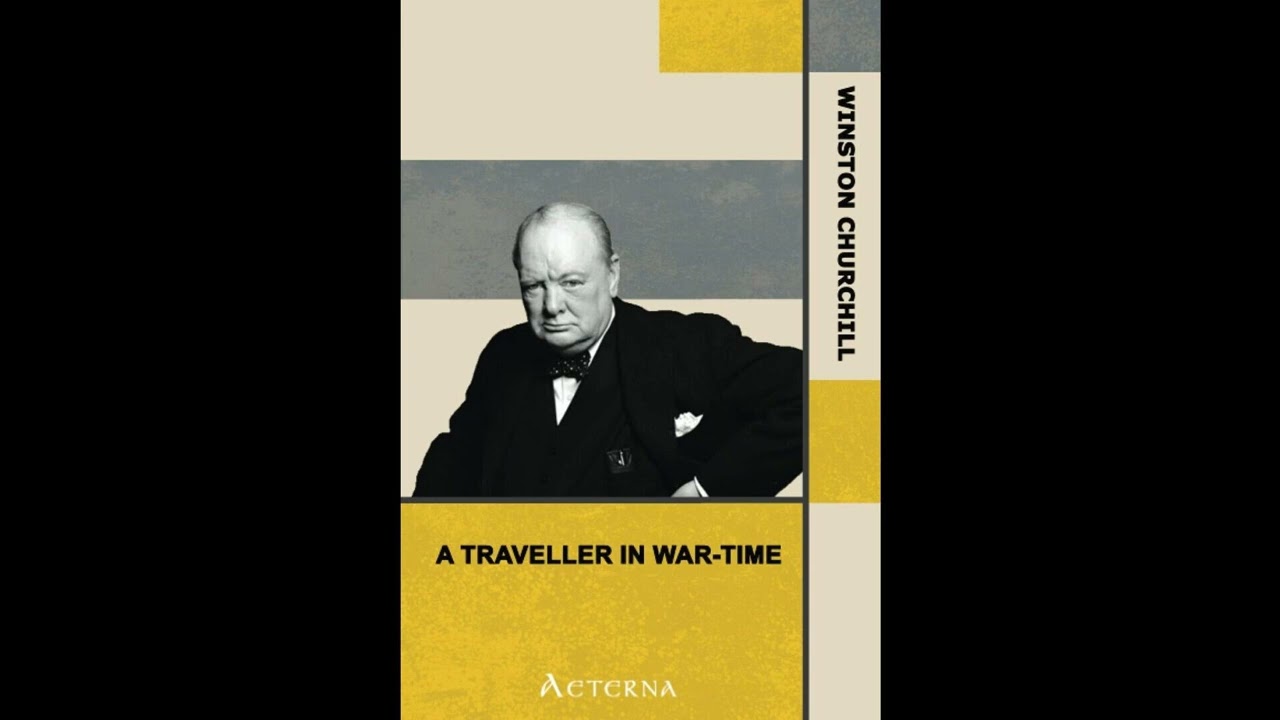
A Traveller in War-Time
Step into the tumultuous heart of the First World War through the eyes and mind of one of the twentieth century's most iconic figures: Winston Churchill. A Traveller in War-Time offers a singular view into the global conflict, not from the trenches, but from the corridors of power, the bustling neutral capital across the Atlantic, and the very fringes of the front lines. This compelling collection of essays and observations, penned during the conflict itself, provides an intimate window into the anxieties, aspirations, and brutal realities of a world irrevocably changed. For modern listeners, it is more than a historical document; it is a testament to the power of personal witness in a time of unprecedented upheaval, offering insights into leadership, diplomacy, and the human spirit under immense pressure – lessons that resonate profoundly even today. The setting for this remarkable account is the vast stage of the Great War, primarily focusing on America during its period of neutrality, and later its entry into the conflict, alongside reflections from Churchill's direct experiences on the Western Front. The main character is, of course, Churchill himself, then a prominent British politician and keen observer, whose vantage point allowed him to engage with the key players and feel the pulse of public opinion. He presents himself not as a detached analyst, but as a man deeply invested in the outcome, moving between Washington, New York, and the battlefields of Europe. His central concern is the monumental struggle unfolding, the clash of nations, and the shifting dynamics of global power, particularly the awakening giant that was the United States. Churchill recounts his visits and conversations, detailing the atmosphere in America as it grappled with its role in a European war. He describes meetings with influential figures, the palpable shift in American sentiment, and the eventual decision to enter the fray. His narrative follows the arc of his own increasing understanding and frustration with the war's demands, from the initial shock of its outbreak to the grim determination of its middle years. He records the physical devastation and moral costs, drawing the listener into the gravity of the period without resorting to sensationalism, instead providing a considered, often somber, perspective on the conflict's unfolding drama and its human toll. Winston Leonard Spencer-Churchill, born in 1874 at Blenheim Palace, was a towering figure whose life spanned significant portions of the late Victorian era, both World Wars, and the early Cold War. His career began in the military, serving in India, Sudan, and the Boer War, experiences he chronicled with characteristic flair, laying the groundwork for his literary career. He then entered politics, serving as a Member of Parliament for over sixty years and holding various cabinet positions, including First Lord of the Admiralty during the initial stages of the First World War – a role that deeply informed the perspectives found in A Traveller in War-Time. Beyond his political achievements, Churchill was a prolific writer, historian, and orator of immense skill. His literary output includes a monumental six-volume history of The Second World War, which cemented his reputation as a statesman-historian, and A History of the English-Speaking Peoples, a comprehensive four-volume work. His autobiography, My Early Life: A Roving Commission, remains a popular and insightful account of his formative years. In 1953, he was awarded the Nobel Prize in Literature "for his mastery of historical and biographical description as well as for brilliant oratory in defending exalted human values," placing him firmly among the literary giants of his age. His prose, known for its clarity, power, and elegant construction, often reflected his background as an orator, making his written words feel as if they are spoken directly to the reader. One of the prominent themes woven throughout A Traveller in War-Time is the nature of modern warfare. Churchill does not merely recount battles; he grapples with the sheer scale and unprecedented brutality of a conflict driven by industrial technology. He provides vivid observations of the desolate landscapes of the Western Front, scarred by artillery and trench lines, and reflects on the psychological toll on the soldiers caught in this grinder. For instance, his descriptions of shattered villages and the grim endurance of the common soldier bring home the war's destructive reality beyond any strategic map. Another key theme is the burden of leadership and political decision-making during a time of crisis. Churchill, having been at the heart of British wartime policy, offers insights into the dilemmas faced by statesmen, hinting at the immense weight of sending men to their deaths and the challenges of forging international alliances. His discussions of America's cautious path towards intervention exemplify the complexities of national interest versus moral obligation. The text also highlights the power of personal observation and narrative in shaping public understanding. Churchill, with his journalist's eye and politician's acumen, meticulously records details that might escape others, from the mood in a foreign capital to the subtle shifts in diplomatic discourse. His detailed letters and essays serve as a testament to the importance of first-hand accounts in comprehending vast historical events, offering a human-scale perspective on an otherwise overwhelming catastrophe. Finally, the book underscores the shifting landscape of international relations, particularly the emergence of the United States as a global power. Churchill keenly observes America's transition from isolationism to intervention, noting the profound cultural and political implications of its entry into the war and how this would redefine the balance of power for generations to come. This work emerged during a pivotal moment in global history. The First World War, spanning 1914 to 1918, was a conflict unlike any before it, shattering the established European order and ushering in an era of unprecedented technological warfare and mass casualty. Culturally and politically, the world was in flux; old empires were crumbling, and new ideologies were beginning to form. Churchill wrote these pieces not as a historian looking back, but as an active participant and eyewitness, attempting to make sense of the chaos as it unfolded. His observations were intended to inform and persuade, offering a perspective shaped by direct access to the highest levels of government and military command, yet also grounded in a keen understanding of public sentiment. It was a period where traditional literary forms were being challenged by modernism, but Churchill's prose remained rooted in a more classical, oratorical tradition, lending gravitas and authority to his wartime dispatches. Listening to A Traveller in War-Time as an audiobook offers a unique opportunity to connect directly with Churchill's distinct voice and intellectual force. His precise, authoritative prose, so often imbued with a sense of urgency and historical consequence, truly comes alive when read aloud. The several hours of listening provide ample space for immersion in the wartime atmosphere he so skillfully creates, allowing the listener to absorb the nuances of his political analysis and his vivid personal recollections at a thoughtful pace. Pay close attention to the deliberate rhythm of the narration, which mirrors Churchill's own oratorical style, lending weight to his pronouncements and reflective passages. The delivery highlights the gravitas of the period and the sincerity of Churchill's observations, transforming a historical text into a direct, engaging encounter with one of history's great minds during its most trying hour.
Enjoyed A Traveller in War-Time? A few ways to support us
Audible & Amazon links are affiliate; we may earn a small commission at no extra cost.
About this production
Human narration by a volunteer reader from LibriVox.org, the public-domain audiobook project. LibriVox volunteers record literary works whose copyright has expired in the United States, releasing the resulting recordings into the public domain.
A Traveller in War-Time by Winston Churchill. The underlying text is in the U.S. public domain. We do not republish any modern copyrighted edition, translation, or commentary.
The 4K cinematic visuals accompanying this audiobook are generated by an AI image model from prompts derived from the source text. No copyrighted photos, paintings, or stock footage are used. AI generation is disclosed on every video on our YouTube channel as required by YouTube's altered/synthetic content policy.
English subtitles are transcribed from the LibriVox recording with OpenAI Whisper. Translations into the 11 other supported languages are produced by Meta's NLLB-200 neural translation model. No human translator's copyrighted translation is used.
Questions about sourcing or rights? See our DMCA & Sourcing policy or contact us.
Enjoyed this audiobook?
If you'd like to own a copy of A Traveller in War-Time or hear a professionally produced edition, the links below help support free audiobook production at no extra cost to you.
As an Amazon Associate we earn from qualifying purchases. Audible / print links are affiliate.