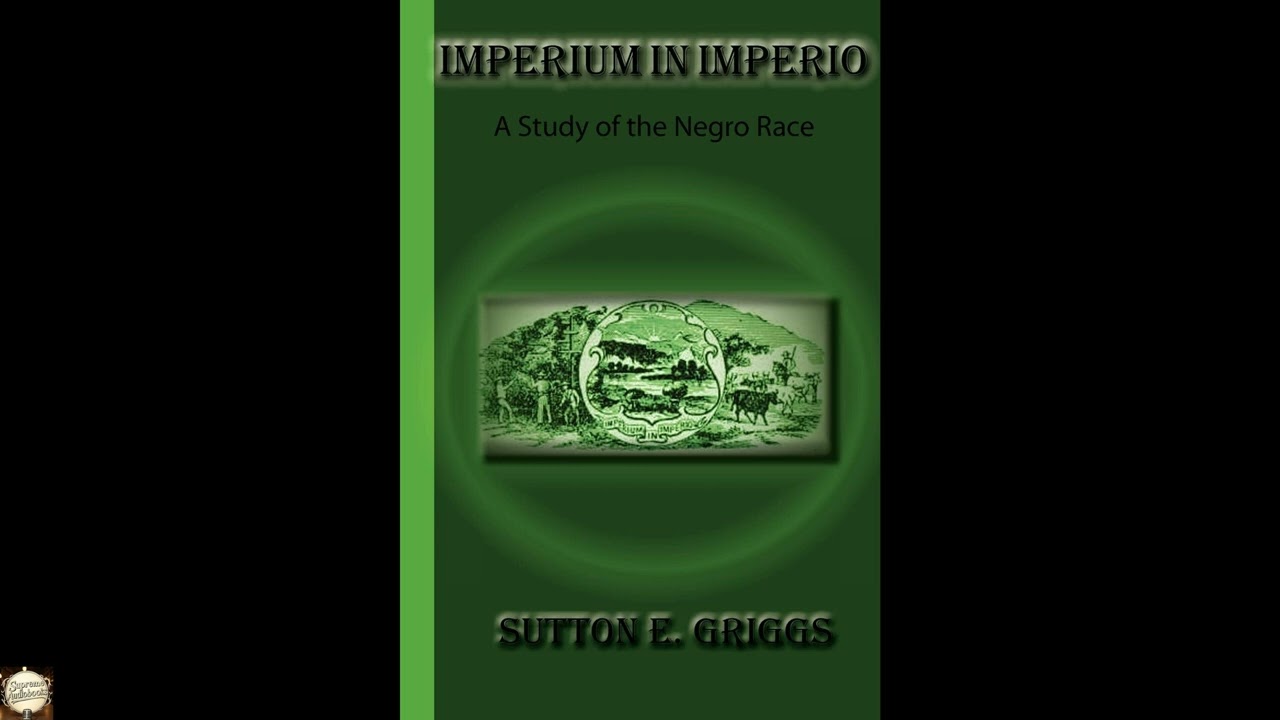
Imperium In Imperio: A Study Of The Negro Race
Sutton E. Griggs’s Imperium In Imperio: A Study Of The Negro Race, first published in 1899, presents an audacious vision of Black self-determination and resistance in post-Reconstruction America. This novel stands as a pivotal work in African American literature, not only for its compelling narrative but also for its fearless confrontation of the era’s most pressing racial injustices. It asks a powerful, uncomfortable question that remains relevant today: what extreme measures might an oppressed people consider when faced with systemic dehumanization and a society unwilling to grant them basic rights? Griggs pulls back the curtain on the fervent internal debates within the Black community at the turn of the twentieth century, forcing readers to consider the moral and strategic complexities of fighting for freedom against overwhelming odds. Listening to this story now, one can still feel the urgency and desperation that fueled its provocative premise. The story introduces us to two brilliant young Black men, Belton Piedmont and Bernard Belgrave, whose lives and ideologies stand in stark contrast. Belton, born into poverty and subjected to the harsh realities of Southern racism, navigates a world of limited opportunity with a sharp mind and a quiet, observant nature. Bernard, on the other hand, comes from a more privileged background and benefits from a unique upbringing that allows him to pass for white, giving him a different perspective on racial dynamics. Both men, despite their divergent paths, are driven by a deep commitment to the advancement of their race. They find themselves drawn to education, a pursuit that offers a glimmer of hope for liberation and influence. Their early experiences—Belton’s encounters with brutal injustice and Bernard’s navigation of a racially divided society—shape their developing philosophies and set the stage for their eventual ideological clash. As their lives intertwine, Belton and Bernard become part of a secret organization known as the Imperium in Imperio, a clandestine government-in-waiting for Black Americans. This covert society, founded on the principle of racial uplift and collective power, grapples with various strategies for achieving true equality and sovereignty. The central conflict within the novel emerges from the differing approaches advocated by Belton and Bernard as they rise through the ranks of the Imperium. Belton, driven by personal experience and a desire for peaceful, intellectual revolution, proposes a path of moral persuasion and strategic political action. Bernard, hardened by his own encounters with hypocrisy and violence, argues for a more radical, even militaristic, solution to racial oppression. The narrative builds toward a dramatic confrontation between these two men and their opposing visions for the future of the Black race, laying bare the profound dilemmas faced by those striving for justice in a hostile world. Sutton E. Griggs, born in 1872 in Texas, was a prominent Baptist minister, educator, and novelist whose life mirrored the struggles and aspirations he depicted in his fiction. The son of a formerly enslaved father who became a minister, Griggs received his education at Bishop College, a historically Black institution in Marshall, Texas. After graduating, he followed in his father's footsteps, serving as a pastor in various cities across the South, including Dallas, Nashville, and Memphis. His experiences as a Black intellectual and religious leader in the Jim Crow South deeply informed his writing, giving his novels an authentic voice and a keen insight into the social and political realities of his time. Griggs was not merely a passive observer; he was actively involved in social justice movements, using his pulpit and his pen to advocate for the rights and uplift of African Americans. Griggs stands as one of the most prolific and significant African American novelists of the late nineteenth and early twentieth centuries. Imperium In Imperio was his first novel, published when he was only 27, and it immediately established his reputation. He went on to write several other notable works, including Overshadowed (1901), Unfettered (1902), The Hindered Hand (1905), and Pointing the Way (1908). These novels consistently engaged with themes of racial injustice, Black identity, and the search for effective strategies against oppression. Often categorized as protest literature, Griggs’s work represents an important precursor to the Harlem Renaissance, laying foundational groundwork for later Black writers to further articulate the complexities of the African American experience. He wrestled with ideas that would continue to shape American thought for decades, carving out a distinct place for himself in the American literary canon. The novel is rich with significant themes, among them the critical question of racial uplift and self-determination. Griggs powerfully illustrates this through the very concept of the Imperium in Imperio, a self-governing body dedicated to the advancement of Black people, which represents a radical attempt to control destiny from within an oppressive system. The debates within this secret society—whether to pursue education and moral persuasion or armed revolution—reveal the depth of this struggle for autonomy. Another prominent theme is the idea of "double consciousness," a concept later articulated by W.E.B. Du Bois, where African Americans must view themselves through the lens of both their own identity and the prejudiced perspective of the dominant white society. Characters like Bernard Belgrave, who can "pass" for white, vividly embody this internal conflict, forced to reconcile disparate worlds and identities. Furthermore, Griggs directly addresses the role of education as a tool for empowerment and the diverging paths of leadership within the Black community. Both Belton and Bernard are highly educated men, and their intellectual capabilities are presented as key to their understanding of their race's predicament and their proposed solutions. However, their education leads them to fundamentally different conclusions regarding how to achieve justice. Belton’s call for intellectual and moral suasion highlights one philosophy, while Bernard’s advocacy for more direct, even violent, action reflects another, demonstrating the internal ideological divides among Black leaders. The narrative also examines the urgent need for justice and, conversely, the temptation for retribution against the backdrop of pervasive white supremacy. The novel forces consideration of the moral boundaries in fighting for freedom, questioning how far a people can and should go to secure their basic humanity. Imperium In Imperio emerged from a profoundly turbulent period in American history: the late nineteenth century, often called the nadir of race relations. It was published in 1899, just three years after the infamous Plessy v. Ferguson Supreme Court decision, which legalized "separate but equal" segregation and ushered in the full force of Jim Crow laws across the South. During this era, African Americans faced systemic disenfranchisement, economic exploitation, and brutal violence, including widespread lynching. This oppressive environment led to intense debates within the Black community about the most effective strategies for survival and advancement. Voices like Booker T. Washington advocated for industrial education and economic self-sufficiency, often seen as an accommodationist approach, while others championed more direct challenges to white supremacy. Griggs's novel directly participates in these crucial discussions, imagining a fictional, yet deeply resonant, response to the crushing realities of racial oppression and the desperate search for liberation. The book captured the raw frustration and the audacious dreaming prevalent in Black intellectual circles at a time when hope for conventional equality seemed dim. Listening to Imperium In Imperio as an audiobook brings an added dimension to Griggs’s powerful narrative. The unfolding of this story, with its intense ideological debates and moments of profound personal struggle, truly benefits from the nuance a skilled narrator can provide. You will hear the distinct voices of Belton and Bernard come alive, their contrasting philosophies articulated with emotional weight and conviction, giving depth to their complex characters and their arguments. The pacing of the narration can underscore the clandestine atmosphere of the secret society and the tension building toward the story's dramatic climax. Pay close attention to the dialogue, as it carries the intellectual core of the novel, revealing the hopes, frustrations, and strategic dilemmas facing a people determined to seize their own destiny. This spoken presentation allows the listener to fully absorb the urgency of Griggs's message and the historical resonance of his groundbreaking vision.
Enjoyed Imperium In Imperio: A Study Of The Negro Race? A few ways to support us
Audible & Amazon links are affiliate; we may earn a small commission at no extra cost.
About this production
Human narration by a volunteer reader from LibriVox.org, the public-domain audiobook project. LibriVox volunteers record literary works whose copyright has expired in the United States, releasing the resulting recordings into the public domain.
Imperium In Imperio: A Study Of The Negro Race by Sutton E. Griggs. The underlying text is in the U.S. public domain. We do not republish any modern copyrighted edition, translation, or commentary.
The 4K cinematic visuals accompanying this audiobook are generated by an AI image model from prompts derived from the source text. No copyrighted photos, paintings, or stock footage are used. AI generation is disclosed on every video on our YouTube channel as required by YouTube's altered/synthetic content policy.
English subtitles are transcribed from the LibriVox recording with OpenAI Whisper. Translations into the 11 other supported languages are produced by Meta's NLLB-200 neural translation model. No human translator's copyrighted translation is used.
Questions about sourcing or rights? See our DMCA & Sourcing policy or contact us.
Enjoyed this audiobook?
If you'd like to own a copy of Imperium In Imperio: A Study Of The Negro Race or hear a professionally produced edition, the links below help support free audiobook production at no extra cost to you.
As an Amazon Associate we earn from qualifying purchases. Audible / print links are affiliate.