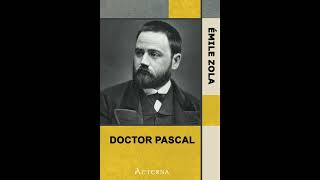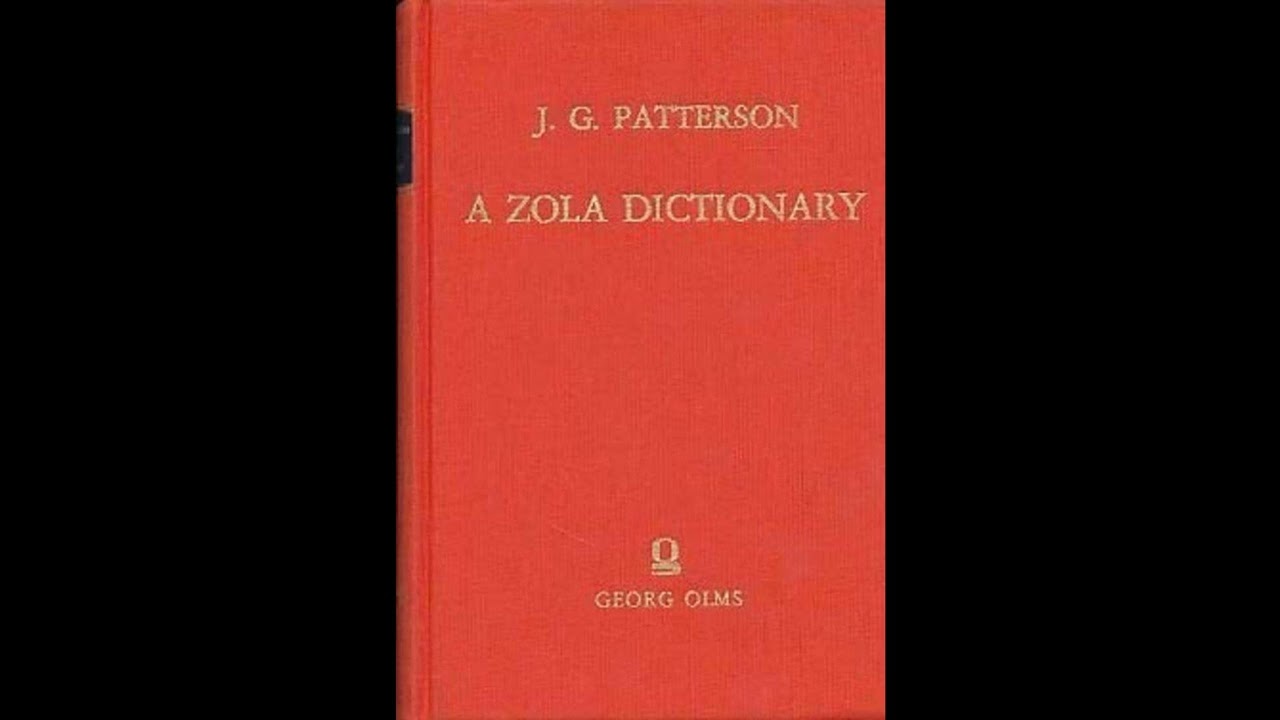
Zola Dictionary: The Characters of the Rougon-Macquart Novels of Emile Zola
Emile Zola’s monumental Rougon-Macquart cycle stands as one of literature’s most ambitious and sprawling undertakings, a natural and social history of a single family across five generations and twenty novels. This vast canvas, teeming with over a thousand characters, each meticulously crafted and interconnected, can be a formidable landscape to navigate for even the most dedicated reader. The Zola Dictionary provides the indispensable key to this intricate world, offering clarity, context, and a comprehensive guide to every named individual within Zola’s grand saga. Far more than a simple index, this essential companion transforms the experience of engaging with Zola’s work, allowing listeners to trace lineage, recall pivotal moments, and understand the complex web of relationships that define his literary universe. For anyone seeking to fully appreciate the genius and scope of Zola, or to revisit his novels with a renewed sense of order, this dictionary serves as an illuminating and necessary resource today. This audiobook does not present a single linear narrative in the traditional sense, but rather compiles the myriad lives and destinies that populate Zola’s epic Rougon-Macquart series. Imagine a living census, meticulously cataloging every person, from the most prominent members of the Rougon and Macquart branches—Adelaide Fouque’s descendants—to the most fleeting figure mentioned in a Parisian alley or a coal mine. Each entry offers a capsule biography, detailing the character’s parentage, their appearances across the different novels, their relationships, their occupations, and their ultimate fates. The "setting" for this dictionary, therefore, is the entire socio-economic landscape of France during the Second Empire, a period of immense change and often brutal reality, as depicted by Zola. The "story" of the Zola Dictionary is the story of understanding the Rougon-Macquart cycle itself. It charts the interconnectedness of fate and biology, showing how the "scientific" principles of heredity and environment play out through individuals like the ambitious Eugène Rougon, the tragic Gervaise Macquart, the voluptuous Nana, or the revolutionary Étienne Lantier. The "main characters" are, in essence, all of Zola’s creations, presented in a structured format that highlights their individual stories while simultaneously revealing their place within the larger generational narrative. The "arc" is not a dramatic one, but rather the listener’s progressive mastery of Zola’s world, moving from initial confusion to profound comprehension as the dictionary illuminates the intricate threads binding these diverse lives together. It is an intellectual adventure, guiding the listener through a labyrinth of human experience. The colossal literary project that necessitated such a dictionary was conceived and executed by Émile Zola himself, born in Paris in 1840. Zola, a towering figure of French Naturalism, began his professional life as a journalist, a career that honed his keen observational skills and his dedication to social realism. Driven by a desire to apply scientific methodology to literature, he embarked on the Rougon-Macquart series in 1871, aiming to illustrate the influence of heredity and environment on a single family under the Second French Empire, much like a scientist might observe a species. He was meticulous in his research, visiting mines for Germinal, laundries for L'Assommoir, and the stock exchange for Money, immersing himself in the realities he depicted. Zola’s life was marked by both literary success and controversy. His unflinching portrayals of working-class squalor, prostitution, and political corruption earned him both acclaim and condemnation. Beyond the Rougon-Macquart novels—which include celebrated titles such as Nana, L'Assommoir, Germinal, and The Beast in Man—Zola also penned plays, essays, and shorter fiction. His most famous non-fiction work, the open letter J'Accuse!, published in 1898, courageously exposed the injustice of the Dreyfus Affair, a scandalous political cover-up that divided French society and ultimately led to Zola’s temporary exile. His unwavering commitment to truth and social justice solidified his place not only as a literary innovator but also as a significant moral voice, and his work continues to inspire scholarly analysis and public interest, making a comprehensive character guide an invaluable tool for understanding his immense legacy. Listening to a dictionary of characters, one truly begins to appreciate the overarching themes that permeate Zola’s Rougon-Macquart cycle. The primary theme of heredity and environment takes center stage. Through the structured entries, one can easily trace the genetic predispositions and the environmental factors that shape the destinies of individuals. For instance, following the Macquart lineage, the listener encounters characters like Gervaise Macquart, the hardworking laundress in L'Assommoir whose descent into poverty and alcoholism is tragically influenced by her family’s tendencies and the brutal conditions of the Parisian slums. Conversely, her daughter Nana, the courtesan who dominates high society, embodies a different expression of these same influences, demonstrating how raw sensuality, combined with the corrupting environment of the demimonde, leads to a spectacular, albeit self-destructive, ascent. Another significant theme illuminated by this guide is social critique and the impact of industrialization. Characters from diverse social strata, such as the oppressed miners of Germinal represented by Étienne Lantier, or the ruthlessly ambitious financiers in Money, are laid bare, showcasing the vast inequalities and moral decay Zola observed in his era. The dictionary allows the listener to observe how individuals are caught in the inexorable machinery of progress and poverty, illustrating the human cost of unfettered capitalism and societal indifference. Each character entry, by situating the individual within their specific social and familial context, reinforces Zola’s powerful commentary on the forces shaping late 19th-century French society. Zola’s monumental series, which this dictionary helps to unlock, was written during a period of profound transformation in France. The Second Empire (1852-1870), established by Napoleon III, was characterized by rapid industrialization, the dramatic modernization of Paris under Baron Haussmann, and a burgeoning, often ostentatious, capitalism. Beneath the glittering surface, however, lay immense social disparities, political corruption, and the struggles of a burgeoning working class. Zola began his Rougon-Macquart novels shortly after the collapse of the Second Empire and the bloody suppression of the Paris Commune, during the nascent years of the Third Republic. It was in this turbulent context that Zola sought to create a comprehensive "natural and social history" of a family, believing that fiction could serve as a powerful lens for scientific and sociological observation. His work emerged from a desire to document and analyze the moral, physical, and psychological traits passed down through generations, and how these traits interacted with specific social environments. The Zola Dictionary, by meticulously mapping every character and their connections, provides an invaluable framework for understanding how Zola used his fictional creations to dissect the political maneuvers, the economic machinations, and the everyday lives that defined this pivotal moment in French history. Listening to the Zola Dictionary as an audiobook offers a uniquely accessible way to engage with this essential reference work. Instead of flipping through pages, one can absorb the wealth of information while commuting, exercising, or relaxing. The narrator’s clear, consistent voice brings organization and flow to the vast amount of factual detail, making the complex web of Zola’s characters less daunting. The several-hour length allows for extensive listening sessions for deep dives into specific novels or character lineages, or for shorter, focused moments to quickly recall a character’s background or relationship to others. The precise pronunciation of numerous French names and places, delivered with care, significantly enhances the experience, allowing listeners to fully immerse themselves in Zola’s world without stumbling over unfamiliar nomenclature. This spoken guide becomes an indispensable companion, enhancing appreciation for Zola’s monumental vision and making his intricate universe comprehensible and richly rewarding.
Enjoyed Zola Dictionary: The Characters of the Rougon-Macquart Novels of Emile Zola? A few ways to support us
Audible & Amazon links are affiliate; we may earn a small commission at no extra cost.
About this production
Human narration by a volunteer reader from LibriVox.org, the public-domain audiobook project. LibriVox volunteers record literary works whose copyright has expired in the United States, releasing the resulting recordings into the public domain.
Zola Dictionary: The Characters of the Rougon-Macquart Novels of Emile Zola by Émile Zola. The underlying text is in the U.S. public domain. We do not republish any modern copyrighted edition, translation, or commentary.
The 4K cinematic visuals accompanying this audiobook are generated by an AI image model from prompts derived from the source text. No copyrighted photos, paintings, or stock footage are used. AI generation is disclosed on every video on our YouTube channel as required by YouTube's altered/synthetic content policy.
English subtitles are transcribed from the LibriVox recording with OpenAI Whisper. Translations into the 11 other supported languages are produced by Meta's NLLB-200 neural translation model. No human translator's copyrighted translation is used.
Questions about sourcing or rights? See our DMCA & Sourcing policy or contact us.
Enjoyed this audiobook?
If you'd like to own a copy of Zola Dictionary: The Characters of the Rougon-Macquart Novels of Emile Zola or hear a professionally produced edition, the links below help support free audiobook production at no extra cost to you.
As an Amazon Associate we earn from qualifying purchases. Audible / print links are affiliate.