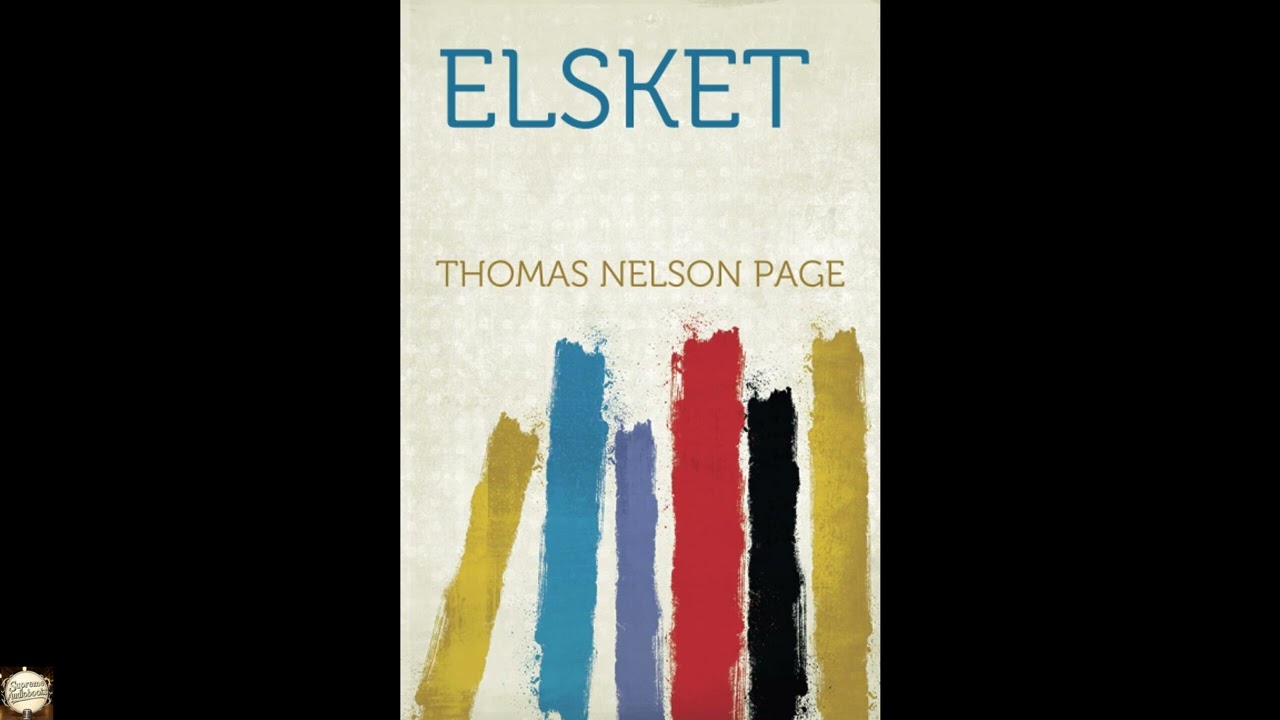
Elsket
"Elsket," a compelling if lesser-known work by Thomas Nelson Page, offers listeners an intimate window into the American South during a period of profound transformation. Set in the immediate aftermath of the Civil War, this narrative distills the grandeur, the devastation, and the persistent spirit of a society grappling with its own undoing and the daunting task of rebirth. It is a story not merely of historical record, but of human resilience and the enduring power of memory, making its insights into a pivotal era remarkably pertinent for understanding the complexities of American identity even today. Listeners will find in its pages a poignant meditation on how individuals and communities redefine themselves when the very ground beneath them has shifted irrevocably. The story unfolds on Belle Reve, a once-proud Virginia plantation now reduced to crumbling elegance and economic ruin. The sprawling estate, with its overgrown gardens and silent columns, serves as a powerful symbol of the Old South’s faded glory. Here resides Colonel Armistead Randolph, the dignified but financially broken patriarch, a figure of staunch honor who fought valiantly for the Confederacy and now finds himself struggling against an unforgiving new world. His world, defined by inherited traditions and a fixed social order, is violently disrupted by the war’s outcome. Into this setting arrives Miss Evangeline "Eva" Fairfax, a distant relative from a more adaptable branch of the Southern gentry. Young, spirited, and possessing a pragmatic streak, Eva represents a nascent generation willing to look forward, even as she respects the past. The central conflict arises from the clash between Colonel Randolph’s unwavering adherence to a bygone era and Eva’s quiet determination to carve a viable future from the wreckage. Their relationship forms the emotional core of the narrative. Colonel Randolph, haunted by the loss of his sons and the dismantling of his way of life, clings to every vestige of his former status, finding solace in recalling antebellum splendor and the imagined purity of the past. Eva, while empathetic to his grief, sees the necessity of making difficult choices—selling off land, adapting labor practices, and confronting the harsh realities of Reconstruction. Their dynamic is delicately balanced by the presence of characters like Uncle Dabney, a formerly enslaved man who remains at Belle Reve, offering a grounded perspective on the family’s struggles and the broader social changes takingfoot. The story arcs through their efforts to mend what is broken, not just financially, but spiritually, as they navigate the shifting landscapes of loyalty, love, and obligation in a society remade. Thomas Nelson Page himself was a product of the very world he so vividly portrayed. Born in Hanover County, Virginia, in 1853, he grew up amidst the tumult of the Civil War and the subsequent Reconstruction. Descended from prominent Southern families, Page’s early life imprinted upon him a deep affinity for the traditions and idealized social structures of the antebellum South. He studied law at the University of Virginia and practiced in Richmond, but his true calling emerged in literature, where he became one of the foremost proponents of the "local color" movement, focusing specifically on Virginia. His early works, such as In Ole Virginia (1887), which included the acclaimed story "Marse Chan," quickly established his reputation as a voice for the Southern perspective. Later, novels like Red Rock: A Chronicle of Reconstruction (1898) solidified his place in the literary canon, albeit often within the context of the "Lost Cause" narrative, which romanticized the pre-war South and softened the harsh realities of slavery. Page eventually moved into public service, appointed as U.S. Ambassador to Italy from 1913 to 1919, a testament to his continued influence and standing. He died in 1922, leaving behind a body of work that remains essential for understanding a significant, if often controversial, facet of American literary and historical thought. "Elsket" enacts several profound themes that resonate throughout Page’s broader work. One prominent theme is the nostalgia for the Old South and the accompanying narrative of the "Lost Cause." Colonel Randolph's persistent recollection of Belle Reve in its pre-war glory, the detailed descriptions of family heirlooms, and his longing for a social order that has vanished, all exemplify this yearning. He frequently speaks of the days when "the land was fruitful, and every soul knew its proper station," a lament for a hierarchical system that he views as having been both just and harmonious. Another key theme is honor and duty as defined by the Southern aristocratic code. Randolph, even in his impoverished state, refuses to sell certain parcels of land or entertain proposals that he deems "unfit" for his family name, prioritizing an abstract sense of honor above practical survival. Eva, too, displays a fierce sense of duty towards her ailing relative and the struggling estate, even as her interpretation of duty allows for more pragmatic action. Furthermore, the narrative grapples with the immense social and economic upheaval wrought by the war. The inability to secure reliable labor, the struggle to pay taxes on land that no longer yields profit, and the shifts in power dynamics between formerly enslaved people and their previous owners, all highlight the radical transformation of Southern society. Finally, the story touches on resilience and adaptation. While Randolph struggles to adapt, his gradual softening towards Eva's practical suggestions—like cultivating smaller, specialized crops rather than trying to restore vast cotton fields—shows a slow, painful process of coming to terms with a changed world, suggesting that survival often requires letting go of cherished but defunct ideals. The period in which Thomas Nelson Page wrote and published was a tumultuous one for America, particularly the South. The decades following the Civil War, known as Reconstruction (roughly 1865-1877), were marked by federal efforts to reintegrate the Confederate states, guarantee civil rights for formerly enslaved people, and rebuild the Southern economy. This era was fraught with political conflict, racial violence, and economic instability. Literary responses varied, but many Southern writers, Page among them, emerged to offer narratives that often romanticized the antebellum period and portrayed Reconstruction as a time of chaos and injustice imposed by outsiders. This literary movement, sometimes termed the "plantation tradition," served a cultural purpose: it helped to create a narrative that allowed white Southerners to grieve their losses, rationalize their past, and rebuild a sense of regional identity, albeit one deeply rooted in nostalgia and often dismissive of African American experiences and rights. "Elsket" can be understood as a direct reflection of this cultural moment, a story born from a desire to process profound loss and articulate a specific vision of Southern identity in the face of radical change. Listening to "Elsket" as an audiobook offers a unique opportunity to immerse oneself in the atmosphere Page so carefully constructs. The narration, given the story's setting and the author's known inclination for dialect, often brings to life the distinct cadences of Southern speech, capturing the nuances of character and emotion that might be missed in silent reading. The "several hours" run length allows for a sustained experience, letting listeners truly sink into the rhythms of the post-war South, feeling the slow pace of life on a decaying plantation and the gravity of the characters' dilemmas. Pay attention to how the narrator renders Colonel Randolph’s nostalgic monologues, imbuing them with both grandeur and pathos, contrasting with Eva’s more direct, hopeful dialogue. The descriptive passages detailing Belle Reve—its sounds, its silences, its lingering scents of jasmine and decay—are particularly enhanced by a skilled voice artist, building a palpable sense of place and time that pulls one deeper into this significant, poignant piece of American literary history.
Enjoyed Elsket? A few ways to support us
Audible & Amazon links are affiliate; we may earn a small commission at no extra cost.
About this production
Human narration by a volunteer reader from LibriVox.org, the public-domain audiobook project. LibriVox volunteers record literary works whose copyright has expired in the United States, releasing the resulting recordings into the public domain.
Elsket by Thomas Nelson Page. The underlying text is in the U.S. public domain. We do not republish any modern copyrighted edition, translation, or commentary.
The 4K cinematic visuals accompanying this audiobook are generated by an AI image model from prompts derived from the source text. No copyrighted photos, paintings, or stock footage are used. AI generation is disclosed on every video on our YouTube channel as required by YouTube's altered/synthetic content policy.
English subtitles are transcribed from the LibriVox recording with OpenAI Whisper. Translations into the 11 other supported languages are produced by Meta's NLLB-200 neural translation model. No human translator's copyrighted translation is used.
Questions about sourcing or rights? See our DMCA & Sourcing policy or contact us.
Enjoyed this audiobook?
If you'd like to own a copy of Elsket or hear a professionally produced edition, the links below help support free audiobook production at no extra cost to you.
As an Amazon Associate we earn from qualifying purchases. Audible / print links are affiliate.