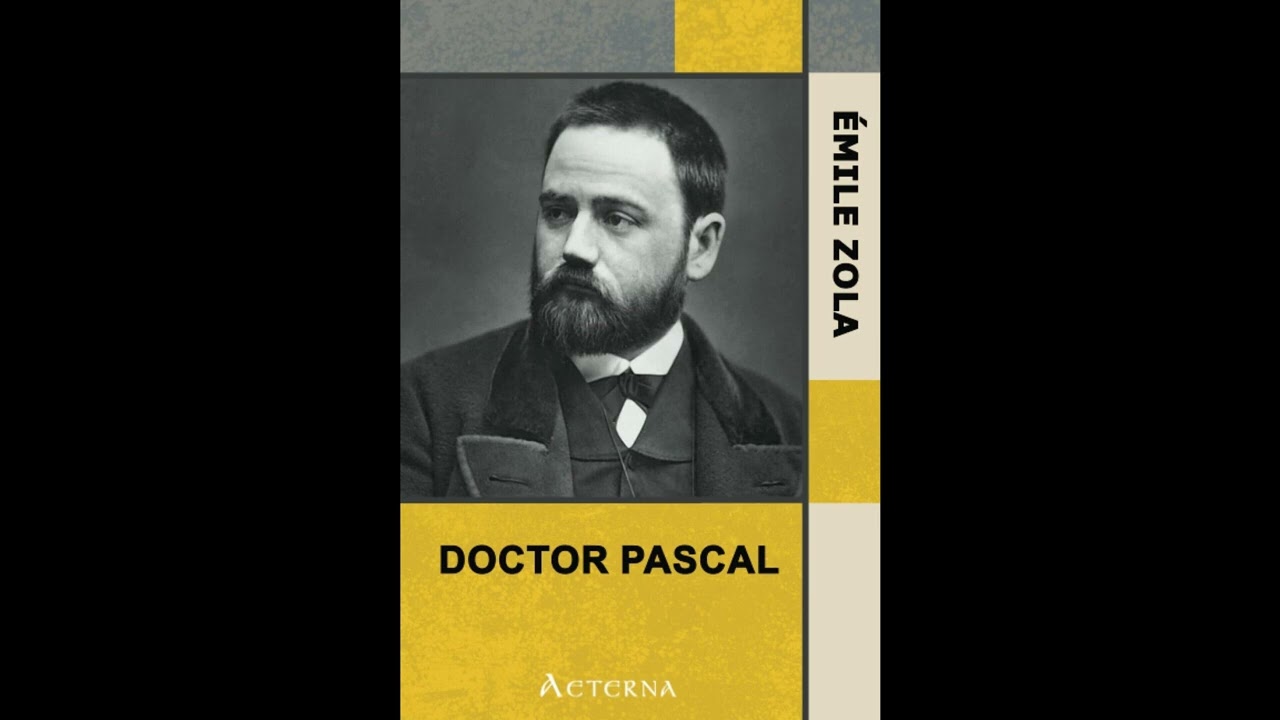
Doctor Pascal
Émile Zola's Doctor Pascal invites listeners into the heart of a monumental literary project, the final, culminating volume of the sprawling Rougon-Macquart series. Published in 1893, this novel is not merely the twentieth and last entry; it serves as a powerful summation, a scientific and emotional capstone to Zola's grand investigation into heredity, environment, and the social fabric of nineteenth-century France. Why should a modern audience care about a novel written over a century ago? Because its central concerns—the pursuit of scientific truth against the tides of ignorance, the enduring power of family secrets, and the desperate human need to understand our origins and fate—remain as urgent and resonant today as they were in Zola’s own time. It is a story about legacy, both biological and intellectual, and the profound struggle to preserve what one believes to be the truth. The story unfolds in Plassans, a fictional town in southern France, a setting familiar to readers of the Rougon-Macquart saga. Here, Dr. Pascal Rougon dedicates his life to scientific research, specifically to understanding the complex laws of heredity that have shaped his own turbulent family, the Rougons and the Macquarts. Pascal meticulously compiles a vast "tree of life," charting the genetic predispositions, the virtues and vices, the madness and genius that have manifested across generations of his kin. His quiet, scholarly existence is intertwined with that of his intelligent, artistic niece, Clotilde, who lives with him and serves as his assistant, though she initially holds a more mystical, less scientific worldview. Their lives are further complicated by the presence of Pascal's aged and fiercely protective mother, Félicité, matriarch of the Rougon family, who is terrified that her son's research will expose the shameful truths and mental frailties that she has spent a lifetime concealing, thereby sullying the family's carefully constructed reputation. The central conflict thus solidifies: Pascal's unwavering commitment to scientific truth clashes dramatically with his mother's desperate need for secrecy and her deeply ingrained superstition. As the narrative progresses, Pascal and Clotilde's intellectual partnership deepens into a profound and unconventional love, challenging societal norms and adding another layer of vulnerability to Pascal's isolated life. This burgeoning relationship becomes a sanctuary for both, a place where the rigid boundaries of scientific inquiry and human emotion blur. The doctor’s dedication to his work, however, makes him blind to the growing danger his mother poses to his life’s mission. Félicité, observing the fragility of her aging son, begins to scheme, determined to destroy the vast collection of notes, charts, and case histories that comprise Pascal’s damning genetic study, believing it to be a monstrous affront to family honor. The story builds toward a crucial confrontation over the fate of Pascal’s research—a confrontation that represents not just a family squabble, but a symbolic battle between enlightenment and willful ignorance, between the meticulous pursuit of knowledge and the comforts of convenient illusion. Émile Zola, born in Paris in 1840, grew up in Aix-en-Provence before returning to the capital to pursue a literary career that would redefine French fiction. His early life was marked by poverty and struggle, experiences that profoundly shaped his sympathetic portrayal of the working classes. A prolific journalist and novelist, Zola became the leading figure of Naturalism, a literary movement that sought to apply scientific principles—particularly those of observation and experimentation—to the novel. He believed that human behavior was largely determined by heredity and environment, and he set out to demonstrate this theory through his monumental Rougon-Macquart series, a twenty-volume chronicle of a single family under the Second Empire. Zola's commitment to social justice extended beyond his fiction. His courageous intervention in the Dreyfus Affair, a notorious political scandal involving a Jewish army officer falsely accused of treason, saw him publish the famous open letter "J'accuse!" in 1898. This act of defiance led to his conviction for libel and temporary exile, but it ultimately played a crucial role in securing Dreyfus's exoneration and underscored Zola's reputation as a fearless defender of truth and justice. His other notable works, such as Germinal, a powerful exposé of the brutal conditions in a coal mine, L'Assommoir, a stark portrayal of alcoholism in working-class Paris, and Nana, a depiction of Parisian courtesan life, cemented his place as one of France's most important and influential authors, a keen observer of society's underbelly and a relentless advocate for realism. He passed away in 1902, leaving behind a legacy that continues to provoke thought and inspire writers. Doctor Pascal confronts several powerful themes. Foremost among them is heredity and determinism, which serves as the very backbone of the Rougon-Macquart series. Pascal's "tree of life" charts, filled with generations of family ailments and psychological predispositions, concretely illustrate Zola's naturalist conviction that one's lineage profoundly influences one's destiny. He meticulously records the consumption, the madness, the flashes of genius that reappear, offering a scientific, almost clinical, view of fate. This leads directly to the theme of science versus superstition or ignorance. Pascal, in his isolated laboratory, represents the triumph of rational thought and empirical observation. His mother, Félicité, embodies the deeply entrenched fear and resistance to truth, preferring the comfortable illusion of respectability over the stark realities his research unveils. Her attempts to destroy his work are not just personal attacks but symbolic acts of intellectual suppression. Another significant theme involves love and sacrifice. The unconventional love between Pascal and Clotilde, his much younger niece, is portrayed with a tender, almost sacred intensity. It is a love that asks for profound personal sacrifice, as they defy societal norms and find solace and strength in each other amidst the isolation of Pascal's intellectual pursuit. Their relationship becomes a bulwark against the external world, particularly against Félicité's machinations. Finally, the novel grapples with legacy and mortality. Pascal's scientific notes are more than just data; they are his life's work, his testament, his desperate bid for intellectual immortality. The impending threat to these papers is thus a threat to his entire existence, a poignant reflection on how human beings strive to leave a mark and how vulnerable that legacy can be to the forces of time and opposing wills. When Doctor Pascal was published in 1893, France was deeply immersed in the Third Republic, a period characterized by political instability but also significant cultural and scientific advancement. The late nineteenth century was a time of immense intellectual ferment, marked by the ascendance of scientific thought. Darwin's theories of evolution and heredity, Pasteur's breakthroughs in microbiology, and the general enthusiasm for experimental science deeply influenced Zola. He saw literature as a means to apply these scientific principles to the study of human behavior, creating a "natural history of a family." This era also witnessed a growing disillusionment with romantic ideals and a turn towards a more unvarnished, often bleak, portrayal of reality in art and literature. Doctor Pascal, with its scientific protagonist and its unflinching look at genetic predispositions, was a direct reflection of this cultural moment, both celebrating the potential of science and warning against the dangers of denying its truths. The novel emerged as the grand conclusion to a series that had captivated and often scandalized French society for decades, offering a final, definitive statement on the pervasive power of one's biological inheritance. Listening to Doctor Pascal as an audiobook offers a unique and intimate way to experience the culmination of Zola's epic vision. The several hours of narration provide the space for the listener to fully absorb the weight of Pascal’s intellectual dedication, to follow the intricate arguments for scientific truth, and to feel the mounting tension as his life's work comes under threat. A skilled narrator can bring out the distinct voices of the characters: Pascal's reasoned, often melancholic monologues; Clotilde's evolving emotional and intellectual journey; and Félicité's manipulative, brittle pronouncements. The pacing can highlight the deliberate, almost methodical nature of Pascal's research, contrasting with the dramatic bursts of familial conflict. The spoken word allows the atmosphere of rural Plassans—its quiet scholarly corners, its domestic tensions, and its underlying currents of societal judgment—to truly settle in the imagination, allowing the listener to be fully immersed in the story’s profound reflections on legacy, truth, and the enduring human condition.
Enjoyed Doctor Pascal? A few ways to support us
Audible & Amazon links are affiliate; we may earn a small commission at no extra cost.
About this production
Human narration by a volunteer reader from LibriVox.org, the public-domain audiobook project. LibriVox volunteers record literary works whose copyright has expired in the United States, releasing the resulting recordings into the public domain.
Doctor Pascal by Émile Zola. The underlying text is in the U.S. public domain. We do not republish any modern copyrighted edition, translation, or commentary.
The 4K cinematic visuals accompanying this audiobook are generated by an AI image model from prompts derived from the source text. No copyrighted photos, paintings, or stock footage are used. AI generation is disclosed on every video on our YouTube channel as required by YouTube's altered/synthetic content policy.
English subtitles are transcribed from the LibriVox recording with OpenAI Whisper. Translations into the 11 other supported languages are produced by Meta's NLLB-200 neural translation model. No human translator's copyrighted translation is used.
Questions about sourcing or rights? See our DMCA & Sourcing policy or contact us.
View 10 famous quotes from this book →
Enjoyed this audiobook?
If you'd like to own a copy of Doctor Pascal or hear a professionally produced edition, the links below help support free audiobook production at no extra cost to you.
As an Amazon Associate we earn from qualifying purchases. Audible / print links are affiliate.