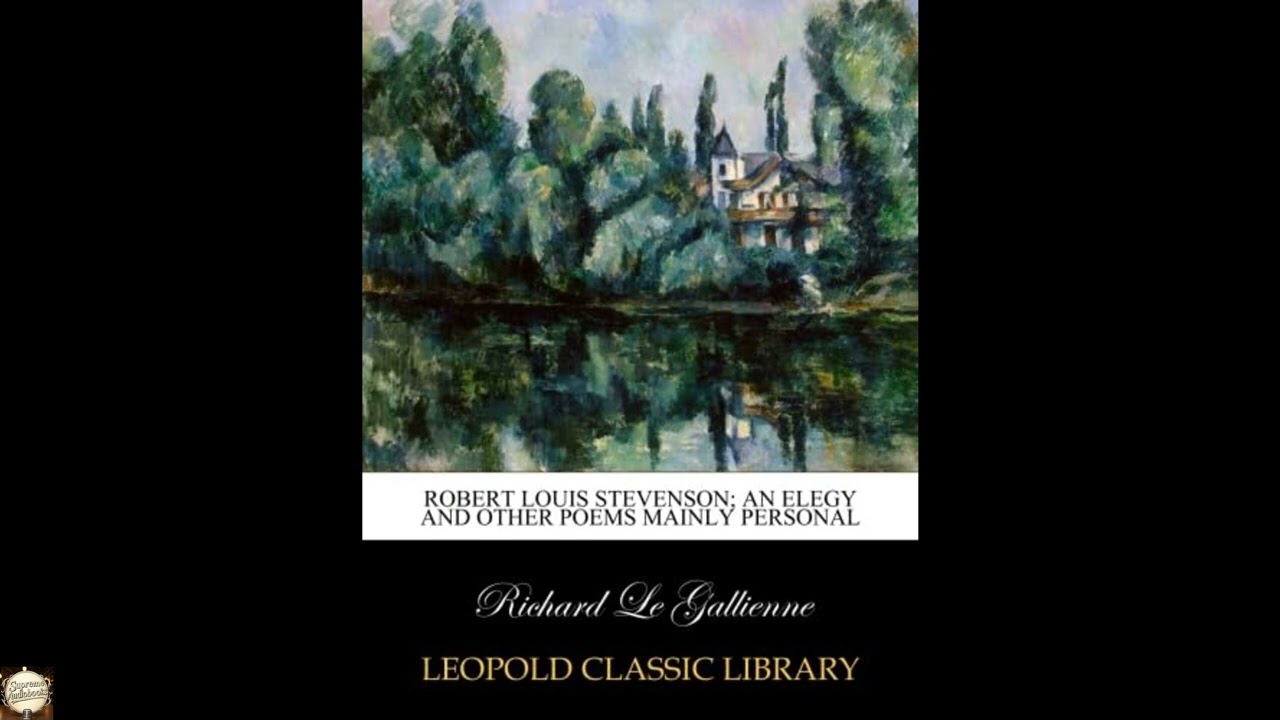
Robert Louis Stevenson; an elegy and other poems mainly personal
The echo of a great writer's passing can profoundly resonate through the literary world, inspiring new creation. "Robert Louis Stevenson; an elegy and other poems mainly personal" by Richard Le Gall offers just such an arresting moment—a collection centered on a deeply felt memorial to a beloved contemporary, augmented by intimate verses. This is a live expression of grief, admiration, and artistic solidarity. For anyone interested in the emotional core of literature, the power of friendship, or how artists commemorate one another, Le Gallienne’s work stands as a poignant reminder that even titans can fall, and the human response to loss remains a universal theme, rendered with exquisite late Victorian sensitivity. At its core, this collection holds the titular "Elegy" for Robert Louis Stevenson, a sustained lament forming its emotional backbone. The narrative here concerns a poet’s mind grappling with profound absence. News of Stevenson's untimely death sent shockwaves through a generation who adored his adventurous spirit and luminous prose. Le Gallienne’s elegy captures the initial disbelief and sorrow, painting a vivid picture of this loss. The verses unfold a public mourning that feels intensely personal, chronicling grief through reflective stanzas invoking Stevenson’s character, his works, and the void he left behind. The poet becomes a vessel for communal sorrow, channeling the era’s collective lament for a writer whose imagination had transported so many. Beyond this central lament, the collection broadens its scope with "other poems mainly personal," serving as an introspective counterpoint. Here, focus on Stevenson recedes, allowing Le Gallienne’s own voice to emerge, yet an underlying current of mortality, beauty, and memory persists. These verses concern quiet contemplation, observations of nature, reflections on love and loss, and the ephemeral quality of human experience. While distinct in subject, they resonate with the elegy's sentiment, often touching upon transient beauty and the search for meaning in a constantly shifting world. Together, the collection forms a poetic memoir of a specific historical moment, filtered through a sensitive artistic lens. Richard Le Gallienne, born in Liverpool, England, in 1866, was a figure steeped in the literary movements of the fin de siècle, a period marked by refinement and melancholic decadence. A poet, essayist, and critic, he quickly became associated with the Aesthetic movement, championing "art for art’s sake" alongside contemporaries like Oscar Wilde. Le Gallienne’s early life was marked by a bohemian spirit and dedication to literature, leading him to abandon accountancy for a creative path. He was a familiar presence in London's literary circles, contributing to influential periodicals like The Yellow Book and The Savoy, which led new artistic sensibilities. Throughout his prolific career, Le Gallienne authored numerous volumes of poetry, prose, and criticism. His notable works include The Religion of a Literary Man, articulating his artistic philosophy, and Prose Fancies, showcasing his elegant style. He also published novels and undertook translations, famously a popular version of the Rubaiyat of Omar Khayyam. Le Gallienne’s life was as colorful as his prose, involving multiple marriages and residences across England, the United States, and France. He remained a dedicated man of letters until his death in 1947, bridging the ornate sensibilities of the late Victorian era and the burgeoning modernist movement. The collection demonstrates several key themes that resonated deeply in the late nineteenth century and continue to speak to listeners. Foremost is grief and remembrance. The "Elegy" provides a direct, moving example, confronting the raw pain of loss while celebrating the departed’s enduring achievements. The poem serves as a literary monument, etching Stevenson's impact into collective memory, suggesting art provides solace and a means of preserving what death attempts to erase. The poet grapples with a life cut short, yet finds affirmation in the legacy Stevenson left behind, transforming sorrow into a lasting tribute. Another significant theme is artistic legacy and immortality. Le Gallienne, in memorializing Stevenson, implicitly considers his own place within letters. The elegy asserts the power of words to confer immortality upon both subject and poet. The "personal" poems often touch upon the beauty of fleeting moments and the desire to capture them in verse, extending their existence. This introspection highlights personal reflection and the fin de siècle sensibility. Le Gallienne's verses reveal a sensitive soul attuned to both human emotion and life's quiet details, showcasing the era’s blend of melancholy, reverence for beauty, and a poignant awareness of transition. "Robert Louis Stevenson; an elegy and other poems mainly personal" emerges directly from the distinctive cultural and literary atmosphere of the late Victorian era, the fin de siècle. This was a period marked by profound social change, industrialization, and a pervasive sense of transition. Within the literary world, a noticeable shift occurred away from earlier Victorian moralistic earnestness. Instead, writers and artists gravitated towards movements like Aestheticism, prioritizing beauty and sensory experience, asserting "art for art’s sake." The death of Robert Louis Stevenson in 1894 was a particularly significant event within this context. Stevenson was not just a successful novelist; he was a beloved literary figure whose passing was felt deeply. Le Gallienne's elegy exemplifies how artists of the time processed such a loss within this evolving literary landscape. Listening to "Robert Louis Stevenson; an elegy and other poems mainly personal" as an audiobook offers a singular opportunity to connect with the inherent musicality and emotional depth of Le Gallienne's verse. Poetry is intended to be heard, and a skilled narrator can illuminate rhythms, rhymes, and subtle inflections missed on the silent page. Over several hours, listeners immerse themselves in the carefully chosen language and nuanced emotional states. The narration guides one through the solemnity of the elegy and the delicate beauty of the personal verses, bringing forth the distinct mood of the late nineteenth century. This auditory experience transforms the static text into a living performance, fostering deeper appreciation for the poet's craft and the profound sentiments expressed.
Enjoyed Robert Louis Stevenson; an elegy and other poems mainly personal? A few ways to support us
Audible & Amazon links are affiliate; we may earn a small commission at no extra cost.
About this production
Human narration by a volunteer reader from LibriVox.org, the public-domain audiobook project. LibriVox volunteers record literary works whose copyright has expired in the United States, releasing the resulting recordings into the public domain.
Robert Louis Stevenson; an elegy and other poems mainly personal by Richard Le Gall. The underlying text is in the U.S. public domain. We do not republish any modern copyrighted edition, translation, or commentary.
The 4K cinematic visuals accompanying this audiobook are generated by an AI image model from prompts derived from the source text. No copyrighted photos, paintings, or stock footage are used. AI generation is disclosed on every video on our YouTube channel as required by YouTube's altered/synthetic content policy.
English subtitles are transcribed from the LibriVox recording with OpenAI Whisper. Translations into the 11 other supported languages are produced by Meta's NLLB-200 neural translation model. No human translator's copyrighted translation is used.
Questions about sourcing or rights? See our DMCA & Sourcing policy or contact us.
Enjoyed this audiobook?
If you'd like to own a copy of Robert Louis Stevenson; an elegy and other poems mainly personal or hear a professionally produced edition, the links below help support free audiobook production at no extra cost to you.
As an Amazon Associate we earn from qualifying purchases. Audible / print links are affiliate.