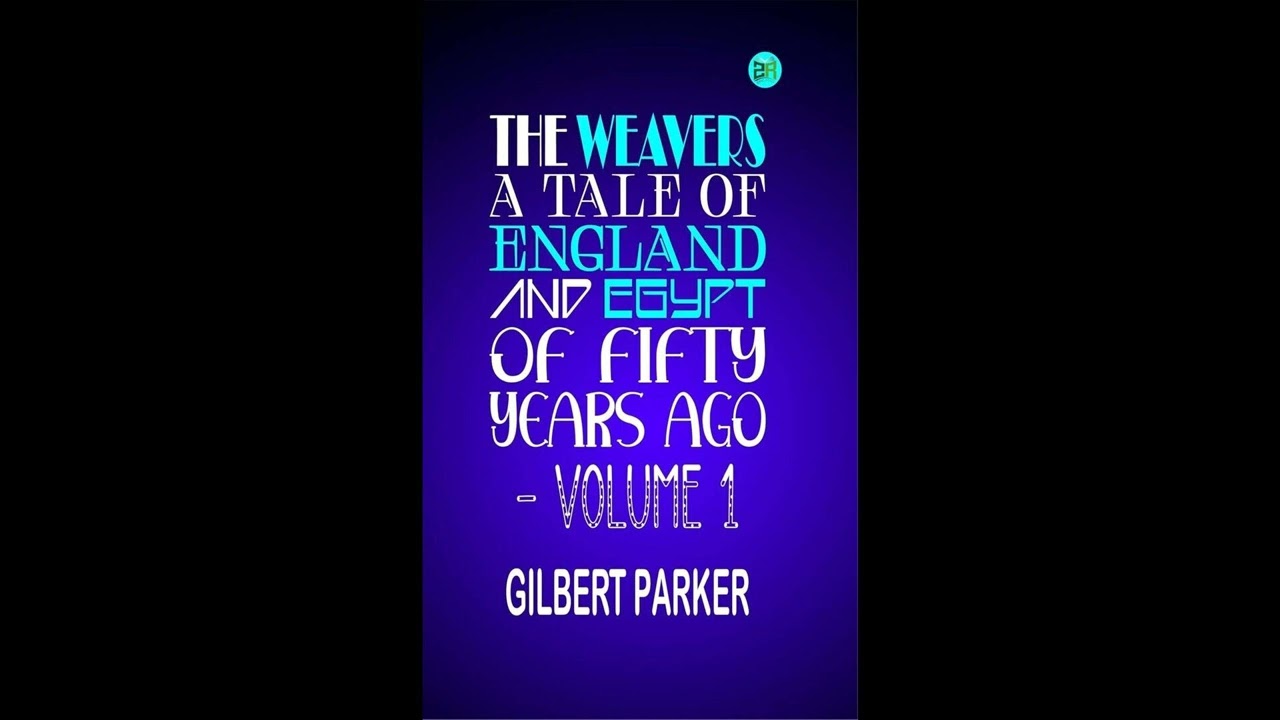
The Weavers: a tale of England and Egypt of fifty years ago - Volume 1- Full Audiobook
Step into a world poised on the precipice of profound change, where the whirring of power looms in England echoes the whispers of revolution across Egyptian sands. The Weavers: a tale of England and Egypt of fifty years ago - Volume 1 is more than just a historical novel; it is a resonant echo from a bygone era, offering a lens through which to view the foundational tensions that shaped the modern world. Though its author remains a mystery, the sheer power of its narrative, its unflinching gaze at social injustice, and its deeply human characters continue to speak to the struggles for dignity, fairness, and understanding that persist to this day. This audiobook brings to life a forgotten classic, inviting listeners to immerse themselves in a sprawling story that connects seemingly disparate corners of the British Empire, revealing the invisible threads that bound them together, for better or worse. The story unfolds in two distinct yet interconnected realms. In the industrial heartland of Victorian England, we meet the Ashworth family, whose lives are inextricably bound to the textile mills of Lancashire. Young Thomas Ashworth, an earnest and idealistic weaver, dreams of a better life for his fellow workers, chafing under the harsh conditions and meager wages imposed by the mill owners. His sister, Eleanor, finds her own quiet rebellion in her love for literature and her growing awareness of the inequalities surrounding them. Their father, a seasoned but weary craftsman, struggles to maintain hope and provide for his family in an age where tradition is rapidly being swallowed by the relentless march of industrial progress. The narrative meticulously details the relentless rhythm of the factories, the stifling air, and the constant threat of poverty, painting a stark picture of the working-class experience in the mid-nineteenth century. Meanwhile, a parallel narrative unfolds in the sun-drenched, ancient land of Egypt, approximately fifty years prior to the book's implied publication around the turn of the twentieth century. Here, the story follows Ahmed, a young fellah — a peasant farmer — whose village life is being increasingly disrupted by external forces, particularly the growing influence of European powers and the ambitious projects of the Khedives. Ahmed witnesses firsthand the imposition of new agricultural practices, the growing debt to foreign entities, and the slow erosion of traditional ways of life under the guise of modernization. As the volume progresses, the subtle but undeniable connections between the two worlds begin to emerge: the cotton harvested by Ahmed's community in Egypt feeds the very looms where Thomas Ashworth toils in England, creating a powerful, if often unacknowledged, chain of dependency and consequence. The central conflict thus solidifies as the struggle for survival and self-determination against the overwhelming forces of colonial expansion and industrial capitalism. The anonymity of The Weavers adds a layer of intriguing depth to its existence. Unlike many works of its period, which were often tied to the reputations or political agendas of known literary figures, this novel emerges almost as a voice from the collective unconscious of its time. It is a testament to the power of observation and narrative craft that a work of such historical and social resonance could appear without an authorial name attached, suggesting perhaps that the story itself, with its focus on the lives of ordinary people caught in extraordinary circumstances, was deemed more important than any individual claim to its creation. This detachment from a specific biographical context allows the narrative to speak with an almost raw authenticity, unburdened by preconceptions about its creator. It stands as a significant example of how powerful social commentary and engaging storytelling can transcend individual recognition, becoming a poignant document of an era. The text illuminates several compelling themes. One central concern is the relentless march of industrialization and its profound impact on human lives. Through the Ashworth family's experiences, the book vividly depicts the dehumanizing aspects of factory labor, the displacement of skilled artisans by machines, and the burgeoning social divides between the wealthy industrialists and the impoverished working class. For instance, a particularly poignant scene details Thomas's quiet despair as he watches an old handloom weaver, whose craft has been made obsolete, begging for scraps outside the mill gates. A second powerful theme is colonialism and its far-reaching effects. In Egypt, Ahmed's community faces the insidious encroachment of foreign influence, which, while promising progress, ultimately strips away their autonomy and exploits their resources. The introduction of cash crops like cotton, driven by European demand, is shown to disrupt the traditional agricultural cycles and foster economic vulnerability. Furthermore, the novel thoughtfully examines the theme of cultural clash and identity. As British influence expands in Egypt, the story portrays the subtle and overt tensions arising from differing customs, beliefs, and power dynamics. Ahmed's internal conflict between adopting new ways for survival and preserving his heritage is palpable, highlighted in a scene where he struggles with the decision to plant cotton instead of traditional food crops, knowing it will make his village dependent on foreign markets. Finally, the novel touches upon the nascent stirrings of social justice and resistance. Thomas's quiet conversations with his fellow workers about forming a union, though fraught with danger, symbolize the awakening consciousness of the working class and their growing desire for collective action and a more equitable society. The era in which The Weavers is set and was likely written was one of immense global transformation. The mid-nineteenth century witnessed the peak of the Industrial Revolution in Britain, leading to unprecedented economic growth but also creating vast social inequalities and fueling the demand for raw materials from abroad. Concurrently, the British Empire was expanding its influence across the globe, with Egypt becoming a vital strategic point due to its location and the construction of the Suez Canal. This period saw the formalization of colonial structures, the rise of international trade networks, and the beginnings of organized labor movements. The novel emerged at a time when questions of empire, class, and social reform were central to public discourse, and its dual narrative allows it to directly engage with these pressing issues from multiple perspectives, providing a panoramic view of the interconnected forces shaping the world. Listening to The Weavers: Volume 1 as an audiobook offers a unique and immersive way to experience this powerful narrative. The production brings the historical settings to life through skilled narration, distinguishing the bustling, gritty atmosphere of industrial England from the ancient, sun-baked landscapes of Egypt. A strong performance can lend individual voices and distinct accents to the array of characters, from the earnest British weavers to the resilient Egyptian villagers, allowing their personal struggles and triumphs to resonate with greater immediacy. The length of several hours provides ample time to settle into the expansive story, letting the nuanced dialogue and descriptive prose unfold at a comfortable pace. Pay close attention to the shifting tones and subtle inflections in the performance, which can greatly enhance the understanding of the deep emotional currents running through this compelling and historically significant work.
Enjoyed The Weavers: a tale of England and Egypt of fifty years ago - Volume 1- Full Audiobook? A few ways to support us
Audible & Amazon links are affiliate; we may earn a small commission at no extra cost.
About this production
Human narration by a volunteer reader from LibriVox.org, the public-domain audiobook project. LibriVox volunteers record literary works whose copyright has expired in the United States, releasing the resulting recordings into the public domain.
The Weavers: a tale of England and Egypt of fifty years ago - Volume 1- Full Audiobook by Gilbert Parker. The underlying text is in the U.S. public domain. We do not republish any modern copyrighted edition, translation, or commentary.
The 4K cinematic visuals accompanying this audiobook are generated by an AI image model from prompts derived from the source text. No copyrighted photos, paintings, or stock footage are used. AI generation is disclosed on every video on our YouTube channel as required by YouTube's altered/synthetic content policy.
English subtitles are transcribed from the LibriVox recording with OpenAI Whisper. Translations into the 11 other supported languages are produced by Meta's NLLB-200 neural translation model. No human translator's copyrighted translation is used.
Questions about sourcing or rights? See our DMCA & Sourcing policy or contact us.
Enjoyed this audiobook?
If you'd like to own a copy of The Weavers: a tale of England and Egypt of fifty years ago - Volume 1- Full Audiobook or hear a professionally produced edition, the links below help support free audiobook production at no extra cost to you.
As an Amazon Associate we earn from qualifying purchases. Audible / print links are affiliate.