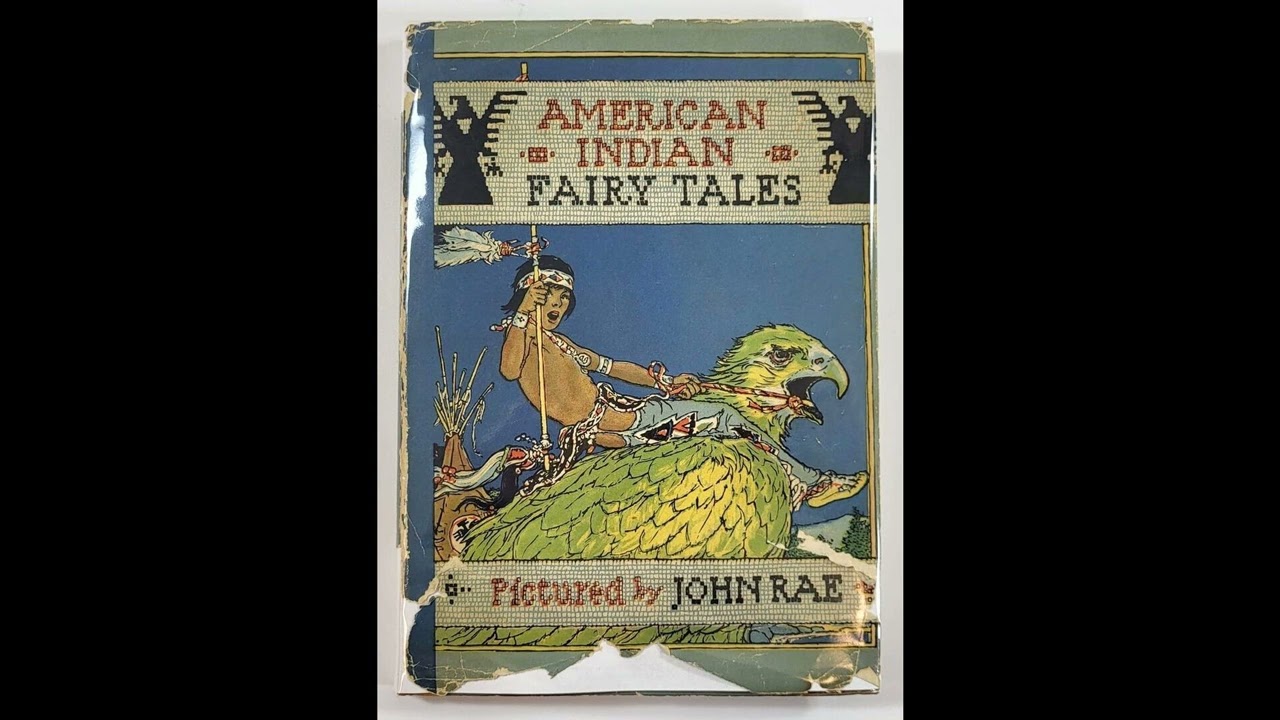
American Indian fairy tales
The whispers of ancient winds across vast plains, the rustle of leaves in primeval forests, and the murmur of wise rivers – these are the voices that animate American Indian Fairy Tales, as retold by W. T. Larned. Far more than simple bedtime stories, this collection opens a doorway into the rich spiritual and cultural heritage of indigenous peoples across the North American continent. It offers a vital connection to storytelling traditions that predate European settlement, presenting tales that explain the natural world, illuminate human character, and convey profound wisdom. For anyone seeking to understand the foundational narratives of a land steeped in millennia of human experience, or simply to marvel at the enduring power of imagination, this book remains a compelling and essential listen today, bridging the past with our present understanding. Within these pages, listeners will encounter a pantheon of characters as diverse and potent as the landscapes they inhabit. Stories spring from the camps of the Algonquin, the pueblos of the Zuni, the lodges of the Sioux, and many other nations, each bringing its own unique flavor and worldview. The typical settings for these narratives are the boundless wilds – dense forests, shimmering lakes, towering mountains, and the endless sky – realms where the boundary between the mundane and the spiritual is wonderfully fluid. Main characters often include animal-people, such as the cunning Coyote, the wise Bear, the playful Rabbit, or the majestic Eagle, who frequently embody human traits and demonstrate both virtues and vices. Humans, too, figure prominently: brave young warriors, resourceful maidens, powerful shamans, and revered elders, all navigating a world imbued with spiritual presence. The central conflict in many of these tales often revolves around explaining a natural phenomenon, teaching a moral lesson, or depicting a heroic feat. Listeners will find narratives that explain why the sky is blue, how the stars were placed, or why certain animals behave as they do. Other stories focus on tests of courage and wisdom, where protagonists must outwit monstrous beings, overcome personal flaws, or undertake perilous quests to save their community. While each tale stands alone, they collectively present an arc of understanding, illustrating how various peoples made sense of their world, their place within it, and the importance of balance and respect for all living things. These narratives often underscore the consequences of greed or pride, and celebrate humility, bravery, and communal harmony. W. T. Larned, the skilled reteller of these traditional stories, was an American journalist and writer born in 1866. A keen observer of popular culture and a thoughtful editor, Larned spent a significant part of his career working for The Bellman, a respected weekly literary magazine based in Minneapolis. His work there undoubtedly honed his ability to craft engaging prose and understand what resonated with a broad audience. While he did not conduct original anthropological fieldwork, Larned possessed a talent for adapting existing collections of folklore into accessible and appealing narratives, particularly for younger readers. His contribution, therefore, lies not in discovery, but in the careful art of presentation. Larned sought to share these previously less-known stories with a wider American public, transforming scholarly texts and ethnographic notes into lively, readable fairy tales. Beyond American Indian Fairy Tales, which was published around 1921, he also penned Fairy Tales from France in 1926, further demonstrating his dedication to bringing global folklore to English-speaking audiences. Larned's place in the literary tradition is as a popularizer, a bridge-builder who ensured that the beauty and wisdom embedded in traditional narratives could reach beyond academic circles and inspire the imaginations of a new generation. He represents a cohort of early 20th-century writers who recognized the intrinsic value of preserving and disseminating cultural heritage through storytelling. The tales gathered in this collection enact several potent themes, chief among them the profound connection to nature. Nearly every story uses the natural world as its primary stage and its characters, showing how rivers, mountains, animals, and weather are not merely backdrops but active participants imbued with spirit and meaning. For example, many narratives explain the origins of specific animals or natural features, illustrating a deep respect and intimacy with the environment, where human actions are often weighed against their impact on the greater ecosystem. Another recurring theme is transformation, where characters frequently change form—humans into animals, or vice versa, and spirits manifesting in physical guises. This fluid reality speaks to a worldview where all life is interconnected and change is a fundamental aspect of existence, often serving as a metaphor for personal growth or the cyclical nature of life. The collection also foregrounds the role of trickster figures, such as Coyote or Raven, whose mischievous actions, while often causing chaos, invariably lead to unexpected creation or the impartation of crucial lessons. These figures embody a complex morality, showing that wisdom can emerge from folly and that the world's order often arises from a touch of irreverence. Finally, a significant theme is the emphasis on moral wisdom and community values. Many stories are cautionary tales, illustrating the negative consequences of selfishness, pride, or disobedience, while others celebrate virtues like generosity, courage, and perseverance. They often highlight the importance of listening to elders, respecting tradition, and understanding one's place within the larger fabric of family and tribe, underscoring collective well-being over individual desire. When American Indian Fairy Tales was published, the United States was in a period of intense cultural introspection and evolving understanding of its own history. The early 20th century saw a burgeoning interest in anthropology and the systematic collection of folklore from various cultures worldwide. Scholars like Franz Boas were actively documenting Native American languages and oral traditions, recognizing the urgent need to preserve these narratives in the face of rapid societal change. Simultaneously, there was a growing market for children's literature, with publishers keen to offer stories that were both entertaining and educational. Larned's work emerged from this confluence. It reflected a broader cultural movement to record and appreciate indigenous traditions, even if presented through a lens often simplified for a mainstream, often juvenile, audience. It also arrived during a complex time for Native Americans themselves, marked by ongoing pressures of assimilation alongside nascent efforts to assert cultural identity. This book, therefore, represents an early effort to introduce these rich narrative traditions to a wider American public, attempting to bridge cultural divides through the universal appeal of storytelling. It was a step towards recognizing the foundational myths of the continent's first peoples, ensuring their stories would continue to resonate, even in a transformed world. Listening to American Indian Fairy Tales as an audiobook offers a unique and deeply fitting experience. These stories were born of oral tradition, passed down through generations around campfires and in community gatherings, their power often residing in the cadence of the storyteller's voice. The narration allows these tales to reclaim their original form, enabling the listener to absorb the rhythms, the subtle shifts in tone, and the dramatic pauses that are essential to their impact. With several hours of content, this collection provides ample opportunity to immerse oneself fully, allowing the listener to visualize the vast landscapes and the expressive characters without the visual interruption of turning pages. The performance of a skilled narrator can evoke the wind's lament, the trickster's chuckle, or the hero's determined voice, creating an atmospheric connection that brings these ancient narratives vividly into the present moment. This format encourages a contemplative engagement, allowing the wisdom and wonder embedded in each story to unfurl at a natural, resonant pace.
Enjoyed American Indian fairy tales? A few ways to support us
Audible & Amazon links are affiliate; we may earn a small commission at no extra cost.
About this production
Human narration by a volunteer reader from LibriVox.org, the public-domain audiobook project. LibriVox volunteers record literary works whose copyright has expired in the United States, releasing the resulting recordings into the public domain.
American Indian fairy tales by Retold By W. T. Larned. The underlying text is in the U.S. public domain. We do not republish any modern copyrighted edition, translation, or commentary.
The 4K cinematic visuals accompanying this audiobook are generated by an AI image model from prompts derived from the source text. No copyrighted photos, paintings, or stock footage are used. AI generation is disclosed on every video on our YouTube channel as required by YouTube's altered/synthetic content policy.
English subtitles are transcribed from the LibriVox recording with OpenAI Whisper. Translations into the 11 other supported languages are produced by Meta's NLLB-200 neural translation model. No human translator's copyrighted translation is used.
Questions about sourcing or rights? See our DMCA & Sourcing policy or contact us.
Enjoyed this audiobook?
If you'd like to own a copy of American Indian fairy tales or hear a professionally produced edition, the links below help support free audiobook production at no extra cost to you.
As an Amazon Associate we earn from qualifying purchases. Audible / print links are affiliate.