The Prince
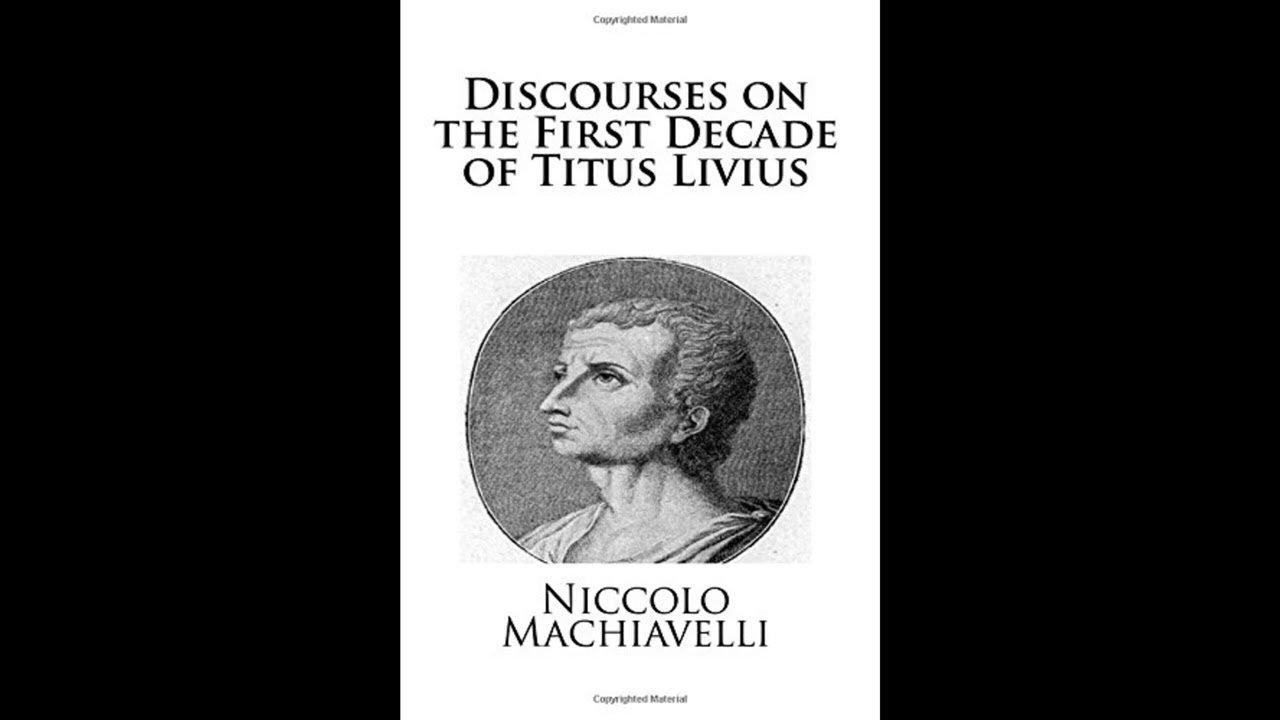
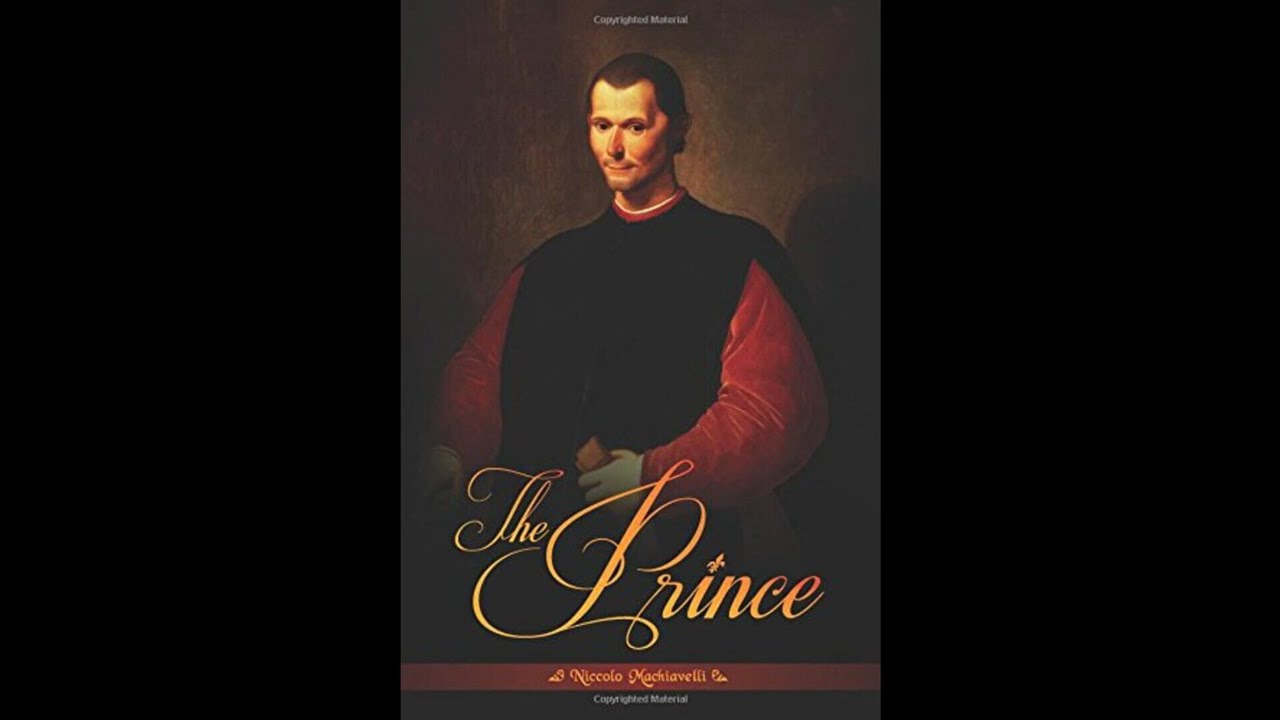
Few books have sparked as much debate, misunderstanding, and grudging admiration across centuries as Niccolo Machiavelli's The Prince. Written in the early sixteenth century, this compact treatise offers a brutally candid assessment of how political power is truly acquired, maintained, and lost. It cuts through moralizing rhetoric to reveal the unvarnished mechanics of statecraft, challenging assumptions about ethics, leadership, and human nature that persist to this day. Listening to this work means confronting a perspective that continues to inform political thought and strategy, forcing us to consider the stark realities often hidden beneath the surface of public life. For anyone interested in the levers of influence, the nature of governance, or the enduring struggle for control, The Prince remains an indispensable, if unsettling, guide. Machiavelli’s slim volume presents itself as a practical instruction manual for a new prince — that is, a ruler of a recently established state or one who has newly seized power. The book opens by classifying different kinds of principalities, distinguishing between hereditary rule, mixed principalities, and those newly acquired through arms or fortune. He meticulously details the unique challenges each type of state presents, from managing rebellious subjects to neutralizing rival powers. The arc of Machiavelli’s argument moves from the foundational acquisition of power to the specific qualities a ruler must cultivate to ensure its longevity. He systematically addresses military organization, emphasizing the crucial role of a state’s own forces over mercenary armies, and offers stark advice on the proper use of cruelty and clemency. The treatise then shifts focus to the character and conduct of the prince himself. Machiavelli controversially argues that a prince must often appear virtuous, even if he cannot always act virtuously. He delves into topics such as liberality versus parsimony, and whether it is more advantageous for a ruler to be loved or feared—concluding, famously, that while both are desirable, being feared is ultimately safer. He scrutinizes the importance of keeping one’s word, when deception is necessary, and how a prince ought to avoid hatred and contempt from his subjects. The work culminates in a passionate plea for a strong leader to unite Italy and liberate it from foreign domination, grounding his pragmatic advice in a profound patriotism and a vision for his homeland's future. Niccolo Machiavelli was born in Florence, Italy, in 1469, during the vibrant era of the Renaissance. His life unfolded against a backdrop of intense political change and instability across the Italian peninsula. For fourteen years, beginning in 1498, he served the Florentine Republic as a senior official, holding positions that allowed him to conduct diplomatic missions to the courts of France, Germany, and the Papacy. These experiences provided him with firsthand observation of powerful rulers like Cesare Borgia, whose ruthless efficiency in consolidating power deeply influenced Machiavelli’s political thinking. His diplomatic efforts and administrative duties made him intimately familiar with the complexities of statecraft and the constant struggle for power among competing city-states and foreign powers. However, the return of the powerful Medici family to Florence in 1512 marked a sharp downturn in Machiavelli's fortunes. The Republic was overthrown, and Machiavelli, suspected of conspiracy, was arrested, tortured, and subsequently exiled from public life to his family estate outside Florence. It was during this period of enforced retirement, between 1513 and 1514, that he penned The Prince, pouring his practical knowledge and observations into its pages. Though The Prince is his most famous work, he also wrote Discourses on Livy, a longer, more republican-leaning treatise on governance, as well as a history of Florence and the satirical play Mandragola. Machiavelli passed away in 1527, having cemented his place as a seminal figure in political philosophy, whose name would become synonymous with a particular brand of pragmatic, often amoral, realism. At its core, The Prince wrestles with several enduring themes, chief among them the stark concept of Realpolitik—the idea that politics should be based on practical considerations rather than ideological or moral ones. Machiavelli illustrates this by arguing that a prince must learn "not to be good" when circumstances demand it, prioritizing the stability and security of the state above individual moral rectitude. For instance, he suggests that a prince should be willing to break promises if doing so serves the greater good of his principality, demonstrating that political success often requires a detachment from traditional ethical constraints. He also dissects the interplay of virtù and fortuna. Virtù, for Machiavelli, is not moral virtue but a prince’s prowess, skill, and decisive action—the ability to adapt to circumstances and seize opportunities. Fortuna, on the other hand, represents luck or fate, the unpredictable events that can either hinder or aid a ruler. He uses the metaphor of a river in flood to explain fortuna, arguing that while one cannot control the flood, a prudent prince builds dikes and dams in times of calm to mitigate its destructive force. Another significant theme is Machiavelli’s often cynical view of human nature. He presumes that people are inherently self-interested, fickle, and ungrateful, and a wise prince must govern with this understanding. This perspective underpins his advice that it is safer for a ruler to be feared than loved, because fear provides a more reliable basis for loyalty than affection, which can dissipate quickly. He also emphasizes the importance of appearance over reality, advising princes to cultivate a public image of piety, integrity, and mercy, even if their actions behind the scenes must be anything but. The historical significance of The Prince lies in its radical departure from classical and medieval political philosophy, which typically grounded governance in divine law or moral virtue. Machiavelli stripped politics down to its bare essentials, analyzing power as a secular and human phenomenon. The Prince emerged from a period of intense political fragmentation and constant warfare in fifteenth and sixteenth-century Italy. The Italian peninsula was not a unified nation but a collection of independent city-states—such as Florence, Venice, Milan, and Naples—alongside the Papal States, all vying for power and often forming shifting alliances. This volatile environment was exacerbated by the interventions of more powerful foreign states like France and Spain, which frequently invaded Italy, further destabilizing the region. Machiavelli witnessed firsthand the brutal effectiveness of figures like Cesare Borgia, who, despite his controversial methods, managed to carve out a significant territory in central Italy. This backdrop of instability, the fragility of republics, and the urgent need for strong, decisive leadership to resist foreign incursions profoundly shaped Machiavelli's arguments. He sought to provide a manual for a leader who could navigate this dangerous world, prioritize the state's survival, and perhaps even unify Italy. Listening to The Prince as an audiobook offers a unique way to engage with its potent arguments. The direct, almost pedagogical tone of Machiavelli's prose lends itself perfectly to the spoken word, allowing the listener to absorb the forceful logic and often shocking implications of his advice. A skilled narrator brings clarity to Machiavelli’s systematic breakdown of power dynamics, making complex historical references and strategic points easier to follow than on the page. The several hours of listening time provide ample opportunity for focused contemplation, allowing the listener to unpack each principle, consider its historical examples, and reflect on its contemporary relevance without interruption. The pacing and voice of the narration can highlight the precision of Machiavelli’s language and underscore the stark, almost dispassionate nature of his observations, making the experience both intellectually stimulating and thought-provoking.
Enjoyed The Prince? A few ways to support us
Audible & Amazon links are affiliate; we may earn a small commission at no extra cost.
About this production
Human narration by a volunteer reader from LibriVox.org, the public-domain audiobook project. LibriVox volunteers record literary works whose copyright has expired in the United States, releasing the resulting recordings into the public domain.
The Prince by Niccolo Machiavelli. The underlying text is in the U.S. public domain. We do not republish any modern copyrighted edition, translation, or commentary.
The 4K cinematic visuals accompanying this audiobook are generated by an AI image model from prompts derived from the source text. No copyrighted photos, paintings, or stock footage are used. AI generation is disclosed on every video on our YouTube channel as required by YouTube's altered/synthetic content policy.
English subtitles are transcribed from the LibriVox recording with OpenAI Whisper. Translations into the 11 other supported languages are produced by Meta's NLLB-200 neural translation model. No human translator's copyrighted translation is used.
Questions about sourcing or rights? See our DMCA & Sourcing policy or contact us.
Enjoyed this audiobook?
If you'd like to own a copy of The Prince or hear a professionally produced edition, the links below help support free audiobook production at no extra cost to you.
As an Amazon Associate we earn from qualifying purchases. Audible / print links are affiliate.