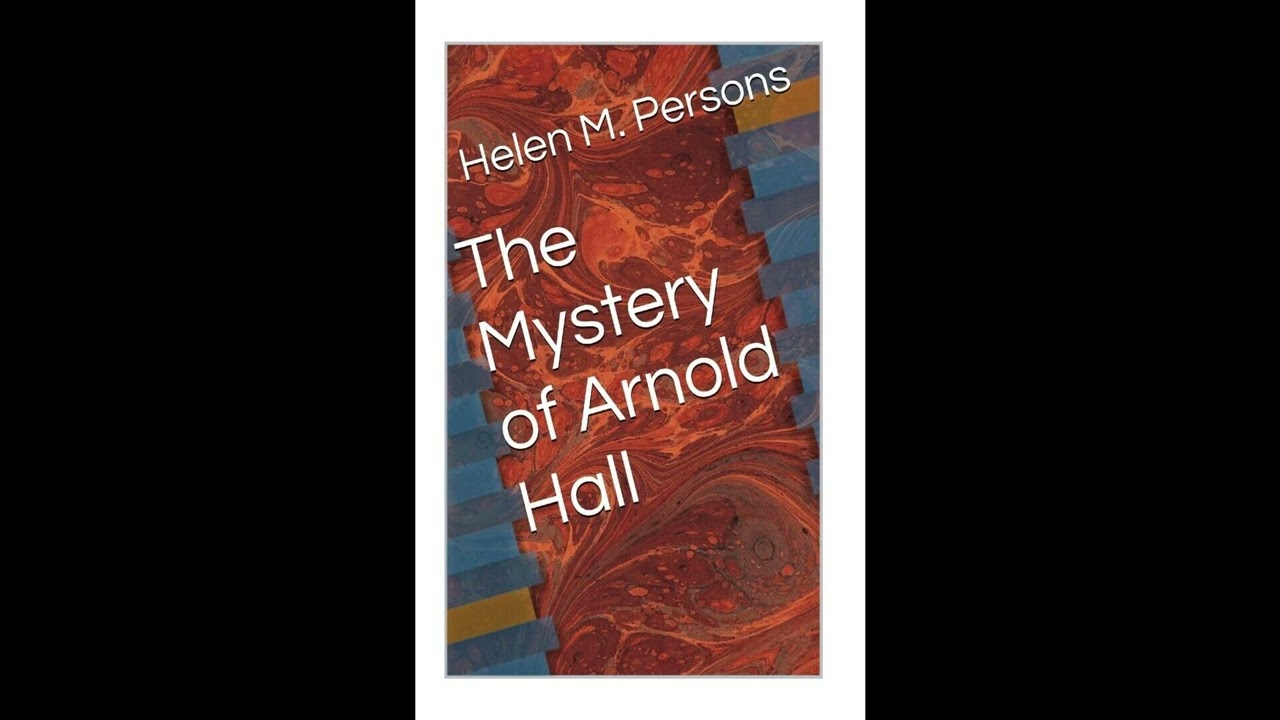
The Mystery of Arnold Hall Book
Helen M. Persons’ The Mystery of Arnold Hall stands as a quiet yet potent cornerstone of classic literature, a compelling testament to the enduring power of atmosphere and psychological suspense. For generations, this novel has drawn readers into its intricate world of shadowed corridors and hidden histories, making it a natural choice for modern listeners seeking a narrative that grips the imagination and challenges perceptions. It is more than a mere whodunit; it is a profound exploration of secrets, identity, and the weight of the past, offering a reflective experience that resonates deeply in our own age of unraveling mysteries and rediscovered truths. This is a story that reminds us how the places we inhabit and the stories we inherit shape who we are, demanding our attention and contemplation long after the final word. The story unfolds within the imposing, ivy-clad walls of Arnold Hall, a sprawling country estate nestled deep within the English countryside. From the moment young Eleanor Vance steps through its grand, oak-paneled doors, she senses an unsettling quiet, a palpable tension beneath the veneer of genteel propriety. Eleanor, a resourceful and observant woman recently engaged as a companion to the Hall’s reclusive matriarch, Lady Selina, finds herself quickly enmeshed in a household where hushed tones and knowing glances replace candid conversation. The Hall itself seems to possess a character, its vast, shadowed rooms and sprawling, untended gardens whispering tales of forgotten events and unspoken tragedies. Eleanor's initial unease gradually blossoms into a chilling certainty that something is profoundly amiss. The patriarch, Sir Alistair Arnold, is a man of severe demeanor and mercurial moods, his presence casting a long shadow over the household. His younger sister, the fragile and often bedridden Miss Evelyn, offers tantalizing but fragmented glimpses into the Hall's history, speaking of a long-lost governess and a disappearance that remains an open wound. As Eleanor begins to uncover puzzling artifacts—an old music box that plays a haunting tune, a faded portrait with a peculiar inscription, a locked room rumored to hold painful memories—she finds herself piecing together fragments of a story the current inhabitants would rather keep buried. The central conflict arises from Eleanor’s quiet persistence against the family’s determined secrecy, as she strives to understand the true nature of the mystery surrounding Arnold Hall, a mystery that seems inextricably linked to a past tragedy and the very foundations of the Arnold legacy. Helen M. Persons, an author whose work often defied easy categorization, lived a life marked by both scholarly pursuit and a deep engagement with the human condition. Born in rural Yorkshire in 1868, she was the youngest of five children to a family of modest gentry, her early years spent immersed in literature and the natural world. Educated privately at home by a series of governesses, she displayed a precocious intellect and a keen interest in philosophy and psychology, subjects relatively uncommon for women of her era. Though she never married, Persons maintained a wide network of intellectual correspondences, exchanging ideas with many of the leading thinkers and writers of her day. Her quiet life in a small cottage near the moors belied the intensity of her inner world, which she channeled into her meticulously crafted narratives. Persons published her first novella, The Whispering Cedars, in 1895 to critical acclaim, noted for its rich character development and evocative sense of place. While she was a contemporary of more sensationalist gothic writers, Persons eschewed overt melodrama for a more subtle, psychological brand of suspense, earning her a unique place within the late Victorian and early Edwardian literary canon. Her body of work, though not voluminous, consistently demonstrated a meticulous attention to detail and an uncanny ability to distill complex human emotions into compelling narratives. Other notable works include The Crimson Scarf (1903), a study of inherited guilt, and the posthumously published Letters from Ashwood (1938), a collection of epistolary tales revealing her ongoing interest in communication and miscommunication. She passed away peacefully in 1937, leaving behind a legacy of quiet introspection and narrative precision. The Mystery of Arnold Hall enacts several profound themes that lend it enduring literary significance. Foremost among these is the stark contrast between appearance and reality. Arnold Hall itself, grand and imposing, initially presents an image of stately dignity, yet beneath its polished surface lies decay and suppressed pain. Eleanor frequently observes how the polite smiles and carefully chosen words of the Arnold family mask deep-seated anxieties and concealed truths, forcing the listener to question what is truly happening versus what is merely presented. For example, Sir Alistair's stern composure initially seems indicative of strength, but Eleanor slowly discerns it as a facade for a deep, almost paralyzing fear of exposure. Another powerful theme is the burden of the past, illustrating how unresolved events continue to haunt the present, shaping characters' lives and the very atmosphere of the setting. The narrative consistently returns to whispers of old scandals, forgotten names, and a pervasive sense of inherited guilt. The locked room in Arnold Hall, for instance, serves as a concrete manifestation of this theme, its contents literally locked away yet figuratively casting a long shadow over every current inhabitant. The novel also carefully examines societal repression, particularly concerning women's roles and desires in a patriarchal society. Characters like Lady Selina and Miss Evelyn are constrained by decorum and unspoken rules, their voices muted, their true feelings often suppressed, demonstrating the psychological toll exacted by strict social expectations. When The Mystery of Arnold Hall was published, the late Victorian and early Edwardian eras were periods of significant cultural and societal upheaval. The world was experiencing rapid industrialization, scientific advancements that challenged traditional beliefs, and a burgeoning interest in psychology and the inner workings of the human mind. Authors of the time were increasingly moving beyond straightforward narratives to psychological realism and complex character studies. There was also a public fascination with spiritualism, the supernatural, and unsolved mysteries, reflecting anxieties about modernity and the unknown. Persons' work emerged precisely at this juncture, offering a sophisticated blend of traditional gothic elements and modern psychological depth. It tapped into the public's appetite for mystery while subtly critiquing the rigid social structures and the often-suffocating expectations placed upon individuals, particularly women, within the confines of respectable society. The story reflects a growing awareness of mental health and the subtle forms of emotional imprisonment that wealth and status could impose, moving beyond simplistic villains to portray characters grappling with complex moral dilemmas and the psychological aftermath of past events, making it a prescient work that spoke to the undercurrents of its time. Listening to The Mystery of Arnold Hall as an audiobook transforms the experience into something deeply personal and intensely atmospheric. The "several hours" run length allows the narrative to unfold at a deliberate, measured pace, gradually immersing the listener in the Hall's pervasive sense of unease. A skilled narrator brings the distinct personalities of Eleanor, Sir Alistair, Lady Selina, and Miss Evelyn to vivid life, capturing the subtle nuances in their dialogue—the hushed fear in one character's voice, the rigid authority in another's, the fragility in a third. The pacing of the narration itself becomes a crucial element, building tension slowly through carefully modulated cadences and pauses, allowing the heavy atmosphere of Arnold Hall to seep into the listener's imagination. You will find yourself listening closely for the subtle shifts in tone that betray hidden emotions, the faint echoes of the house's creaks and groans, and the deliberate unfolding of a story where every word carries weight, deepening the sense of mystery and compelling you to follow Eleanor's every step into the unknown.
Enjoyed The Mystery of Arnold Hall Book? A few ways to support us
Audible & Amazon links are affiliate; we may earn a small commission at no extra cost.
About this production
Human narration by a volunteer reader from LibriVox.org, the public-domain audiobook project. LibriVox volunteers record literary works whose copyright has expired in the United States, releasing the resulting recordings into the public domain.
The Mystery of Arnold Hall Book by Helen M. Persons. The underlying text is in the U.S. public domain. We do not republish any modern copyrighted edition, translation, or commentary.
The 4K cinematic visuals accompanying this audiobook are generated by an AI image model from prompts derived from the source text. No copyrighted photos, paintings, or stock footage are used. AI generation is disclosed on every video on our YouTube channel as required by YouTube's altered/synthetic content policy.
English subtitles are transcribed from the LibriVox recording with OpenAI Whisper. Translations into the 11 other supported languages are produced by Meta's NLLB-200 neural translation model. No human translator's copyrighted translation is used.
Questions about sourcing or rights? See our DMCA & Sourcing policy or contact us.
Enjoyed this audiobook?
If you'd like to own a copy of The Mystery of Arnold Hall Book or hear a professionally produced edition, the links below help support free audiobook production at no extra cost to you.
As an Amazon Associate we earn from qualifying purchases. Audible / print links are affiliate.