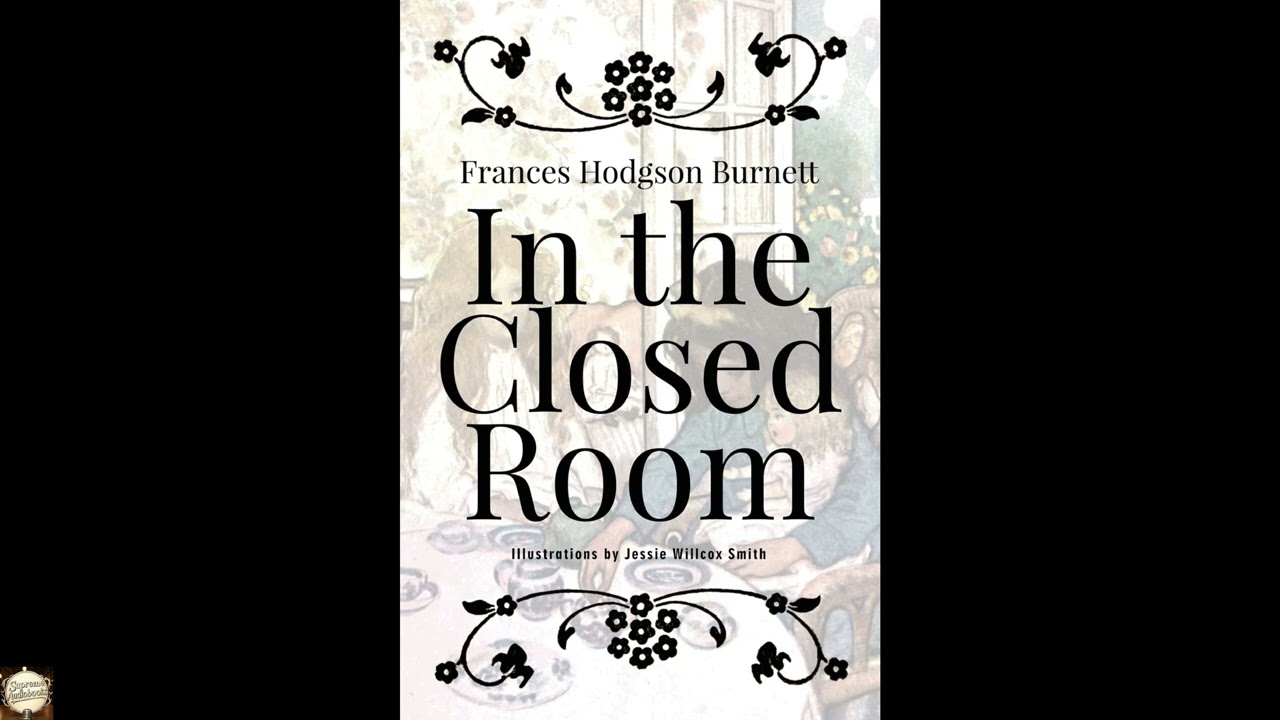
In the Closed Room
Frances Hodgson Burnett’s In The Closed Room presents a compelling, ethereal whisper from the past, inviting listeners to step into a world where the boundaries between childhood imagination and a more profound reality blur. While many recognize Burnett for her sunnier, life-affirming tales like The Secret Garden, this lesser-known novella from 1904 reveals a darker, more haunting facet of her genius, offering a poignant look at loneliness, the power of belief, and the often-overlooked inner lives of children. It asks us to consider what adults dismiss as fancy might actually hold a kernel of truth, and why some connections transcend the visible world. This short but impactful work resonates even today with anyone who has felt isolated or wondered about the unseen currents that shape our existence. The story unfolds within the quiet, often isolating grandeur of a London house inhabited by the young, imaginative Judith and her stern, pragmatic governess, Mrs. Fazeley. Judith is a child of privilege, yet profoundly alone, living in a world of her own making that feels more real to her than the regimented adult world around her. Her parents are distant figures, leaving her largely to the care of the unyielding Mrs. Fazeley, who values order and convention above all else. This emotional void becomes a fertile ground for Judith’s sensitive spirit, particularly when she discovers a peculiar closed room in the house – a room adults avoid and speak of with a hushed reverence. It is here that Judith encounters a mysterious "small lady," a delicate, ethereal presence that only she can perceive. This gentle, seemingly innocuous presence becomes Judith’s confidante, her playmate, and her only true friend. The "small lady" is not frightening, but rather a source of comfort and understanding in Judith’s solitary life, offering a silent companionship that the living adults fail to provide. As Judith’s bond with this unseen friend deepens, the chasm between her inner world and Mrs. Fazeley’s rational skepticism widens. The governess dismisses Judith’s stories as childish fantasy, an overactive imagination born of too much solitude. The narrative delicately balances the possibility that Judith is merely creating an imaginary friend with the growing sense that something truly extraordinary, perhaps supernatural, is at play, building a quiet tension that draws the listener deeper into Judith’s isolated existence. Frances Hodgson Burnett, born in Manchester, England, in 1849, experienced a childhood marked by both early comfort and significant hardship. Her father’s death when she was young plunged her family into poverty, leading to their emigration to America, settling in the burgeoning coal-mining region of Tennessee. It was there, amidst the struggle to support her family, that Burnett began to write, publishing her first story at the age of eighteen. Her literary career blossomed rapidly, propelling her from obscurity to international acclaim. Burnett became an exceptionally prolific writer, known for a diverse body of work that transcended strict genre boundaries, though she is most enduringly celebrated for her contributions to children's literature. Her enduring novels, Little Lord Fauntleroy (1886), A Little Princess (1905), and The Secret Garden (1911), secured her place as one of the most beloved authors of the late Victorian and Edwardian eras. These works, while often sentimental, offered profound insights into childhood resilience, social injustice, and the transformative power of love and nature. Burnett's ability to create memorable characters and evoke strong emotions cemented her standing, but she also wrote numerous adult novels and plays, often engaging with themes of social class, marriage, and personal identity. She passed away in 1924, leaving behind a legacy that continues to touch readers across generations. At its core, In The Closed Room engages profoundly with the theme of childhood imagination versus adult rationality. Judith’s ability to see and interact with the “small lady” is a direct challenge to the prosaic, fact-driven world of Mrs. Fazeley, who cannot conceive of anything beyond the tangible. The story underscores how adults often invalidate children’s perceptions, mistaking sensitivity for delusion. This theme is keenly illustrated when Mrs. Fazeley scolds Judith for her persistent tales, firmly asserting the non-existence of her ethereal playmate. Another prominent theme is loneliness and emotional neglect. Despite her comfortable surroundings, Judith suffers from a deep isolation, her parents emotionally absent, and her governess emotionally distant. The “small lady” emerges from this void, a profound response to Judith’s unmet need for companionship and understanding. The novella also touches on social class and forgotten lives, hinting at a poignant undercurrent beneath the story’s surface. While not explicitly stated, the nature of the "small lady" and her connection to the closed room suggests a life less privileged than Judith’s, a past forgotten or ignored by the current inhabitants of the grand house. This subtle layering of social commentary with a sense of the uncanny gives the story a quiet power. Finally, the ambiguity surrounding the supernatural element is a theme in itself. Burnett masterfully maintains uncertainty, allowing the listener to question whether the "small lady" is a ghost, a psychic projection of Judith’s mind, or simply a manifestation of profound longing. This delicate balance of the real and the spectral lends the narrative its unique, atmospheric quality. Published in 1904, In The Closed Room emerged during the early Edwardian era, a period of transition between the strictures of Victorian society and the dawning of modernism. Culturally, there was a growing interest in psychology, the subconscious, and spiritualism, which offered alternatives to conventional religious or scientific explanations for unexplained phenomena. This was also a time when childhood was increasingly idealized, yet child labor and neglect remained pressing social issues, leading to a complex and sometimes contradictory view of children. In the literary world, the turn of the century saw a continued appetite for stories that blended realism with elements of fantasy or the supernatural, often used to comment on social anxieties or psychological states. Authors were experimenting with ways to depict inner lives and the unseen world. In The Closed Room fits neatly into this context, reflecting the era’s fascination with the uncanny and its evolving understanding of the child’s mind, while also serving as a quiet commentary on the emotional cost of societal rigidity and class divisions. It represents Burnett at a moment where her empathetic observation of childhood met a willingness to engage with the mysterious. Listening to In The Closed Room as an audiobook offers a uniquely immersive experience, perfectly suited to its atmospheric and character-driven narrative. The novella’s relatively short run length, several hours, makes it an ideal choice for focused listening, perhaps during a quiet afternoon or evening. A skilled narrator can bring Judith's quiet vulnerability and the "small lady's" delicate presence to life through subtle vocal shifts, giving voice to a child’s intense inner world and the distinct lack of understanding from the adults around her. Pay close attention to the pacing, which often builds slowly, allowing the listener to sink into the story's gentle suspense and melancholic beauty. The dialogue, particularly Judith's poignant exchanges with her unseen friend and the abrupt dismissals from Mrs. Fazeley, gains added emotional weight when performed, enhancing the sense of isolation and wonder. The auditory experience allows the story's delicate atmosphere of mystery and quiet companionship to truly settle, drawing you into the closed room with Judith.
Enjoyed In the Closed Room? A few ways to support us
Audible & Amazon links are affiliate; we may earn a small commission at no extra cost.
About this production
Human narration by a volunteer reader from LibriVox.org, the public-domain audiobook project. LibriVox volunteers record literary works whose copyright has expired in the United States, releasing the resulting recordings into the public domain.
In the Closed Room by Frances Hodgson Burnett. The underlying text is in the U.S. public domain. We do not republish any modern copyrighted edition, translation, or commentary.
The 4K cinematic visuals accompanying this audiobook are generated by an AI image model from prompts derived from the source text. No copyrighted photos, paintings, or stock footage are used. AI generation is disclosed on every video on our YouTube channel as required by YouTube's altered/synthetic content policy.
English subtitles are transcribed from the LibriVox recording with OpenAI Whisper. Translations into the 11 other supported languages are produced by Meta's NLLB-200 neural translation model. No human translator's copyrighted translation is used.
Questions about sourcing or rights? See our DMCA & Sourcing policy or contact us.
Enjoyed this audiobook?
If you'd like to own a copy of In the Closed Room or hear a professionally produced edition, the links below help support free audiobook production at no extra cost to you.
As an Amazon Associate we earn from qualifying purchases. Audible / print links are affiliate.