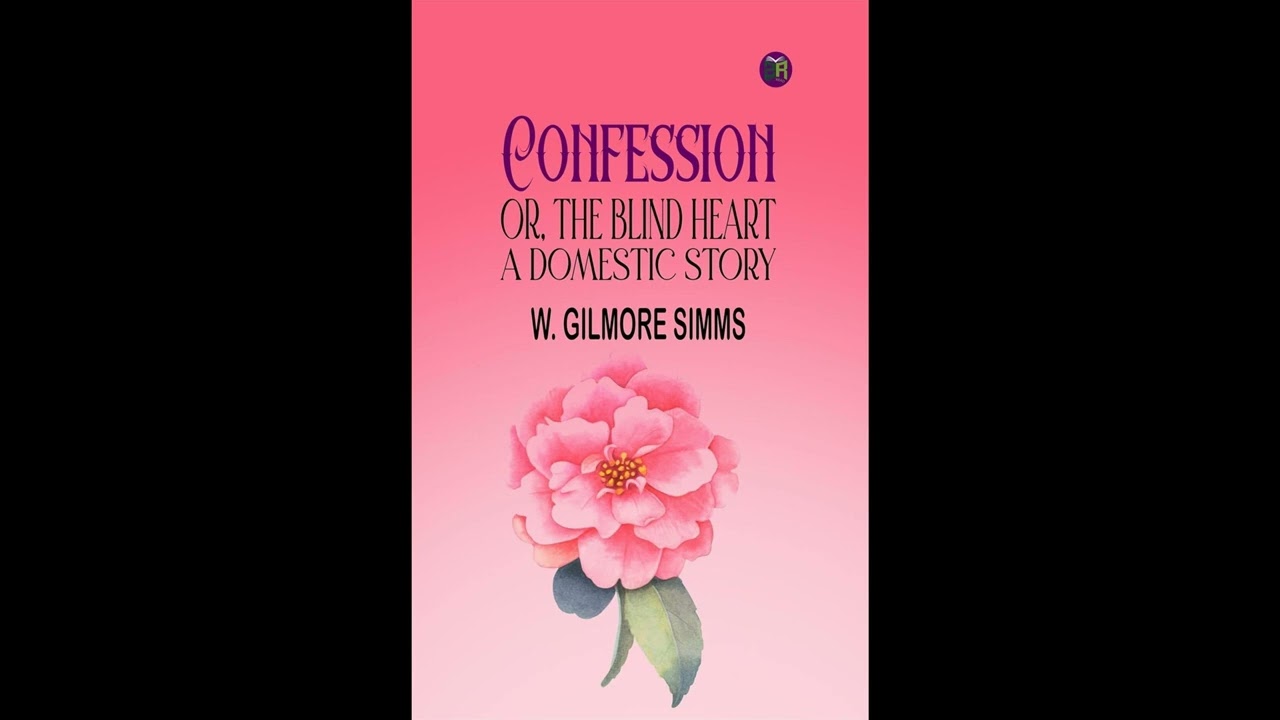
Confession; Or, The Blind Heart. A Domestic Story
W. Gilmore Simms’s "Confession; Or, The Blind Heart. A Domestic Story" stands as a chilling portrait of human fragility, a psychological novel that plunges into the dark abyss of jealousy and the destructive power of a mind turned inward. First published in 1841, this powerful narrative remains acutely relevant today, offering a stark warning about the insidious nature of suspicion and the profound impact of our internal lives on those we love most. It is a story not of grand battles or sweeping historical events, but of the quiet, devastating warfare waged within a seemingly perfect domestic sphere, compelling listeners to confront the very real dangers of a heart that refuses to see truth. The story unfolds in the gracious, yet ultimately suffocating, world of the antebellum American South, centered on the elegant plantation home of Edward Walcott, the narrator, and his beautiful young wife, Emily. Their early marriage seems idyllic, a testament to deep affection and mutual respect. Edward, a man of intense feelings and a somewhat possessive nature, adores Emily with an almost suffocating devotion. Their tranquil existence, however, is gradually—and then rapidly—disrupted by the arrival of Captain Clive, a man of the world, urbane and charming, but with an undercurrent of something sinister. Clive’s subtle machinations begin to play upon Edward’s latent insecurities, planting seeds of doubt about Emily’s fidelity and the purity of her affections. What follows is a harrowing descent into paranoia. Edward’s love for Emily, once his greatest joy, transforms into a tormenting obsession. His "blind heart" renders him incapable of discerning truth from insidious suggestion, twisting innocent smiles into evidence of betrayal, and gentle words into coded confessions. The domestic idyll crumbles under the weight of his unfounded suspicions, creating an atmosphere of increasing tension and despair within their once happy home. The listener witnesses the slow, agonizing estrangement between husband and wife, a tragedy fueled less by external events than by the internal decay of Edward’s own poisoned mind, leading him down a path toward an inevitable, heartbreaking conclusion that shatters the bonds of trust and affection. William Gilmore Simms, born in Charleston, South Carolina, in 1806, lived a life marked by both literary ambition and personal hardship. Orphaned at a young age, Simms largely educated himself, devouring books and honing a keen intellect. He became a lawyer, newspaper editor, and an astonishingly prolific writer across various genres—poetry, drama, essays, and, most notably, novels. Simms established himself as a dominant voice in Southern literature before the Civil War, often compared to James Fenimore Cooper for his historical romances like The Yemassee and The Partisan, which vividly depicted conflicts and cultures of early American history and the Southern frontier. Simms was a tireless advocate for Southern identity and literature, though his pro-slavery views and his ardent defense of the Southern way of life contributed to a decline in his national reputation after the Civil War. Despite this, his impact on American letters cannot be overstated. He was not merely a regional writer but a significant figure in American Romanticism, capable of both grand historical narratives and, as "Confession" demonstrates, profound psychological studies. His home, "Woodlands," was a hub for Southern intellectuals and writers, and he continued writing prolifically until his death in 1870, leaving behind a body of work that provides invaluable insight into the cultural and intellectual landscape of the antebellum South. "Confession" powerfully enacts the theme of jealousy as a destructive force, a central pillar of its enduring relevance. Edward Walcott’s internal monologues vividly illustrate how his unfounded suspicions consume him, turning his beloved wife into an object of constant scrutiny and fear. For example, a simple, polite exchange between Emily and Captain Clive at a social gathering becomes, in Edward’s distorted perception, a clandestine communication, fueling his "blind heart" and driving him further from reality. This internal torment showcases how an unchecked emotion can utterly corrupt one’s perception and relationships. The novel also functions as a stark domestic tragedy, revealing the profound fragility of happiness and trust within a marriage. The once harmonious home of Edward and Emily slowly becomes a prison of unspoken anxieties and accusations. Consider the scenes where Emily, confused and hurt by Edward’s increasing coldness, attempts to reconcile with him, only to be met with his veiled accusations and coldness. Her quiet suffering and his inability to see her innocence underscore the tragic unraveling of their union, demonstrating how easily a cherished bond can be destroyed by an inner failing rather than external calamity. Additionally, the theme of reputation and societal expectations subtly underpins the narrative, particularly in the Southern context where honor and a spotless family name held immense weight. Edward’s fear of being cuckolded, even if unfounded, is tied to the social disgrace it would bring, intensifying his internal torment and driving his need to control and accuse, rather than trust. "Confession; Or, The Blind Heart" emerged during a period of significant change and introspection in American society, specifically in the decades leading up to the Civil War. Published in 1841, it reflects the burgeoning interest in psychological realism within American literature, even amidst the dominant currents of Romanticism and the rise of the historical novel, a genre Simms himself largely pioneered. While Simms is primarily known for his tales of Southern history and frontier life, "Confession" distinguishes itself as a powerful departure, delving into the interior world of its characters. This was a time when the novel was gaining widespread popularity, and authors were beginning to experiment with domestic fiction and the exploration of individual moral and psychological dilemmas, moving beyond purely didactic or overtly adventurous narratives. Simms’s work, particularly this novel, contributes to understanding the cultural values and internal anxieties of the educated, land-owning class in the American South, where notions of honor, family, and social standing were paramount, and where the human heart was often subjected to intense scrutiny, both internally and externally. Listening to "Confession; Or, The Blind Heart" as an audiobook brings the intense psychological drama to life with immediate power. The several hours of its run length allow the listener to fully immerse themselves in Edward Walcott’s gradual, agonizing descent, feeling the slow-burn tension build with each chapter. A skilled narrator can masterfully convey Edward’s tormenting internal monologues, differentiating his voice from the gentle, increasingly sorrowful tones of Emily, and the smooth, manipulative pronouncements of Captain Clive. The pacing of the narration is crucial here; a deliberate, measured delivery enhances the suffocating atmosphere of suspicion and dread that permeates the Walcott household. Listeners will appreciate how subtle inflections in voice can underscore the hidden meanings in the restrained yet loaded dialogue, revealing unspoken fears and insidious intentions. The auditory experience makes Edward’s "blind heart" palpable, allowing the listener to truly feel the weight of his self-inflicted misery and the tragic consequences for all involved.
Enjoyed Confession; Or, The Blind Heart. A Domestic Story? A few ways to support us
Audible & Amazon links are affiliate; we may earn a small commission at no extra cost.
About this production
Human narration by a volunteer reader from LibriVox.org, the public-domain audiobook project. LibriVox volunteers record literary works whose copyright has expired in the United States, releasing the resulting recordings into the public domain.
Confession; Or, The Blind Heart. A Domestic Story by W. Gilmore Simms. The underlying text is in the U.S. public domain. We do not republish any modern copyrighted edition, translation, or commentary.
The 4K cinematic visuals accompanying this audiobook are generated by an AI image model from prompts derived from the source text. No copyrighted photos, paintings, or stock footage are used. AI generation is disclosed on every video on our YouTube channel as required by YouTube's altered/synthetic content policy.
English subtitles are transcribed from the LibriVox recording with OpenAI Whisper. Translations into the 11 other supported languages are produced by Meta's NLLB-200 neural translation model. No human translator's copyrighted translation is used.
Questions about sourcing or rights? See our DMCA & Sourcing policy or contact us.
Enjoyed this audiobook?
If you'd like to own a copy of Confession; Or, The Blind Heart. A Domestic Story or hear a professionally produced edition, the links below help support free audiobook production at no extra cost to you.
As an Amazon Associate we earn from qualifying purchases. Audible / print links are affiliate.