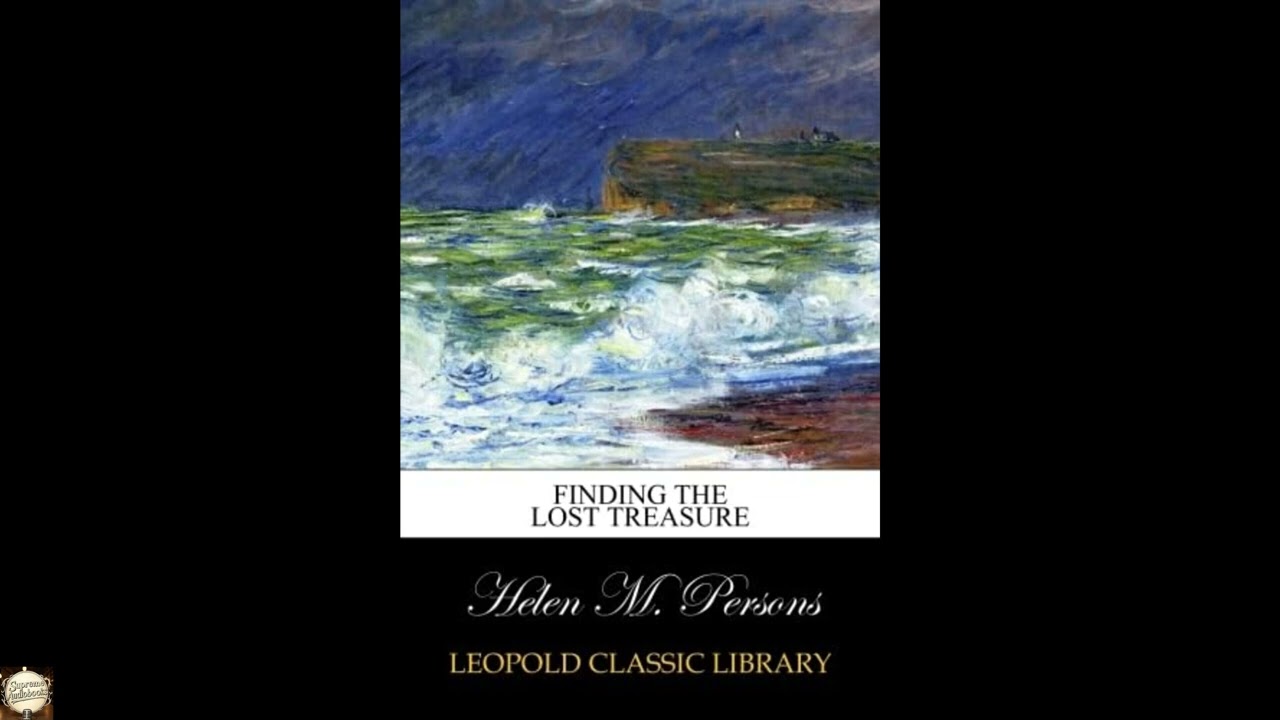
Finding the Lost Treasure
The whispers of forgotten riches and the allure of discovery have echoed through human hearts for centuries, shaping narratives that probe the very core of our motivations. Helen M. Persons's "Finding the Lost Treasure" stands as a towering example of this enduring fascination, a resonant work of classic literature that transcends its immediate adventure to ask profound questions about wealth, legacy, and the true cost of ambition. More than a simple hunt for glittering gold, this novel presents a meticulous examination of character under duress, set against a backdrop so vivid it practically breathes. It is a story not merely about what one finds, but about who one becomes in the arduous pursuit of the seemingly unattainable. Even today, the questions it poses about the nature of value—material versus spiritual, tangible versus intangible—ring with striking relevance in a world still grappling with definitions of success and fulfillment. The story transports us to the rugged, sun-baked landscape of the fictional Republic of Esmeralda, a South American nation still finding its footing in the late 19th century, shadowed by ancient legends and colonial history. Here, we meet Elias Thorne, a meticulous, somewhat reclusive cartographer whose life has been defined by precise lines on paper rather than the wild contours of the world itself. Elias stumbles upon a cryptic, centuries-old map fragment, hinting at the location of the fabled "Heart of the Jaguar"—not merely a hoard of gems, but an artifact said to hold immense historical and spiritual power for the region's indigenous peoples. Driven by a thirst for academic validation and a nascent hunger for genuine experience, Elias finds himself drawn into the treacherous quest. His initial attempts to decipher the map lead him to a cast of memorable figures: the enigmatic Maria, a local woman whose deep knowledge of the land and its legends proves indispensable, and the cunning industrialist, Sterling Finch, who sees the treasure only as a means to expand his mining empire. As Elias, Maria, and a small, disparate team venture deeper into the untamed interior – through dense rainforests, across perilous rivers, and over mist-shrouded peaks – they confront not only natural hazards but also the betrayals and conflicting agendas within their own ranks. The hunt for the Heart of the Jaguar becomes less about pinpointing a location and more about navigating the labyrinthine depths of human character, revealing the hidden motivations that drive each individual forward. The story builds with relentless tension, each discovery and setback shaping Elias in unforeseen ways, compelling him to re-evaluate his values and redefine what "treasure" truly means. Helen M. Persons, though her exact birth and death dates are lost to the passage of time, was undoubtedly a significant voice in the literary landscape of the late nineteenth and early twentieth centuries. Accounts suggest she possessed an unusually adventurous spirit for a woman of her era, rumored to have traveled extensively throughout the Americas and parts of Africa, often under challenging conditions. These firsthand experiences clearly informed her writing, lending an authentic, sensory texture to her exotic settings and the rugged trials faced by her characters. Unlike some of her contemporaries who focused solely on drawing-room dramas or social realism, Persons carved out a unique niche, blending thrilling adventure with astute psychological insight. Her literary output, while not voluminous, consistently garnered critical attention for its robust prose and complex moral inquiries. Besides "Finding the Lost Treasure," her other notable works include "The Obsidian Key," a haunting historical novel set in Mesoamerica, and a collection of short stories titled "Shadows of the Equator," which explored themes of cultural clash and personal identity. Persons was never neatly categorized within a single literary movement; instead, she is often admired for her singular contribution to the tradition of speculative realism, where grand human endeavors are meticulously grounded in believable cultural and environmental details. Her influence can be seen in later authors who sought to elevate adventure fiction beyond mere escapism, injecting it with intellectual depth and genuine humanistic concern. "Finding the Lost Treasure" masterfully explores several enduring themes, foremost among them the nature of true wealth. Initially, Elias Thorne and Sterling Finch are driven by conventional notions of riches—gold, jewels, power. Yet, as the narrative progresses, particularly in scenes where Elias witnesses the quiet dignity and communal spirit of the remote indigenous villages, he begins to question the singular pursuit of material gain. The "Heart of the Jaguar" itself transforms from a physical object into a symbol of cultural heritage, communal memory, and the spiritual connection to the land—a form of wealth far removed from currency. Another significant theme is self-discovery and transformation. Elias Thorne begins as an academic, somewhat detached from the realities of the world. However, through the crucible of the quest—facing the raw power of nature, enduring betrayal, and forging unexpected alliances—he sheds his intellectual armor. A poignant moment occurs when Elias, having lost his most precise navigational instruments in a flash flood, is forced to rely solely on Maria's intuitive understanding of the landscape and the star patterns, marking a profound shift from reliance on external tools to trust in human connection and instinct. The book powerfully demonstrates how profound challenges can forge a deeper understanding of one's own capabilities and values. The emergence of "Finding the Lost Treasure" can be understood against the backdrop of an era marked by rapid industrialization, expanding global empires, and a burgeoning interest in exploration and anthropology. The late nineteenth century was a period when "darkest Africa" and "unexplored America" captured the popular imagination, fueling both scientific expeditions and romanticized adventure narratives. It was a time when the boundaries of the known world were still being pushed, and the concept of "lost civilizations" held immense appeal. Persons’s novel taps into this widespread fascination with the unknown, but it distinguishes itself by subtly critiquing the imperialist tendencies often inherent in such quests. It questions the ethics of seeking treasure in lands with established cultures and histories, subtly shifting the focus from mere acquisition to the responsibility of discovery. The work resonated with readers who were both thrilled by the prospect of grand adventure and increasingly aware of the ethical complexities involved in encounters with other cultures. Listening to "Finding the Lost Treasure" as an audiobook offers a uniquely immersive experience, allowing the rich, descriptive prose to truly unfold. The several hours of narration provide ample time to settle into the rhythms of Persons's storytelling, from the measured pace of Elias's initial research to the escalating urgency of the jungle expedition. A skilled narrator brings a vital dimension to the varied voices, from Elias's contemplative observations to Maria's stoic wisdom and Finch's oily persuasions, enhancing the nuanced characterizations. Pay close attention to the way the narrator handles the atmospheric descriptions, particularly the sounds and smells of the Esmeraldan interior—the chirping insects, the rustle of leaves, the distant calls of exotic birds—all contributing to the sense of an ancient, breathing world. The shifts in dialogue and the subtle inflections can reveal much about the characters' hidden motives and shifting allegiances, making the unfolding drama feel immediate and palpable.
Enjoyed Finding the Lost Treasure? A few ways to support us
Audible & Amazon links are affiliate; we may earn a small commission at no extra cost.
About this production
Human narration by a volunteer reader from LibriVox.org, the public-domain audiobook project. LibriVox volunteers record literary works whose copyright has expired in the United States, releasing the resulting recordings into the public domain.
Finding the Lost Treasure by Helen M. Persons. The underlying text is in the U.S. public domain. We do not republish any modern copyrighted edition, translation, or commentary.
The 4K cinematic visuals accompanying this audiobook are generated by an AI image model from prompts derived from the source text. No copyrighted photos, paintings, or stock footage are used. AI generation is disclosed on every video on our YouTube channel as required by YouTube's altered/synthetic content policy.
English subtitles are transcribed from the LibriVox recording with OpenAI Whisper. Translations into the 11 other supported languages are produced by Meta's NLLB-200 neural translation model. No human translator's copyrighted translation is used.
Questions about sourcing or rights? See our DMCA & Sourcing policy or contact us.
Enjoyed this audiobook?
If you'd like to own a copy of Finding the Lost Treasure or hear a professionally produced edition, the links below help support free audiobook production at no extra cost to you.
As an Amazon Associate we earn from qualifying purchases. Audible / print links are affiliate.