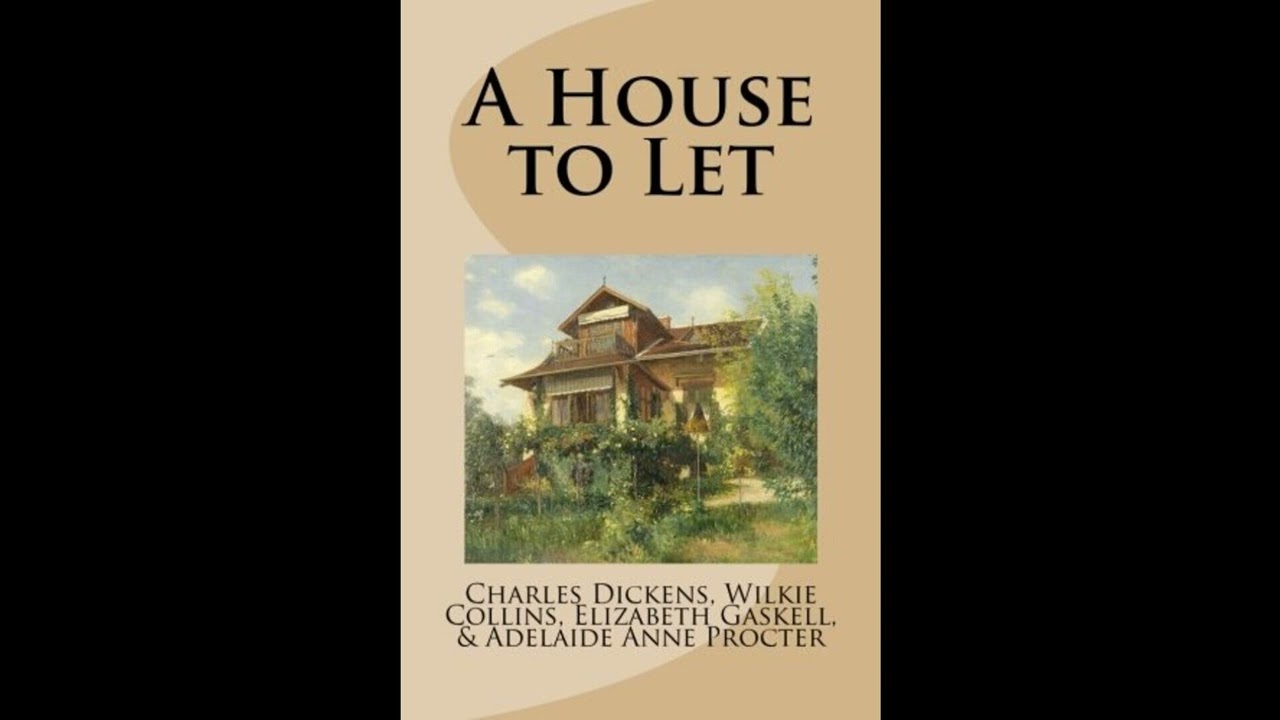
A House to Let
Enter a world shrouded in gaslight and fog, where the secrets of a decaying London house beckon with an irresistible, chilling allure. A House to Let, a classic of Victorian suspense, stands as a testament to the enduring power of mystery and the human urge to uncover what lies hidden. Far more than just a ghost story or a detective tale, this atmospheric work offers a unique window into the collaborative spirit of some of England's most celebrated authors, creating a narrative that feels both familiar and strikingly original even today. Listeners will find themselves drawn into a compelling web of observations and deductions, a whispered history of tragedy that echoes through the very walls of an empty dwelling, proving that sometimes, the most unsettling truths are those we piece together ourselves. The story unfolds on a quiet street in a respectable London neighborhood, centering on a particular residence that has stood vacant for years – a large, imposing house, its windows darkened, its facade hinting at untold stories. The narrative perspective is shared among a group of elderly, somewhat gossipy neighbors who live opposite the mysterious property. Each character, including a spinster, an invalid, and a retired naval officer, contributes their own observations and theories about the "house to let," slowly building a collective picture of its past. Their curiosity is piqued by the sudden appearance of a reclusive old woman, Miss Dunstane, who takes up residence in the house, accompanied by her maid, Niner. Miss Dunstane’s odd habits, her strange gardener who resembles a menacing phantom, and the air of melancholy surrounding her only deepen the neighbors’ resolve to discover the truth. As the days turn into weeks, the armchair detectives across the street pool their information, interpreting every shadow, every fleeting glimpse, every whispered word. They observe lights appearing and disappearing, notice peculiar activity in the overgrown garden, and piece together fragments of local lore. Slowly, through their combined efforts and the gradual unfolding of events within the house itself, a tragic history begins to emerge. It's a tale of a lost child, a broken family, and a long-held secret that has kept the house—and its current occupant—imprisoned in a cycle of grief and regret. The story artfully balances the mundane details of Victorian daily life with the creeping dread of a domestic drama that refuses to remain buried. Though listed with an "Unknown" author, A House to Let holds a fascinating place in literary history as a prime example of collaborative storytelling, orchestrated by none other than Charles Dickens himself. This work was originally published in the 1858 Christmas issue of Dickens's popular magazine, Household Words, a common practice for holiday editions to feature special, often ghost-themed, anthologies. For this particular endeavor, Dickens brought together a constellation of literary talents, each contributing a segment to the unfolding narrative. The primary contributors are widely acknowledged to include Dickens, Wilkie Collins, Elizabeth Gaskell, and Adelaide Anne Procter. This unique "round-robin" structure allowed for a distinctive blend of narrative voices and styles, showcasing the strengths of each writer while contributing to a unified, suspenseful whole. The tradition of collaborative fiction was relatively common in Victorian periodicals, as it offered a novel way to engage readers and highlight the versatility of the magazine's regular contributors. Dickens, a master editor and storyteller, likely provided the initial framework and possibly the concluding sections, ensuring continuity and coherence. Collins, renowned for his intricate plots and mastery of the sensation novel, brought his signature touch of mystery and suspense. Gaskell, known for her keen psychological insight and vivid characterizations, contributed depth to the story's emotional core and the observations of the neighbors. Procter, a poet of considerable repute, likely lent a lyrical or reflective quality to certain passages. Together, these distinct voices weave a seamless narrative, demonstrating a remarkable harmony despite their individual approaches, creating a work that stands as a testament to the literary camaraderie and inventive spirit of the age. A House to Let enacts several compelling themes that resonate with the human condition. One central idea is the irresistible force of curiosity and the dangers of obsession. The elderly neighbors are driven by an insatiable need to know the truth behind the silent house, their lives becoming intertwined with its secrets. Their observations, though often mundane, gradually build towards a momentous reveal, showing how seemingly harmless gossip can lead to profound discoveries. For instance, the meticulous tracking of Miss Dunstane's movements and the deciphering of her strange household rituals exemplify this relentless pursuit of knowledge. Another prominent theme is secrecy and the burden of the past. The house itself is a repository of hidden truths, and its current occupant is trapped by a past tragedy she cannot escape. The long-held secret of a lost family member permeates the very atmosphere, demonstrating how unresolved grief and unacknowledged history can cast long shadows over generations and spaces. Furthermore, the story thoughtfully considers social isolation and the judgments society casts. Miss Dunstane's reclusive nature immediately makes her an object of suspicion and scrutiny, highlighting how those who deviate from societal norms are often marginalized and misunderstood. Her solitary existence within the decaying house mirrors the internal torment she endures, revealing the often-harsh lens through which communities view difference. The narrative also underscores the idea that physical spaces can hold emotional echoes, that a house can be haunted not just by spirits, but by memory and suffering. The very structure of the house seems to contain the echoes of a past crime, manifesting in the eerie silence, the locked rooms, and the pervasive sense of sorrow that the neighbors perceive, showing how trauma can imbue a location with a palpable sense of dread. The mid-Victorian era, when A House to Let was published, was a time of immense social and cultural transformation in England. The rapid expansion of cities like London, fueled by the Industrial Revolution, led to both unprecedented prosperity and burgeoning social anxieties. This period saw the rise of a powerful middle class with leisure time and a voracious appetite for reading, particularly serialized fiction in popular magazines. Publications like Household Words became vital cultural institutions, providing entertainment, education, and a platform for social commentary. Christmas editions, in particular, were eagerly anticipated, often featuring festive yet spooky stories that tapped into the public's fascination with the supernatural, folklore, and unsolved mysteries. The emergence of the "sensation novel," a genre characterized by thrilling plots, dramatic revelations, and often shocking events, was gaining traction, with authors like Wilkie Collins leading the charge. A House to Let, with its emphasis on domestic mystery and psychological suspense, perfectly aligned with these contemporary literary tastes, offering a blend of gothic atmosphere and realistic observation that was deeply resonant with its audience. Listening to A House to Let as an audiobook offers a particularly immersive and satisfying experience. The story’s gradual build-up of suspense and its reliance on observations and whispered conjectures lend themselves beautifully to audio narration. Its run length of several hours makes it an ideal companion for a long commute, an afternoon of chores, or quiet evenings by the fire. A skilled narrator can bring to life the distinct perspectives of the inquisitive neighbors, differentiating their voices and temperaments as they pool their findings and speculate on the house's dark secrets. Listen for the subtle shifts in pacing as the initial curiosity morphs into genuine dread, and the careful articulation of dialogue that reveals character and advances the mystery. The atmospheric descriptions of the old house, the foggy London streets, and the melancholic presence of its occupants create a palpable sense of place, allowing the listener to truly step into this intriguing corner of Victorian England.
Enjoyed A House to Let? A few ways to support us
Audible & Amazon links are affiliate; we may earn a small commission at no extra cost.
About this production
Human narration by a volunteer reader from LibriVox.org, the public-domain audiobook project. LibriVox volunteers record literary works whose copyright has expired in the United States, releasing the resulting recordings into the public domain.
A House to Let by Charles Dickens, Wilkie Collins, Elizabeth Gaskell, Adelaide Anne Procter. The underlying text is in the U.S. public domain. We do not republish any modern copyrighted edition, translation, or commentary.
The 4K cinematic visuals accompanying this audiobook are generated by an AI image model from prompts derived from the source text. No copyrighted photos, paintings, or stock footage are used. AI generation is disclosed on every video on our YouTube channel as required by YouTube's altered/synthetic content policy.
English subtitles are transcribed from the LibriVox recording with OpenAI Whisper. Translations into the 11 other supported languages are produced by Meta's NLLB-200 neural translation model. No human translator's copyrighted translation is used.
Questions about sourcing or rights? See our DMCA & Sourcing policy or contact us.
Enjoyed this audiobook?
If you'd like to own a copy of A House to Let or hear a professionally produced edition, the links below help support free audiobook production at no extra cost to you.
As an Amazon Associate we earn from qualifying purchases. Audible / print links are affiliate.