The Light Princess and Other Stories
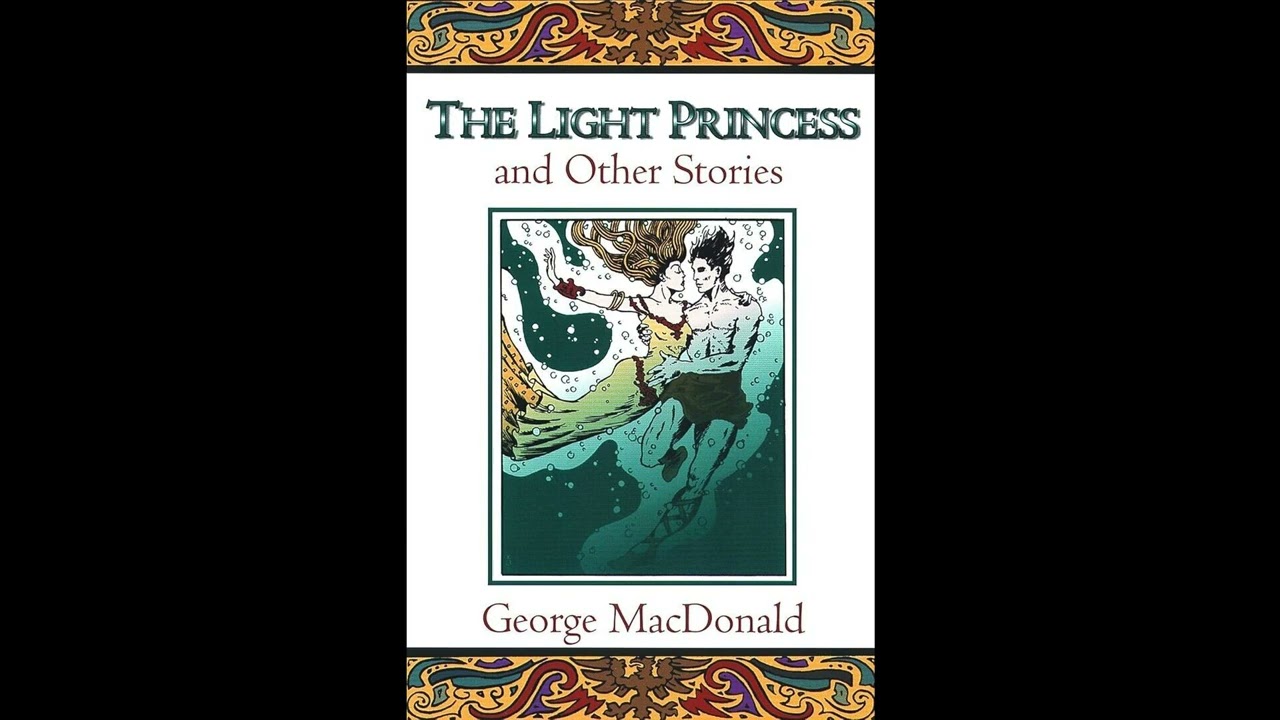
"The Light Princess and Other Stories" offers a rare glimpse into the imaginative heart of George MacDonald, a writer whose influence on fantasy literature is immense, yet whose work often remains a treasured discovery. This collection invites listeners into worlds where logic bends to the whims of magic, where curses can steal gravity, and where the deepest truths are often found in the most whimsical settings. For those seeking an escape into stories that challenge the boundaries of reality while speaking profoundly to the human condition, these tales are more than just entertainment; they are a return to the foundational wellspring of wonder, offering insight and gentle wisdom in an era that often feels heavy with its own concerns. MacDonald's unique blend of fairy tale enchantment and philosophical depth makes this collection a truly singular experience, one that continues to resonate with listeners who appreciate stories woven with both lightheartedness and genuine spiritual curiosity. The collection's titular story, "The Light Princess," introduces a most unusual affliction that befalls a royal infant. Born into a loving kingdom, the princess's birth is overshadowed by the spiteful act of her wicked aunt, a sorceress offended by not being invited to the christening. This aunt places a curse upon the child: she will have no gravity whatsoever. The princess floats through life, physically weightless and, as a consequence, emotionally unburdened. She laughs at everything, even the most serious matters, unable to shed a single tear or feel genuine sorrow. Her parents, the king and queen, grow increasingly distraught as their daughter drifts through palaces and gardens, her constant cheer masking a profound lack of connection. As she grows, her lightheartedness causes profound sorrow for those around her, as she cannot feel the weight of love or grief. The kingdom's only hope lies in an ancient prophecy: the princess will regain her gravity and her soul's depth only when she sheds tears, which can only flow from a source of great sacrifice related to a lake of family tragedy. Into this peculiar situation enters a young, earnest prince, drawn by tales of the floating royal. He finds her enchanting, but slowly begins to understand the emptiness behind her mirth. His unwavering affection and willingness to confront danger hint at the possibility of breaking the witch's cruel spell, promising to bring her down to earth not just physically, but emotionally as well. George MacDonald, born in Huntly, Aberdeenshire, Scotland, in 1824, was a figure whose life and writings left an indelible mark on the landscape of English literature. Though initially trained as a Congregational minister, MacDonald’s progressive theological views proved too challenging for his parish, leading him to resign his pulpit after a few years. This shift, however, propelled him into a prolific career as a novelist, poet, and lecturer. He married Louisa Powell, and together they raised a large family of eleven children, often facing financial hardship, yet always surrounded by a creative and intellectual atmosphere. MacDonald’s struggles with tuberculosis often led him to spend significant periods living in Italy, a change of scenery that influenced the dreamlike qualities of his narratives. MacDonald stands as a pioneering force in the development of modern fantasy literature, often credited as the "father" of the genre. His ability to weave deep philosophical and spiritual truths into imaginative narratives paved the way for future generations. Beyond "The Light Princess," his bibliography includes foundational fantasy novels such as Phantastes, an early example of portal fantasy, and Lilith, a darker, more complex allegory. He also penned beloved children's stories like At the Back of the North Wind and The Princess and the Goblin, alongside more realistic Victorian novels. MacDonald’s work garnered admiration from literary giants such as C.S. Lewis, who called him his "master" and acknowledged him as a profound influence, and J.R.R. Tolkien, who recognized MacDonald’s unique ability to craft mythologies. He demonstrated that fairy tales could be far more than simple moral lessons, but rather powerful vehicles for exploring the mysteries of existence. Within "The Light Princess" and other tales, MacDonald consistently returns to several profound themes, presenting them as integral parts of the narrative. One central idea is the vital connection between emotional depth and what it means to be truly human. The princess's physical weightlessness is a potent metaphor for her emotional superficiality; she literally cannot be "grounded" in feeling. Her inability to cry and her constant laughter at serious events underscore a fundamental truth: genuine joy often exists in balance with sorrow, and the capacity for deep feeling encompasses both. The story concretely shows this through the prophetic cure tied to a lake of tears, suggesting that only through profound encounter with suffering — or the willingness to alleviate it in others — can one truly become whole and experience the full weight of love. Another recurring theme is the power of sacrificial love and redemption. The prince's unwavering devotion and willingness to risk his own life act as the catalyst for her transformation. This act of profound selflessness mirrors MacDonald's deeper theological sensibilities, suggesting that love at its purest is inherently sacrificial and redemptive. Furthermore, MacDonald champions the realm of the imagination itself as a pathway to truth. Unlike many contemporaries who viewed fairy tales as frivolous, he argued that imagination was essential for perceiving spiritual realities. His stories are an invitation to engage with deeper realities through wonder, showing that seemingly fantastical events can illuminate universal human experiences and spiritual principles more clearly than strict realism ever could. "The Light Princess" emerged from mid-Victorian England, a period marked by rapid industrialization, scientific advancements challenging traditional worldviews, and a widespread interest in folklore. While much children's literature remained overtly didactic, MacDonald, alongside contemporaries like Lewis Carroll, represented a significant shift. They sought to create stories for both children and adults that offered not just entertainment, but also rich philosophical and spiritual inquiry. MacDonald's work directly responded to the encroaching materialism of the age. He insisted on the validity of fantasy for expressing truths literal language often failed to convey. Drawing upon ancient fairy tale tropes, he infused them with his unique blend of Christian mysticism and psychological insight, creating tales that felt both traditional and revolutionary. His stories provided an alternative vision, celebrating the inner life, the power of wonder, and the enduring human need for meaning in a world increasingly defined by scientific measurement. To experience "The Light Princess and Other Stories" as an audiobook is to reconnect with the most ancient and intimate form of storytelling. MacDonald's prose, with its gentle rhythms and evocative descriptions, truly shines when brought to life by a skilled narrator. The several-hours length makes it an ideal companion for a long drive, a quiet evening, or unwinding before sleep, allowing full immersion. A talented voice artist can render the whimsical charm of the Light Princess, the tenderheartedness of the prince, and the subtle malice of the wicked aunt, adding layers of emotion and nuance to the narrative. Listeners will appreciate how thoughtful pacing allows for reflection on MacDonald’s deeper meanings, while distinct voices clarify dialogue and deepen the overall atmosphere, truly preserving the inherent enchantment of these stories.
Enjoyed The Light Princess and Other Stories? A few ways to support us
Audible & Amazon links are affiliate; we may earn a small commission at no extra cost.
About this production
Human narration by a volunteer reader from LibriVox.org, the public-domain audiobook project. LibriVox volunteers record literary works whose copyright has expired in the United States, releasing the resulting recordings into the public domain.
The Light Princess and Other Stories by George MacDonald. The underlying text is in the U.S. public domain. We do not republish any modern copyrighted edition, translation, or commentary.
The 4K cinematic visuals accompanying this audiobook are generated by an AI image model from prompts derived from the source text. No copyrighted photos, paintings, or stock footage are used. AI generation is disclosed on every video on our YouTube channel as required by YouTube's altered/synthetic content policy.
English subtitles are transcribed from the LibriVox recording with OpenAI Whisper. Translations into the 11 other supported languages are produced by Meta's NLLB-200 neural translation model. No human translator's copyrighted translation is used.
Questions about sourcing or rights? See our DMCA & Sourcing policy or contact us.
Enjoyed this audiobook?
If you'd like to own a copy of The Light Princess and Other Stories or hear a professionally produced edition, the links below help support free audiobook production at no extra cost to you.
As an Amazon Associate we earn from qualifying purchases. Audible / print links are affiliate.