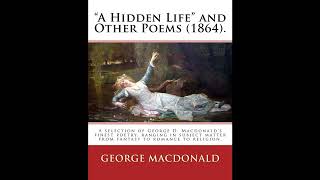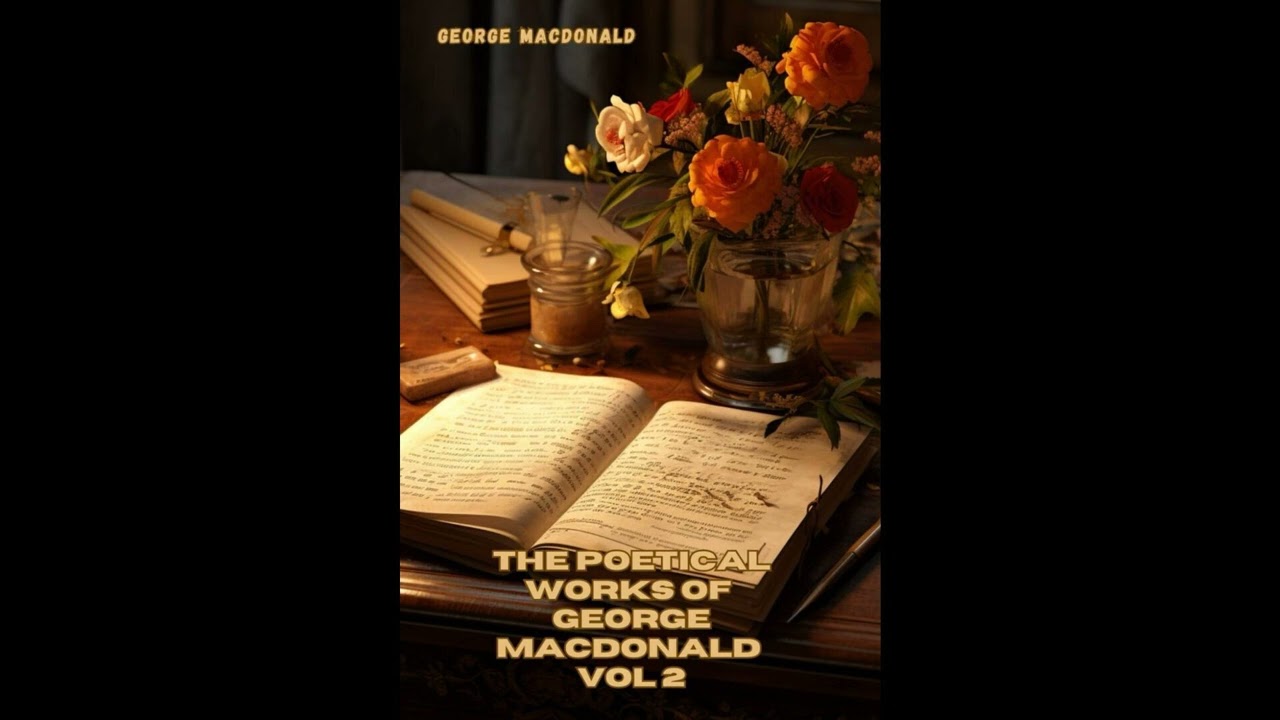
The Poetical Works of George MacDonald: Volume 2
For many, the name George MacDonald immediately brings to mind the foundational stories of fantasy, the allegorical tales that so profoundly influenced literary giants like C.S. Lewis and J.R.R. Tolkien. Yet, a crucial, often overlooked, dimension of his genius lies in his extensive poetical output. The Poetical Works of George MacDonald: Volume 2 offers a deeper understanding of the mind behind these celebrated novels, presenting a vast landscape of thought and feeling that fed his prose. These aren't mere poetic exercises; they are direct outpourings of his spiritual struggles, his profound connection to nature, and his unique theological vision. For anyone seeking to understand the wellspring of MacDonald's enduring influence, or for those simply yearning for verse that speaks to the deepest human questions of faith, suffering, and the divine, this collection represents an essential listening experience today. This second volume in MacDonald's collected poetry invites the listener into a world both intimately personal and cosmically grand. The collection itself presents a broad spectrum of human experience, moving through the quiet introspection of a solitary thinker to the grand pronouncements of a prophet. The settings vary wildly, from the windswept hills and misty lochs of MacDonald's native Scotland, alive with the presence of the divine, to the intimate confines of a domestic hearth, where lessons of love and patience unfold. Listeners will encounter verses that paint vivid pictures of natural beauty, others that grapple with philosophical conundrums, and still others that retell biblical narratives with fresh, empathetic insight. There are a great many lyrical pieces, sonnets that condense complex ideas into precise forms, and longer narrative poems that unfold like miniature stories, often with a moral or spiritual core. The central conflict often resides within the human heart, as the speaker—frequently a transparent reflection of MacDonald himself—grapples with doubt, the sting of loss, or the bewildering complexities of God's ways. The listener witnesses this internal wrestle, moving from moments of profound questioning to affirmations of unwavering belief, from expressions of sorrow to outbursts of joyous praise. The arc of this collection is not a single storyline, but rather the cumulative effect of hundreds of individual moments of revelation and struggle, creating a panoramic view of one man's spiritual and intellectual pilgrimage. Each poem contributes to a larger symphony of feeling, revealing a mind deeply attuned to both the suffering and the wonder of existence, always straining towards a greater understanding of divine love. Born in 1824 in Huntly, Aberdeenshire, Scotland, George MacDonald came from a family rooted in Scottish Presbyterianism, a heritage that would profoundly shape—and sometimes challenge—his spiritual path. After studying chemistry and physics at King's College, Aberdeen, he eventually turned to theology, attending Highbury College in London to train for the Congregational ministry. He was ordained, but his heterodox views, particularly his belief in a loving God who would ultimately redeem all, rather than condemn many to eternal damnation, led to his dismissal from his pulpit in Arundel. This turning point propelled him fully into a literary career, supporting his large family through writing, lecturing, and editing. MacDonald became a significant figure in Victorian literary circles, counting Lewis Carroll (Charles Dodgson) and John Ruskin among his friends. His literary output was prolific and varied, encompassing realistic novels such as Alec Forbes of Howglen and Robert Falconer, which often depicted Scottish life and explored social and theological issues. However, he is perhaps best remembered for his children's fantasies, including At the Back of the North Wind, The Princess and the Goblin, and The Princess and Curdie, as well as his adult fantasies like Phantastes and Lilith. These works established him as one of the pioneers of modern fantasy literature, influencing generations of writers with their blend of Christian allegory, psychological depth, and dreamlike imagery. He passed away in 1905, leaving behind a legacy that continues to resonate. The poetry collected here enacts several recurring themes that lie at the heart of MacDonald's worldview. Foremost among these is the concept of the Fatherhood of God, a tender and corrective divine love that permeates his universe. His poems often speak of God not as a distant judge, but as a parent deeply involved in the growth and well-being of his children, even through pain and discipline. For instance, many lyrical pieces reflect on suffering not as punishment, but as a crucible for refinement, a means through which divine love perfects the human spirit, echoing his broader theological stance that "God is always working for our good." Another significant theme is the spiritual potency of nature. MacDonald frequently uses the natural world—the sea, the mountains, the wind, the stars—as a direct revelation of God's character and presence. A poem describing a sunrise over a Scottish glen is rarely just a description; it is often a moment of spiritual awakening, where the beauty and order of creation speak profound truths about the Creator's wisdom and power, serving as a constant reminder of the unseen realities that underpin existence. MacDonald also frequently addresses the interplay between imagination and reality, seeing imagination not as mere escapism, but as a divine faculty essential for perceiving deeper truths that reason alone cannot grasp. His verse employs vivid, often symbolic, imagery to bridge the visible and invisible worlds, suggesting that true understanding requires a leap of imaginative faith. Finally, the collection consistently returns to the theme of suffering and redemption. Many poems grapple honestly with human pain, loss, and the struggle against doubt, yet they ultimately point towards a profound belief in ultimate healing and renewal. There is a persistent hope, a conviction that even in the darkest moments, there is a redemptive purpose at play, leading to spiritual growth and a deeper appreciation of divine grace. This refusal to shy away from hardship, while always steering towards a hopeful resolution, marks much of his work. These poetical works emerged during the Victorian era, a period of immense social, scientific, and spiritual upheaval in Britain. The rapid advancements in science, particularly Darwin's theory of evolution, challenged traditional religious beliefs and led to widespread questioning of established dogma. Industrialization brought about dramatic societal changes, creating both unprecedented wealth and widespread poverty, which in turn fueled social commentary and movements for reform. In the literary world, realism was gaining traction, yet there was also a strong counter-current of romanticism, spiritualism, and a yearning for meaning beyond the material. MacDonald's poetry stands at this confluence, offering a unique spiritual perspective that directly confronted the rigid Calvinism prevalent in his youth and provided an alternative to the growing scientific materialism. His work spoke to a generation wrestling with how to reconcile faith with reason, suffering with a benevolent God, and the human desire for truth in a rapidly changing world. It offered comfort and intellectual solace by presenting a God of unwavering love and a cosmos imbued with spiritual significance, directly addressing the anxieties and hopes of his time. Listening to The Poetical Works of George MacDonald: Volume 2 as an audiobook transforms the experience of encountering these verses. Poetry, perhaps more than any other literary form, truly comes alive when read aloud, allowing the listener to absorb the rhythm, meter, and the subtle musicality of MacDonald's language. The several hours of listening time allow for sustained immersion in his world, but also permit breaking the collection into smaller, contemplative segments. A skilled narrator can guide the listener through the varied emotional landscapes of the poems, from moments of quiet awe and tender reflection to passages of fervent theological argument or dramatic narrative. The narrator's voice gives shape to the lines, lending emphasis and nuance to MacDonald's often profound and sometimes challenging ideas. It allows the listener to appreciate the sonic textures of his words, the careful choices of alliteration and assonance, and the cadence that underscores his meaning, creating an intimate connection with the poet's voice that reading silently sometimes cannot achieve.
Enjoyed The Poetical Works of George MacDonald: Volume 2? A few ways to support us
Audible & Amazon links are affiliate; we may earn a small commission at no extra cost.
About this production
Human narration by a volunteer reader from LibriVox.org, the public-domain audiobook project. LibriVox volunteers record literary works whose copyright has expired in the United States, releasing the resulting recordings into the public domain.
The Poetical Works of George MacDonald: Volume 2 by George MacDonald. The underlying text is in the U.S. public domain. We do not republish any modern copyrighted edition, translation, or commentary.
The 4K cinematic visuals accompanying this audiobook are generated by an AI image model from prompts derived from the source text. No copyrighted photos, paintings, or stock footage are used. AI generation is disclosed on every video on our YouTube channel as required by YouTube's altered/synthetic content policy.
English subtitles are transcribed from the LibriVox recording with OpenAI Whisper. Translations into the 11 other supported languages are produced by Meta's NLLB-200 neural translation model. No human translator's copyrighted translation is used.
Questions about sourcing or rights? See our DMCA & Sourcing policy or contact us.
Enjoyed this audiobook?
If you'd like to own a copy of The Poetical Works of George MacDonald: Volume 2 or hear a professionally produced edition, the links below help support free audiobook production at no extra cost to you.
As an Amazon Associate we earn from qualifying purchases. Audible / print links are affiliate.