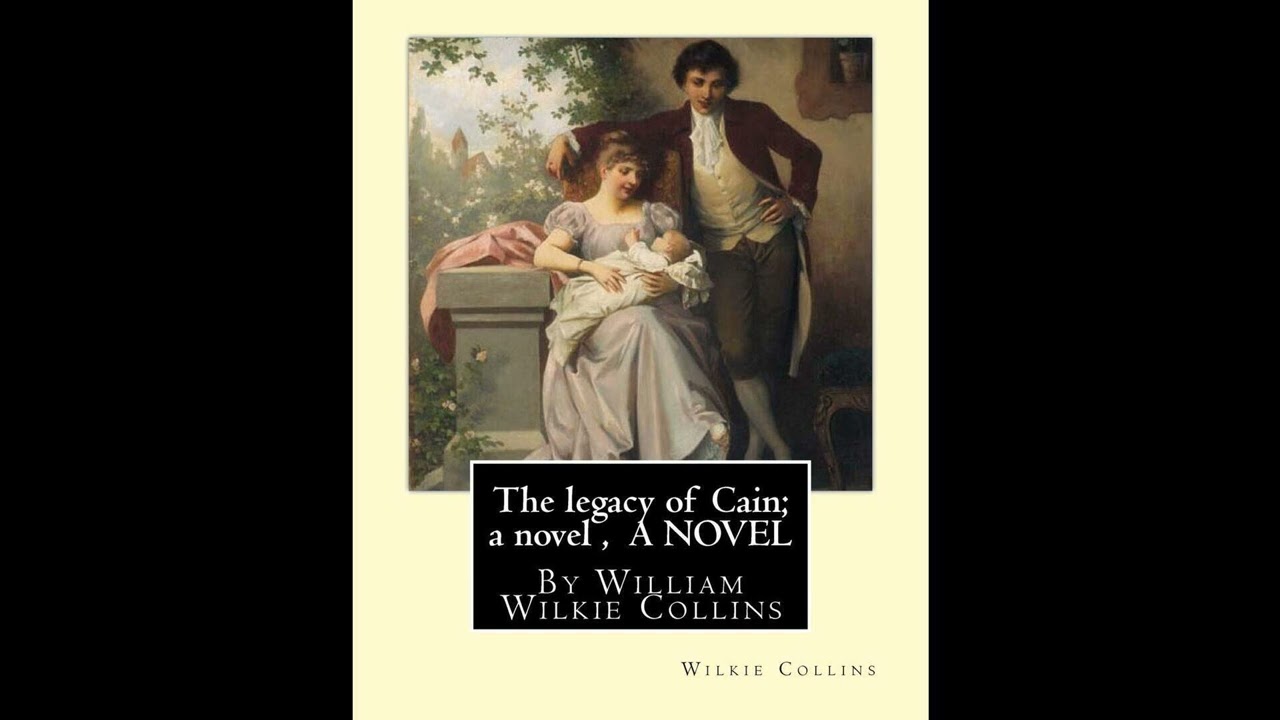
The legacy of Cain; a novel , By Wilkie Collins A NOVEL: William Wilkie Collins- Full Audiobook
Step into the shadowed drawing rooms and gaslit streets of Victorian England with Wilkie Collins’s The Legacy of Cain, a novel that dares to question the very nature of good and evil, and whether one’s destiny is truly predetermined by blood. Here is a story that, even today, asks uncomfortable questions about identity, social prejudice, and the long reach of family secrets, presenting a chilling psychological drama that held nineteenth-century readers spellbound and continues to resonate with anyone who has ever felt marked by their past. This isn't just a historical curiosity; it is a gripping human struggle, a testament to the power of a single revelation to shatter a life, forcing a young woman to confront the most terrifying question of all: is wickedness an inheritance? The novel introduces us to Helena, a seemingly ordinary young woman whose life is irrevocably altered by a catastrophic discovery. She learns, with a profound shock, that her biological mother was a notorious murderess, a woman who faced the ultimate penalty for her crime. This devastating truth casts a dark shadow over Helena's existence, burdening her with what society of the era deemed a "legacy of Cain"—the chilling notion that a criminal past could taint future generations, a stain on the soul passed down through blood. Suddenly, the quiet security of her upbringing crumbles, replaced by an agonizing uncertainty about her own character and the potential for inherited depravity. Helena finds herself taken under the wing of Mrs. Nelson, a well-meaning but rigidly conventional woman whose compassion is perpetually at odds with her societal expectations. As Helena grapples with the weight of her origins, she tries to build a new life, navigating the treacherous waters of Victorian judgment and self-doubt. Her path intersects with Philip Lefrank, a man who carries his own complex history and who represents a potential balm for her wounded spirit. The central conflict then becomes Helena’s desperate fight to define herself, to prove that her character is her own and not merely an echo of her mother’s sins, all while the specter of her past threatens to consume her, constantly tempting her with the fear that she, too, harbors a predisposition to evil. William Wilkie Collins, born in London in 1824, was the son of a successful landscape painter, William Collins, who instilled in him a love for art and travel that deeply influenced his literary career. After studying law, Collins turned to writing, quickly gaining recognition for his innovative storytelling. He became a close friend and collaborator of Charles Dickens, a relationship that spurred some of his most significant work and allowed him to hone his craft within the dynamic literary circles of mid-Victorian London. Collins distinguished himself as a pioneer of "sensation fiction," a genre that blended elements of realism with thrilling suspense, often featuring shocking crimes, hidden identities, and domestic intrigue that captivated a burgeoning reading public. Among his many notable works are The Woman in White (1860), which redefined the suspense novel and established a blueprint for mystery fiction, and The Moonstone (1868), widely considered one of the earliest and greatest English detective novels. Collins’s personal life was as unconventional as his plots; he maintained a long-term relationship with Caroline Graves, living openly with her and her daughter, and later also with Martha Rudd, with whom he had three children, challenging the staid moral conventions of his time. He struggled with severe gout and an addiction to laudanum, an opium-based painkiller, experiences that occasionally found their way into the psychological depth and troubled characters of his later novels, lending them a distinctively introspective edge until his death in 1889. The Legacy of Cain vividly enacts several profound themes that preoccupied Victorian society. Central among these is the stark tension between heredity and environment. Helena's inner turmoil and the external reactions she faces constantly highlight the period's anxieties about whether moral character is an inherited trait, passed down genetically, or if it can be shaped by upbringing and personal will. The very title evokes the biblical idea of a cursed lineage, and the novel uses Helena’s story to question whether an individual truly stands condemned by the actions of their ancestors, or if personal choice can overcome such a perceived birthright. For instance, her every anxious glance in a mirror, her every moment of self-doubt about an impulsive thought, becomes a direct manifestation of this thematic struggle, as she constantly fears detecting the "mark of Cain" within herself. Related to this is the theme of social prejudice and the immense power of public opinion. Helena’s life is not only shadowed by her mother's crime but also by the unforgiving judgment of a society quick to condemn based on association. Even well-intentioned characters struggle to reconcile Helena’s apparent goodness with the notorious reputation of her parentage, creating an atmosphere where secrets are dangerous and reputation is paramount. This societal pressure, often more devastating than any personal failing, forces Helena into isolation and fuels her internal conflict, demonstrating how an individual’s identity can be crushed under the weight of communal condemnation. Collins expertly uses specific scenes of polite ostracism and whispered judgments to illustrate how a mere hint of scandal could unravel a life in Victorian society. Another key theme involves the deceptive nature of appearances versus reality, a hallmark of sensation fiction, where respectable facades often conceal disturbing truths. The late Victorian era, when The Legacy of Cain was written, was a period of immense social and scientific upheaval. Industrialization had transformed landscapes and cities, challenging traditional class structures, while emerging scientific theories, particularly Darwin’s ideas on evolution and the nascent understanding of heredity, profoundly influenced public discourse. This era saw intense public fascination with crime and its causes, fueling debates about nature versus nurture and the potential for moral degeneration. Sensation novels like Collins’s often served as a popular cultural forum for these anxieties, allowing readers to grapple with frightening domestic secrets, social hypocrisy, and questions of psychological deviance within a thrilling narrative framework. Collins's work spoke directly to a society both fascinated and terrified by the idea that respectability could be a thin veneer over deeply disturbing truths, and that the domestic sphere itself could harbor monstrous secrets. Listening to The Legacy of Cain as an audiobook offers a singular experience of immersion in Collins’s meticulously crafted narrative. The novel's several hours of length allow for a full appreciation of its intricate plotting and psychological tension, making it ideal for extended listening sessions where the slow burn of suspense can truly take hold. A skilled narrator brings the distinct voices of Victorian characters to life—the earnest Helena, the conflicted Mrs. Nelson, the compelling Philip Lefrank—making their internal struggles and dramatic exchanges palpable. The measured pacing of Collins’s prose, often punctuated by sudden, shocking revelations, is particularly effective when delivered through audio, guiding the listener through the twists and turns of Helena's emotional landscape and the unfolding mystery with a compelling sense of immediacy and atmospheric depth.
Enjoyed The legacy of Cain; a novel , By Wilkie Collins A NOVEL: William Wilkie Collins- Full Audiobook? A few ways to support us
Audible & Amazon links are affiliate; we may earn a small commission at no extra cost.
About this production
Human narration by a volunteer reader from LibriVox.org, the public-domain audiobook project. LibriVox volunteers record literary works whose copyright has expired in the United States, releasing the resulting recordings into the public domain.
The legacy of Cain; a novel , By Wilkie Collins A NOVEL: William Wilkie Collins- Full Audiobook by Wilkie Collins. The underlying text is in the U.S. public domain. We do not republish any modern copyrighted edition, translation, or commentary.
The 4K cinematic visuals accompanying this audiobook are generated by an AI image model from prompts derived from the source text. No copyrighted photos, paintings, or stock footage are used. AI generation is disclosed on every video on our YouTube channel as required by YouTube's altered/synthetic content policy.
English subtitles are transcribed from the LibriVox recording with OpenAI Whisper. Translations into the 11 other supported languages are produced by Meta's NLLB-200 neural translation model. No human translator's copyrighted translation is used.
Questions about sourcing or rights? See our DMCA & Sourcing policy or contact us.
Enjoyed this audiobook?
If you'd like to own a copy of The legacy of Cain; a novel , By Wilkie Collins A NOVEL: William Wilkie Collins- Full Audiobook or hear a professionally produced edition, the links below help support free audiobook production at no extra cost to you.
As an Amazon Associate we earn from qualifying purchases. Audible / print links are affiliate.