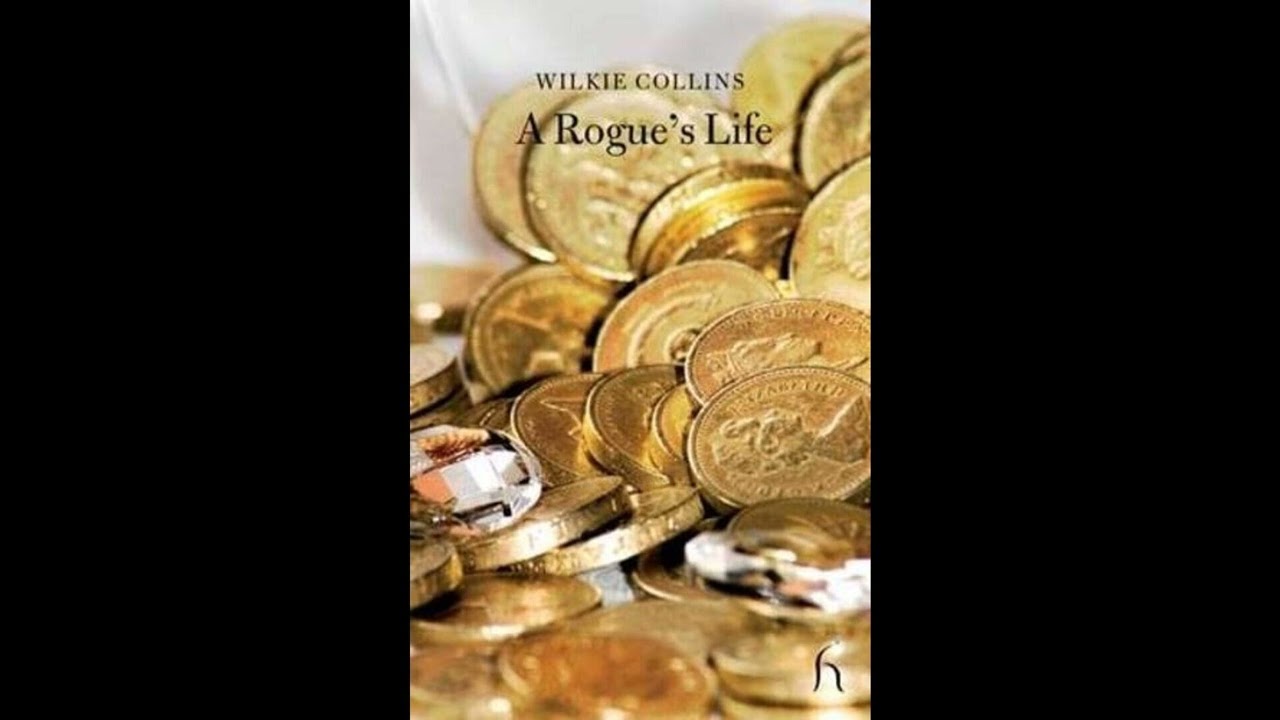
A Rogue's Life (Hesperus Classics)
Wilkie Collins, a name synonymous with the birth of sensation fiction, presents listeners with a lesser-known but equally inventive tale in A Rogue's Life. This narrative stands apart from his more famous mysteries, offering a unique, often comedic, first-person confession from a self-proclaimed scoundrel. It asks us to look through the eyes of someone who consistently bends the rules, testing the boundaries of Victorian morality and societal expectation with a mischievous grin. Why should a listener care today? Because the appeal of a well-told story about human foibles, ambition, and the relentless pursuit of one's desires—no matter how ill-advised—remains as potent as ever. This is a chance to step into the mind of a character whose life is a series of ingenious scrapes and narrow escapes, challenging our own ideas about right and wrong, success and failure. Our protagonist is Frank Softly, a man who dedicates his existence to the art of deception and the pursuit of an easy fortune, all chronicled in his own unapologetic voice. From his earliest days, Softly displays a singular talent for avoiding honest labor and exploiting the gullibility of others. The story opens by introducing his origins and quickly establishes his unusual approach to life, setting him on a path that is anything but conventional. We are placed firmly in the bustling, often hypocritical, world of mid-Victorian England, a society ripe for the plucking by a man of Softly's particular talents. His adventures take him from humble beginnings to encounters with various unsuspecting individuals, each interaction providing a new stage for his schemes. The central conflict arises not from a grand, overarching conspiracy, but from Softly's continuous struggle against the consequences of his own actions and the persistent demands of an honest world he so diligently tries to evade. We witness his attempts to marry for money, his forays into dubious business ventures, and his perpetual flight from creditors and disapproving relatives. The arc of the story follows Softly’s attempts to secure a comfortable life without recourse to genuine effort, relying instead on his quick wit, charm, and a remarkable ability to extricate himself from tight spots. His narrative voice, wry and self-aware, maintains a surprising degree of sympathy even as he recounts his less-than-honorable deeds, inviting the listener to revel in his cunning rather than condemn his ethics. William Wilkie Collins, born in London in 1824, carved out a distinguished career as one of the most popular and innovative writers of the Victorian era. The son of a successful landscape painter, William Collins, young Wilkie initially studied law but soon gravitated towards literature, finding his true calling in storytelling. His formative years were marked by extensive travel across Europe with his family, experiences that undoubtedly broadened his perspective and infused his later works with a keen observation of human nature and diverse settings. He famously forged a close, enduring friendship with Charles Dickens, a relationship that profoundly influenced both men's writing and led to numerous collaborations in Dickens's periodicals, including Household Words and All the Year Round, where A Rogue's Life first appeared. Collins's personal life was as unconventional as some of his plots. He maintained two separate households and families, an arrangement discreetly managed in an age of strict moral codes, yet it speaks to his independent spirit and a disregard for social conventions that often manifested in his fictional characters. Despite ongoing health issues, including chronic pain that led to reliance on laudanum, he remained a prolific author until his death in 1889. While A Rogue's Life might be less frequently discussed, his enduring legacy rests on seminal works like The Woman in White (1860) and The Moonstone (1868), which are widely regarded as foundational texts of the sensation novel genre and early examples of detective fiction, pioneering techniques of suspense, multiple narrators, and complex plotting that continue to influence writers today. Among the prominent themes animating A Rogue's Life is the deceptive nature of appearances and the often-blurred lines between morality and expediency. Frank Softly, with his respectable veneer and ingratiating manner, exemplifies how easily individuals can be swayed by outward show rather than true character. For instance, in one memorable episode, Softly manages to charm his way into a seemingly advantageous marriage, relying entirely on a carefully constructed persona and a series of clever lies to present himself as a man of means and rectitude. This entire scenario serves as a stark illustration of how easily Victorian society, for all its strictures, could be fooled by a convincing performance, highlighting the era's vulnerability to confidence tricksters. Another significant theme centers on social mobility and the lengths to which individuals would go to ascend the class ladder, or simply to avoid falling down it. Softly's entire existence is a comment on the rigidity of class structures and the limited avenues available for genuine advancement without inherited wealth or significant effort. His schemes, however outlandish, are often born of a desire for comfort and status that society ostensibly offered but withheld from those without the right connections or capital. His encounters with various societal figures, from earnest professionals to pompous gentry, reveal the inherent hypocrisies and prejudices that Softly so expertly exploits for his own gain, offering a cynical yet humorous critique of the era's social dynamics. The mid-nineteenth century, the period during which A Rogue's Life was conceived and published, was a time of tremendous upheaval and change in Britain. The Industrial Revolution had radically reshaped society, leading to rapid urbanization, the growth of a powerful middle class, and stark disparities between wealth and poverty. There was a burgeoning public interest in crime, scandal, and the seedy underbelly of polite society, fueled by newspaper reports and the growing popularity of novels published serially in magazines. These serials were widely consumed, making fiction accessible to a broader audience than ever before. In this context, the sensation novel emerged as a powerful literary force, often dealing with themes of hidden crimes, secret identities, and domestic intrigue that shocked and thrilled its readers. Collins, alongside contemporaries like Mary Elizabeth Braddon, became a leading exponent of this genre, responding to the public's appetite for stories that offered excitement and psychological tension, often subverting conventional notions of hero and villain. A Rogue's Life, with its unconventional protagonist and its focus on the darker corners of human motivation, fits squarely within this cultural moment, offering a lighthearted yet sharp commentary on the prevailing anxieties and fascinations of Victorian England. Listening to A Rogue's Life as an audiobook offers a particularly immersive way to experience Collins's witty prose and unique narrative style. The voice of Frank Softly, whether delivered with self-satisfied charm, feigned innocence, or a touch of genuine exasperation, truly comes alive through a skilled narrator. The several hours of listening time allow the story to unfold at a comfortable pace, perfect for daily commutes, quiet evenings, or while tending to household tasks. Pay close attention to the narrator's pacing, especially during Softly's more elaborate explanations of his escapades, and how their vocal performance brings out the subtle humor and underlying tension in his dialogue. The audio format also enhances the atmospheric details of Victorian London and the various locales Softly passes through, painting vivid pictures with sound and tone that transport you directly into the rogue's world.
Enjoyed A Rogue's Life (Hesperus Classics)? A few ways to support us
Audible & Amazon links are affiliate; we may earn a small commission at no extra cost.
About this production
Human narration by a volunteer reader from LibriVox.org, the public-domain audiobook project. LibriVox volunteers record literary works whose copyright has expired in the United States, releasing the resulting recordings into the public domain.
A Rogue's Life (Hesperus Classics) by Wilkie Collins. The underlying text is in the U.S. public domain. We do not republish any modern copyrighted edition, translation, or commentary.
The 4K cinematic visuals accompanying this audiobook are generated by an AI image model from prompts derived from the source text. No copyrighted photos, paintings, or stock footage are used. AI generation is disclosed on every video on our YouTube channel as required by YouTube's altered/synthetic content policy.
English subtitles are transcribed from the LibriVox recording with OpenAI Whisper. Translations into the 11 other supported languages are produced by Meta's NLLB-200 neural translation model. No human translator's copyrighted translation is used.
Questions about sourcing or rights? See our DMCA & Sourcing policy or contact us.
Enjoyed this audiobook?
If you'd like to own a copy of A Rogue's Life (Hesperus Classics) or hear a professionally produced edition, the links below help support free audiobook production at no extra cost to you.
As an Amazon Associate we earn from qualifying purchases. Audible / print links are affiliate.