A Legend of Montrose: Historical Novel
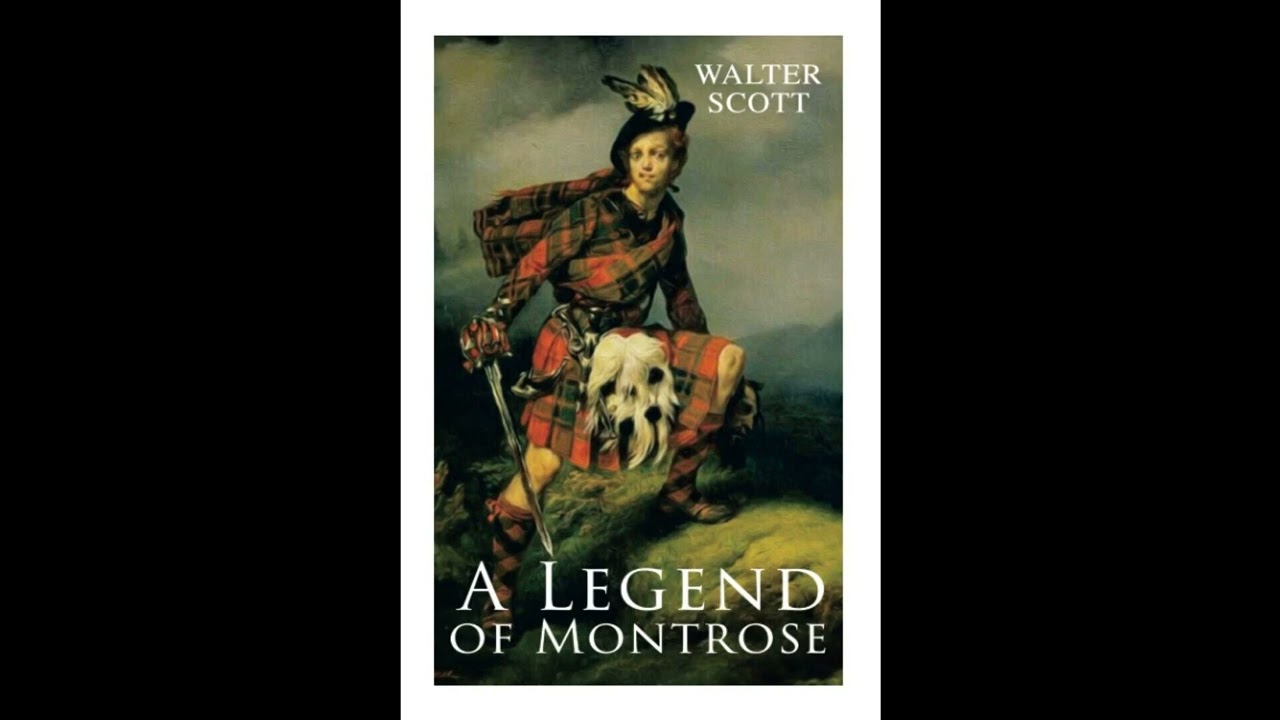
Step into the tumultuous heart of seventeenth-century Scotland with "A Legend of Montrose," a gripping historical novel that brings to life the fierce loyalties and brutal conflicts of a nation tearing itself apart. Walter Scott, the grand architect of historical fiction, invites listeners into a world where honor is both a shield and a blade, where ancient clans clash with modern armies, and where personal destinies are irrevocably tied to the fate of kingdoms. This isn't merely a story of battles and political machinations; it’s a penetrating look at the human cost of civil war, a vivid portrayal of a bygone era that continues to resonate with its questions of identity, allegiance, and survival. Even today, the spirited debates and the deeply drawn characters offer a profound reflection on the forces that shape nations and individuals. The narrative transports us to the rugged Scottish Highlands during the Wars of the Three Kingdoms, a period of intense strife where the Royalist cause, championed by James Graham, Marquess of Montrose, contended against the Covenanters. Against this backdrop of sweeping conflict, the story centers on the personal entanglements of Captain Dugald Dalgetty, a mercenary soldier of fortune whose pragmatic view of war and unwavering dedication to his own advancement provide a cynical yet often humorous counterpoint to the fierce idealism around him. Dalgetty finds himself in the employ of Montrose, whose daring campaigns against superior Covenanter forces are legendary. The plot then entwines with the fortunes of the Children of the Mist, a broken clan led by the enigmatic Ranald MacEagh, and the fate of Annot Lyle, a young woman whose mysterious past connects her to both Highland families and Lowland gentry. Her sudden appearance at Inveraray Castle, a stronghold of the Duke of Argyll—Montrose's primary Covenanter rival—sets in motion a chain of events involving abduction, rivalry, and a long-simmering feud. As Montrose gathers his forces, including a contingent of wild Irish auxiliaries and various Highland clans, the tension builds. The novel meticulously details the strategic brilliance and personal sacrifices demanded by these campaigns, while also focusing on the smaller, more intimate dramas unfolding within and between the warring factions. Characters like the fierce and unpredictable Allan M'Aulay, a Highlander with a chilling ability to foresee death, add layers of superstition and fatalism to the historical realism. The central conflict morphs from a grand-scale military engagement to a more personal struggle for Annot Lyle’s hand and for justice regarding past wrongs, all while the greater war rages. The intricate web of alliances, ancient feuds, and emerging romantic attachments forms the core of a story where courage is tested and loyalties are challenged, leading to a series of escalating confrontations that propel the listener through the dramatic Scottish landscape. Walter Scott, born in Edinburgh in 1771, became the towering figure who essentially invented the historical novel as we know it. Despite a childhood illness that left him lame, his mind was exceptionally keen, absorbing vast amounts of Scottish lore, ballads, and history. After a successful career as a lawyer and clerk of session, he turned his prodigious talents to literature, initially finding fame as a poet with works like The Lady of the Lake. However, it was his shift to prose fiction, beginning anonymously with Waverley in 1814, that cemented his legacy. He transformed historical storytelling from dry chronicle into vivid, character-driven narrative. Scott's impact was immediate and profound, establishing a genre that would influence generations of writers across Europe and America. His home at Abbotsford, which he rebuilt and furnished with historical artifacts, became a reflection of his fascination with the past. Though later plagued by financial ruin from a publishing venture in which he was a silent partner, Scott continued to write prolifically to pay off his immense debts, publishing celebrated works like Ivanhoe, Rob Roy, and Kenilworth. His ability to weave historical figures and events with fictional characters and dramatic plots created a powerful sense of authenticity and spectacle, earning him a place as one of the most significant literary figures of the Romantic era before his death in 1832. "A Legend of Montrose" brilliantly enacts several enduring themes. One major thread is the clash of cultures, particularly between the wild, clan-loyal Highlanders and the more ordered, often prejudiced Lowlanders. This division is evident in the stark contrast between the traditional Highland fighting methods and the more European-style mercenary tactics of Dalgetty, or the rigid religious convictions of the Covenanters versus the ancient superstitions of the clans. Another prominent theme is the nature of loyalty and betrayal. Characters grapple with allegiances to family, clan, king, and personal honor, often finding these loyalties in direct conflict. For instance, the fierce devotion of Montrose's followers to the Royalist cause is set against the shifting allegiances and ancient grievances of the clans he attempts to unite. The novel also examines idealism versus pragmatism. Montrose embodies a chivalric ideal, fighting for a principle, while Captain Dalgetty represents a more cynical, self-serving approach to warfare, carefully calculating his own advantage in every situation. This contrast is often played for humor, but it also provides a grounded perspective on the brutal realities of conflict. Finally, the role of fate and predestination runs through the story, particularly in the character of Allan M'Aulay and his unsettling prophetic abilities. His visions lend an air of tragic inevitability to many events, suggesting that even in the midst of human struggle, some destinies are preordained, adding a layer of supernatural mystery to the historical unfolding. When Scott was writing, the early nineteenth century was a period of intense interest in national history, folklore, and the concept of the nation-state. The Enlightenment had recently emphasized reason, but the emerging Romantic movement brought a renewed appreciation for emotion, the sublime, and the dramatic narratives of the past. Scott himself was deeply invested in preserving and romanticizing Scottish history, often feeling that the ancient ways and unique cultural identity of the Highlands were fading. His novels provided a means to revisit and celebrate these traditions, influencing how Scotland and its history were perceived not just domestically, but globally. "A Legend of Montrose," originally published as part of Tales of My Landlord, 3rd Series, emerged from this milieu, a testament to his desire to capture the vivid dramas and unique characters of a transformative period in Scottish history, making it accessible and exciting for a broad readership. Listening to "A Legend of Montrose" as an audiobook offers an immersive experience, especially given its setting and character dynamics. The run length, measured in several hours, means it's an ideal companion for long drives, quiet evenings, or while tending to daily tasks, allowing the listener to truly settle into the rhythm of Scott's prose. A skilled narrator can bring to life the distinct voices of the diverse cast—from the measured pronouncements of Montrose to the dry wit of Dalgetty, and the passionate outbursts of the Highlanders—enhancing the cultural and individual contrasts so central to the narrative. Pay close attention to the pacing, which often builds slowly, allowing the listener to absorb the detailed descriptions of landscape and battle, before accelerating into moments of high drama and confrontation. The rich dialogue, delivered with appropriate accents and intonations, breathes extra life into the historical atmosphere, ensuring that the listener is fully transported to the rugged, romantic, and dangerous world of seventeenth-century Scotland.
Enjoyed A Legend of Montrose: Historical Novel? A few ways to support us
Audible & Amazon links are affiliate; we may earn a small commission at no extra cost.
About this production
Human narration by a volunteer reader from LibriVox.org, the public-domain audiobook project. LibriVox volunteers record literary works whose copyright has expired in the United States, releasing the resulting recordings into the public domain.
A Legend of Montrose: Historical Novel by Sir Walter Scott. The underlying text is in the U.S. public domain. We do not republish any modern copyrighted edition, translation, or commentary.
The 4K cinematic visuals accompanying this audiobook are generated by an AI image model from prompts derived from the source text. No copyrighted photos, paintings, or stock footage are used. AI generation is disclosed on every video on our YouTube channel as required by YouTube's altered/synthetic content policy.
English subtitles are transcribed from the LibriVox recording with OpenAI Whisper. Translations into the 11 other supported languages are produced by Meta's NLLB-200 neural translation model. No human translator's copyrighted translation is used.
Questions about sourcing or rights? See our DMCA & Sourcing policy or contact us.
Enjoyed this audiobook?
If you'd like to own a copy of A Legend of Montrose: Historical Novel or hear a professionally produced edition, the links below help support free audiobook production at no extra cost to you.
As an Amazon Associate we earn from qualifying purchases. Audible / print links are affiliate.