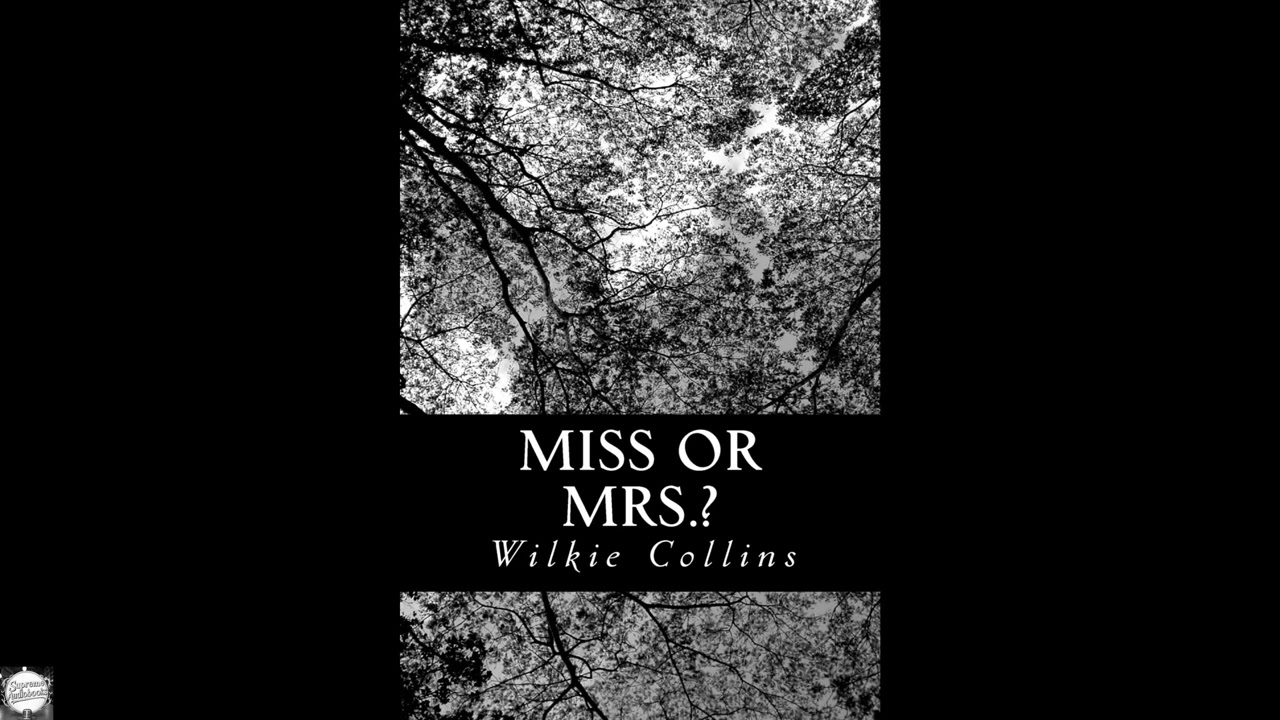
Miss or Mrs.?
Imagine a world where a woman’s entire social standing, her very identity, and her right to her own name hung precariously on a single, whispered question: “Miss or Mrs.?” Wilkie Collins, the architect of Victorian suspense, plunges us into precisely such a world with his shrewd and gripping novel. This is a story that peels back the polished facade of English society to reveal the anxieties, the deceptions, and the raw vulnerability lurking beneath, particularly for women navigating a labyrinth of expectations. Centuries after its creation, its precise plotting and keen psychological insight continue to resonate, reminding us that the human heart, and the secrets it keeps, remain eternally compelling. The story unfolds in a quiet corner of the English countryside, a setting seemingly idyllic but ripe for hidden truths. Our narrator, Laurence Grice, a young man recently returned from India, finds himself drawn into a peculiar domestic drama upon visiting the respectable, if somewhat rigid, household of Mr. and Mrs. Van Brandt. They have taken in a beautiful, enigmatic young woman named Natalie Gray, whose past is shrouded in an unsettling vagueness. The central mystery, which soon consumes Laurence, is the true nature of Natalie’s marital status. Is she a single woman, "Miss" Gray, or is she "Mrs."—a wife, perhaps even a widow? This seemingly simple social distinction carries immense weight, affecting her reputation, her potential inheritance, and her very place in a society obsessed with propriety. As Laurence—initially more of an observer—becomes increasingly entangled, he uncovers layers of half-truths and deliberate evasions, propelled by both a natural curiosity and a growing affection for Natalie. The tension mounts with the unexpected arrival of Mr. Peregrine, a figure from Natalie’s past whose reappearance only deepens the ambiguity surrounding her. His presence stirs old fears and fresh suspicions, forcing Natalie into an even more guarded posture. Laurence, now determined to unravel the knot of secrets, finds himself caught between his desire to protect Natalie and his relentless pursuit of the truth. He witnesses firsthand the subtle power plays, the whispered judgments, and the societal pressures that threaten to crush Natalie, regardless of her innocence or guilt. The narrative meticulously tracks Laurence’s investigative efforts, his conversations with reluctant witnesses, and his growing frustration with the elaborate web of circumstances designed to keep Natalie's true status hidden. Every new piece of information seems to raise more questions, pulling Laurence, and by extension the listener, deeper into the unfolding mystery, all while preserving the ultimate revelation for the climactic moments. Wilkie Collins, born in London in 1824, was a groundbreaking figure in English literature, renowned for his innovative approach to narrative structure and his pioneering efforts in what would become known as the detective novel. The son of landscape painter William Collins, he spent part of his childhood in Italy, an experience that likely broadened his perspective beyond conventional English life. Though he initially studied law, his true calling lay in writing. His close friendship and literary collaboration with Charles Dickens proved pivotal, with Dickens publishing many of Collins's serials in his popular journals, Household Words and All the Year Round. Collins’s output was prolific, but he is most celebrated for his "sensation novels," a genre he helped define. These works, which included The Woman in White (1859) and The Moonstone (1868), captivated Victorian audiences with their blend of intricate plotting, psychological drama, and domestic secrets. The Moonstone, in particular, is often credited as one of the earliest full-length detective novels in the English language, influencing generations of crime writers. Collins possessed an extraordinary talent for constructing elaborate plots, maintaining suspense, and developing characters whose inner lives were as complex as the mysteries they inhabited. He consistently pushed the boundaries of conventional storytelling, earning his place as a master of suspense and a significant voice in the Victorian literary canon. At its core, Miss or Mrs.? probes the themes of identity and the stark contrast between appearance and reality. Natalie Gray's entire existence in the story revolves around the public perception of her marital status, a fundamental question of who she truly is in the eyes of society. Collins skillfully illustrates how easy it is for an individual's reputation to be shaped—or shattered—by ambiguous circumstances and the relentless power of rumor. Natalie’s guarded demeanor, her evasive answers, and the reactions of those around her all contribute to this central tension, forcing the listener to question every detail and every character’s motive. Another poignant theme is the severe constraints placed upon women in Victorian society. Natalie's precarious situation underscores the vulnerability of women whose legal and social standing was largely defined by their relationships to men. Her potential inheritance, her freedom, and her social acceptance all hinge upon whether she is legally a "Miss" or a "Mrs." Collins often used his novels to critique these societal injustices, highlighting how a woman’s fate could be tragically sealed by circumstances beyond her control, or by the manipulative machinations of others, even in seemingly respectable settings like the Van Brandts' home. The narrative is a testament to the suffocating pressure of Victorian propriety and the constant threat of scandal. Miss or Mrs.? emerged in 1871, a period of profound social and cultural shifts in Victorian England. The era was characterized by a strict moral code, particularly concerning women’s roles, sexual propriety, and property rights. Women, especially unmarried ones, held limited legal autonomy, and their reputation was paramount. The sensation novel, which Collins championed, exploded in popularity during this time, appealing to a burgeoning middle-class readership that devoured serial fiction in magazines and newspapers. These stories often blended domestic drama with thrilling plots, crime, and psychological suspense, providing both entertainment and a means to subtly—or not so subtly—question societal norms. Collins’s work, including this novel, often served as a vehicle for social commentary, using the thrilling narratives to expose the hypocrisies and rigidities of Victorian life. The legal intricacies surrounding marriage, inheritance, and a woman’s property—themes central to Miss or Mrs.?—were particularly relevant given ongoing debates and nascent reforms, such as the Married Women’s Property Act of 1870. The novel’s focus on the ambiguities of identity and the devastating consequences of social judgment directly reflected anxieties prevalent in a society struggling to reconcile traditional values with a rapidly changing world. It demonstrated how legal loopholes and social conventions could trap individuals, particularly women, in webs of deceit and despair. Listening to Miss or Mrs. as an audiobook offers a uniquely immersive way to experience Collins's masterful storytelling. The narrator's performance is crucial in bringing out the subtle nuances of Laurence Grice’s voice—his initial naivete, his growing determination, and his gradual disillusionment as he uncovers more of the truth. A skilled reader can heighten the tension that permeates every conversation and observation, drawing listeners into the intricate web of secrets as if they too are piecing together the clues. The run length of several hours makes this a perfect companion for long drives, quiet evenings, or any time one wishes to be transported into a compelling mystery. The measured pacing of Collins’s prose, with its careful unfolding of revelations, is perfectly suited for audio, allowing the listener to savor each detail, each carefully chosen word, and fully appreciate the atmospheric descriptions of the Victorian setting and its intriguing inhabitants. The distinct voices given to characters through narration—from Natalie’s guarded responses to Mr. Peregrine’s ominous presence—enhance the drama, making the mystery of her identity not just a plot point, but a deeply personal predicament.
Enjoyed Miss or Mrs.?? A few ways to support us
Audible & Amazon links are affiliate; we may earn a small commission at no extra cost.
About this production
Human narration by a volunteer reader from LibriVox.org, the public-domain audiobook project. LibriVox volunteers record literary works whose copyright has expired in the United States, releasing the resulting recordings into the public domain.
Miss or Mrs.? by Wilkie Collins. The underlying text is in the U.S. public domain. We do not republish any modern copyrighted edition, translation, or commentary.
The 4K cinematic visuals accompanying this audiobook are generated by an AI image model from prompts derived from the source text. No copyrighted photos, paintings, or stock footage are used. AI generation is disclosed on every video on our YouTube channel as required by YouTube's altered/synthetic content policy.
English subtitles are transcribed from the LibriVox recording with OpenAI Whisper. Translations into the 11 other supported languages are produced by Meta's NLLB-200 neural translation model. No human translator's copyrighted translation is used.
Questions about sourcing or rights? See our DMCA & Sourcing policy or contact us.
Enjoyed this audiobook?
If you'd like to own a copy of Miss or Mrs.? or hear a professionally produced edition, the links below help support free audiobook production at no extra cost to you.
As an Amazon Associate we earn from qualifying purchases. Audible / print links are affiliate.