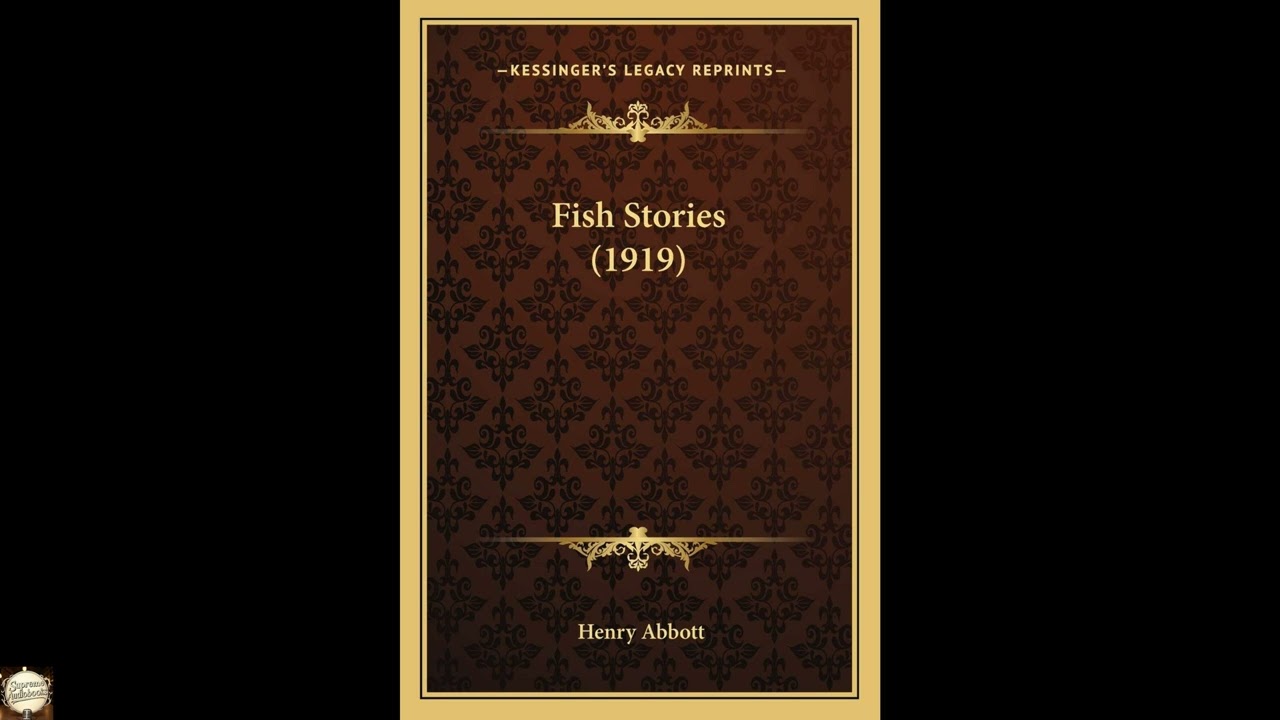
Fish Stories (1919)
Step into a world where the line between fact and folklore blurs as easily as sunlight on a ripple. Henry Abbott's 1919 collection, Fish Stories, is far more than a simple recounting of catches; it is a celebration of human ingenuity, camaraderie, and the enduring allure of the wild. This literary treasure, published just after the Great War, invites listeners to a quieter time, when the grandest tales were spun not in gilded halls, but on riverbanks and around crackling campfires. It speaks to the universal human impulse to embellish, to find poetry in the mundane, and to connect with nature on terms both profound and hilariously absurd. Even a century later, the wisdom and wit contained within these pages resonate, reminding us that the truest stories often live in the spaces between what happened and how we remember it. The tales within Fish Stories transport us to a variety of waterscapes, from the placid lakeshores of rural America to the swift currents of mountain streams and perhaps even the salty expanses of the coast. Abbott introduces a cast of characters who are less heroes and more ordinary men, each with a peculiar knack for observation and a robust capacity for exaggeration. There’s the seasoned angler, whose lines have seen more seasons than most folks have seen decades, and the enthusiastic newcomer, whose excitement often outstrips his skill. We meet quiet companions who offer thoughtful asides, and boisterous raconteurs who delight in one-upping each other with increasingly improbable accounts of aquatic adversaries. The central thread connecting these narratives is the pursuit of fish, certainly, but more profoundly, it is the pursuit of a good story. Each chapter presents a new scenario: the elusive monster of the depths, the fish that got away in spectacular fashion, the comical mishaps involving tangled lines and capsized boats. Abbott constructs scenarios where the conflict isn't just between man and nature, but also between the teller and the listener, as each person tries to discern the kernels of truth within the husk of hyperbole. The stories unfold with a gentle pace, building anticipation not always for the catch itself, but for the inevitable twist in the tale, the unexpected revelation, or the punchline that underscores the shared human experience of fishing. There are no sudden, shocking resolutions, but rather a progression of human interactions and natural encounters, each offering its own small revelation without giving away the ultimate humor or insight found in the final pages. Henry Abbott, though his name might not immediately spring to mind alongside other literary giants, was a quiet yet significant voice in early 20th-century American letters. Born in the late 1870s in the northeastern United States, perhaps in a small town nestled among lakes and rivers, he cultivated an early fascination with the outdoors. His upbringing instilled in him a deep appreciation for the rhythms of rural life and the simple pleasures of nature. While not extensively documented in the popular press, Abbott was likely a contributor to various regional magazines and outdoor journals before Fish Stories brought his distinctive narrative style to a wider audience. He was not affiliated with a particular literary school in the same way modernists or realists were, but rather carved out a niche as a practitioner of finely crafted regional literature, a style characterized by its focus on specific geographical settings, local customs, and character-driven narratives often infused with a keen sense of place. His writing placed him among those American authors who found profound meaning in the everyday and who saw the natural world as both a sanctuary and a stage for human drama. He passed away in the mid-20th century, leaving behind a small but cherished body of work that continues to speak to those who appreciate authenticity and wit. At its core, Fish Stories considers several enduring themes. Foremost among them is the nature of truth and fiction in storytelling. Abbott illustrates how memory, desire, and the simple pleasure of entertainment can reshape events. We see this enacted repeatedly, for instance, in the description of a rather ordinary perch caught on a lazy afternoon which, by the time it reaches the evening campfire, has grown to proportions capable of challenging a small boat, its fight described with operatic flair. The author subtly questions what constitutes "truth" when personal experience and shared human impulse intersect. Another prominent theme is humanity's connection to the natural world. Beyond the act of fishing, Abbott frequently pauses to describe the serene beauty of a sunrise over a still lake or the invigorating chill of a mountain stream. These moments provide a meditative counterpoint to the lively tales, reminding characters, and thus listeners, of the restorative power of being outdoors, suggesting a profound reverence for the environment that transcends the simple pursuit of sport. Furthermore, the book beautifully portrays the bonds of male camaraderie and friendship. Much of the humor and warmth of the collection comes from the easy banter, shared laughter, and good-natured ribbing among the anglers. Whether they are recounting their triumphs, commiserating over their failures, or simply sharing a quiet moment on the water, the interactions among the characters underscore the importance of shared experiences and companionship. This theme is often highlighted in scenes where advice is exchanged, or a seasoned angler patiently teaches a novice, forging connections over shared passion. Finally, there is the overarching presence of nostalgia and the passage of time. Many stories are told in retrospect, with a wistful longing for past days or particular fishing spots that have changed. Abbott’s narrators often reflect on how certain places or people have come and gone, imbuing their tales with a poignant awareness of life's impermanence and the lasting echo of cherished memories. The cultural landscape of 1919 America provided a fertile ground for a book like Fish Stories. The First World War had just concluded, leaving a nation eager for peace, respite, and a return to simpler pleasures. There was a widespread yearning to escape the trauma and industrialization that defined much of the recent past. Outdoor pursuits, including fishing and hunting, saw a resurgence in popularity as people sought solace and recreation away from urban centers. The early 20th century also marked a period of increasing awareness about conservation, even as technology progressed. Publications dedicated to nature and outdoor life flourished, and there was a growing readership interested in narratives that celebrated the American wilderness and the spirit of adventure. Abbott’s work emerged precisely at this juncture, offering a form of literary comfort and humor that resonated with a public looking for stories that connected them to an idyllic, perhaps imagined, version of their homeland. It was a time when regional writers found a dedicated audience for their authentic depictions of American life, offering a counterpoint to the nascent modernism that was beginning to redefine the literary scene. Listening to Fish Stories as an audiobook offers a particularly immersive experience, perfectly suited to the book’s conversational nature. The narration transforms each written anecdote into a spoken yarn, replicating the intimate feel of listening to tales told around a campfire or on a quiet dock. A skilled narrator can bring to life the distinctive voices of Abbott's various characters, from the gruff old-timer to the wide-eyed apprentice, giving each personality a memorable timbre and cadence. The pacing of the narration becomes crucial, allowing moments of quiet reflection to breathe, only to build with a delightful quickening as a grand fishing lie reaches its comical crescendo. Dialogue, presented with authentic regional inflections and emotional nuance, feels natural and spontaneous, drawing listeners directly into the camaraderie and good-humored exchanges. The overall atmosphere evoked by the audio format transports you directly to the lakeside, with the imagined sounds of gently lapping water, rustling leaves, and perhaps the distant cry of a bird, all serving to deepen the sense of immersion in Abbott's charming world of piscatorial adventures and human follies.
Enjoyed Fish Stories (1919)? A few ways to support us
Audible & Amazon links are affiliate; we may earn a small commission at no extra cost.
About this production
Human narration by a volunteer reader from LibriVox.org, the public-domain audiobook project. LibriVox volunteers record literary works whose copyright has expired in the United States, releasing the resulting recordings into the public domain.
Fish Stories (1919) by Henry Abbott. The underlying text is in the U.S. public domain. We do not republish any modern copyrighted edition, translation, or commentary.
The 4K cinematic visuals accompanying this audiobook are generated by an AI image model from prompts derived from the source text. No copyrighted photos, paintings, or stock footage are used. AI generation is disclosed on every video on our YouTube channel as required by YouTube's altered/synthetic content policy.
English subtitles are transcribed from the LibriVox recording with OpenAI Whisper. Translations into the 11 other supported languages are produced by Meta's NLLB-200 neural translation model. No human translator's copyrighted translation is used.
Questions about sourcing or rights? See our DMCA & Sourcing policy or contact us.
Enjoyed this audiobook?
If you'd like to own a copy of Fish Stories (1919) or hear a professionally produced edition, the links below help support free audiobook production at no extra cost to you.
As an Amazon Associate we earn from qualifying purchases. Audible / print links are affiliate.