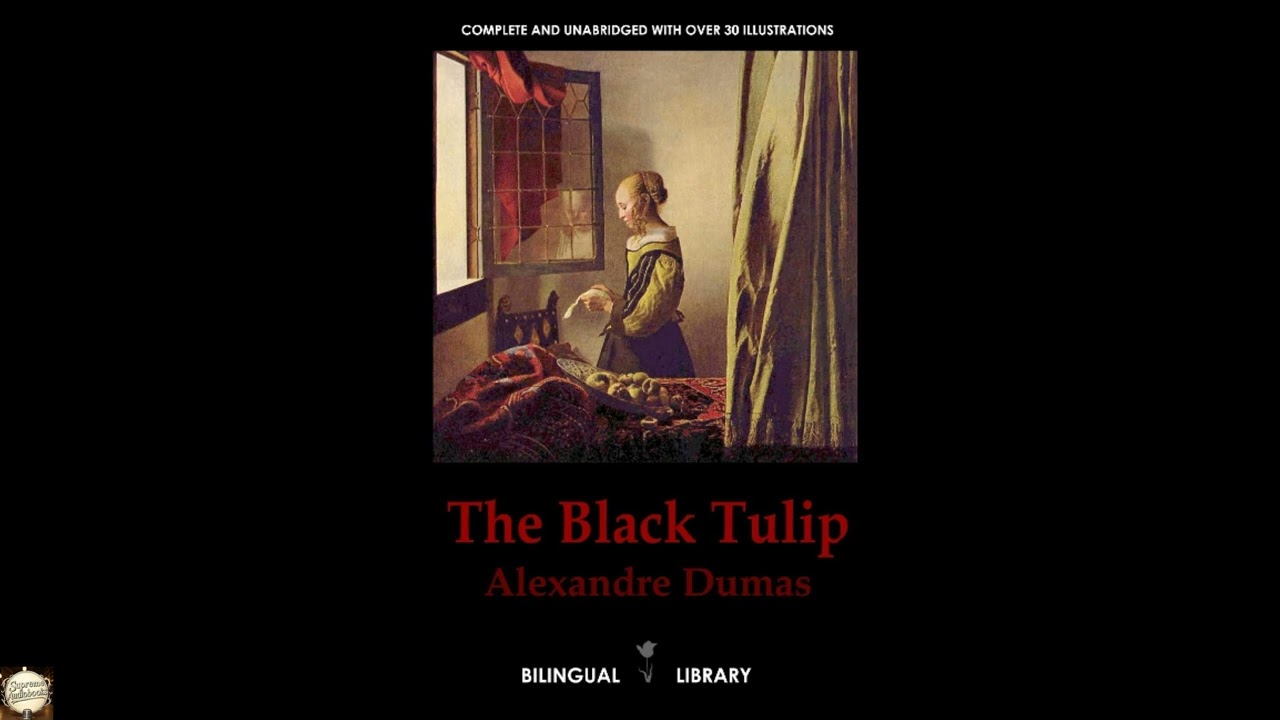
The Black Tulip
The Black Tulip is an adventure, a romance, and a historical drama that plunges listeners into the high-stakes world of 17th-century Dutch tulip mania. Here, a single bulb could ruin a fortune or make a name immortal. More than just a tale of horticultural obsession, it is a story about the pursuit of beauty, the resilience of the human spirit in the face of injustice, and the power of love to bloom in unlikeliest places. Listeners today will recognize the universal struggle against political machinations and the quest for freedom, all wrapped in Dumas's signature blend of action, wit, and emotional depth. This story proves even the smallest thing—like a flower—can hold the weight of grand ambitions and profound human drama. Set against the turbulent backdrop of 1672 Holland, a period known as the Rampjaar or "Disaster Year," The Black Tulip opens with the brutal public lynching of the de Witt brothers, powerful republican statesmen. This dramatic event immediately establishes the precarious political climate and foreshadows dangers awaiting the protagonist. Our focus quickly shifts to Cornelius van Baerle, a young, intelligent, and wealthy tulip grower from Dort. Cornelius is entirely absorbed in his horticultural pursuits, possessing an almost obsessive dedication to cultivating the perfect bloom. He has one ambition: to be the first to grow a completely black tulip, a feat deemed impossible and one that carries an immense prize offered by the Haarlem Horticultural Society. This innocent quest soon entangles him in the dangerous political rivalries simmering beneath Dutch society. When Cornelius is falsely accused of treason due to his unwitting association with the de Witt brothers, his idyllic life is shattered. Imprisoned and facing execution, his only solace is his desperate attempt to cultivate his elusive black tulip from within his cell. It is here that he meets Rosa, the daughter of his gruff jailer, Gryphus. Rosa becomes his unlikely confidante and helper, developing a bond that transcends their circumstances. Together, they navigate the perils of his unjust imprisonment, the cunning schemes of his envious rival, Isaac Boxtel, and the constant threat of discovery, all while the dream of the black tulip—and a future—hangs precariously in the balance. Alexandre Dumas père, born in 1802 in Villers-Cotterêts, France, lived a life almost as dramatic as his characters. The son of a French general of mixed race, Dumas inherited a powerful physique and striking presence. His early life was marked by poverty, but his natural talent for writing soon propelled him into Parisian literary circles. He began his career writing plays, finding early success in the Romantic movement with historical dramas. Dumas's genius lay in transforming historical events and figures into gripping narratives. He published hundreds of novels and plays, becoming one of France's most prolific authors. His works are characterized by strong plots, memorable characters, and a driving sense of adventure, often set against grand historical backdrops. He was a master of suspense and human drama, making history feel alive. His legacy is defined by globally renowned historical novels like The Three Musketeers (1844) and The Count of Monte Cristo (1844-1846), which are still widely read and adapted. The Black Tulip, published in 1850, showcased his continued skill in crafting compelling historical fiction. Dumas's place in the literary canon is secure as a foundational figure of the historical novel, a storyteller whose imaginative power created enduring works. He died in 1870. One central theme in The Black Tulip is ambition and obsession. Cornelius van Baerle's singular pursuit of the black tulip, an almost mythical horticultural achievement, exemplifies this. His dedication is total; he risks fortune, freedom, and life for a flower. This mirrors the "tulip mania" that gripped 17th-century Holland, where fortunes were won and lost on the speculative value of tulip bulbs. The book suggests that while ambition can drive extraordinary achievements, it also risks isolating individuals and making them vulnerable. The novel also powerfully addresses injustice and persecution. Cornelius, a man of science and beauty, apolitical, becomes a victim of political intrigue and personal jealousy. His imprisonment, based on flimsy evidence and the machinations of his rival, Isaac Boxtel, highlights the fragility of justice when power struggles interfere. Yet, amidst this severe injustice, hope and love emerge with striking clarity. Rosa's unwavering loyalty and growing affection for Cornelius offer him practical assistance and emotional sustenance. Her belief in him and their shared dream become a beacon, illustrating how human connection and perseverance provide strength and meaning even in the darkest circumstances. The book celebrates small acts of kindness and profound loyalty that sustain individuals against overwhelming adversity. The Black Tulip was published in 1850, a period when Romanticism was still a powerful force in European literature. Dumas, a key figure in French Romanticism, often looked back to earlier historical periods for settings that offered grand drama and clear moral conflicts. His choice of 17th-century Holland for The Black Tulip was particularly apt, drawing on a period of immense significance for the Dutch Republic. The actual historical events referenced, such as the Rampjaar of 1672 and the murder of the de Witt brothers, were real and traumatic for the Dutch. This was a time of national crisis, with the country facing invasion and internal political divisions. Furthermore, the novel foregrounds "tulip mania," a speculative bubble that had burst in 1637 but remained a cultural touchstone. Dumas expertly uses this backdrop to lend both gravitas and unique cultural flavor to his narrative, weaving personal drama into larger societal turmoil and examining how individual lives are shaped by history. To experience The Black Tulip as an audiobook is to be transported directly into the heart of 17th-century Holland, hearing Dumas's prose brought to life with all its period detail and dramatic flair. A skilled narrator gives voice to the distinct personalities of Cornelius, Rosa, and the scheming Boxtel, allowing their emotions and motivations to resonate deeply. The measured pacing builds tension masterfully during scenes of political intrigue, then softens to highlight moments of quiet romance. Listen for subtle shifts in tone that distinguish Cornelius's philosophical musings from Rosa's sharp wit. The auditory experience enhances the atmospheric descriptions of Delft, Dort, and Haarlem, making the political anxieties and horticultural fervor palpable. With several hours of listening, this format offers the perfect companion for an immersive encounter with one of Dumas's most unique historical romances.
Enjoyed The Black Tulip? A few ways to support us
Audible & Amazon links are affiliate; we may earn a small commission at no extra cost.
About this production
Human narration by a volunteer reader from LibriVox.org, the public-domain audiobook project. LibriVox volunteers record literary works whose copyright has expired in the United States, releasing the resulting recordings into the public domain.
The Black Tulip by Alexandre Dumas. The underlying text is in the U.S. public domain. We do not republish any modern copyrighted edition, translation, or commentary.
The 4K cinematic visuals accompanying this audiobook are generated by an AI image model from prompts derived from the source text. No copyrighted photos, paintings, or stock footage are used. AI generation is disclosed on every video on our YouTube channel as required by YouTube's altered/synthetic content policy.
English subtitles are transcribed from the LibriVox recording with OpenAI Whisper. Translations into the 11 other supported languages are produced by Meta's NLLB-200 neural translation model. No human translator's copyrighted translation is used.
Questions about sourcing or rights? See our DMCA & Sourcing policy or contact us.
Enjoyed this audiobook?
If you'd like to own a copy of The Black Tulip or hear a professionally produced edition, the links below help support free audiobook production at no extra cost to you.
As an Amazon Associate we earn from qualifying purchases. Audible / print links are affiliate.