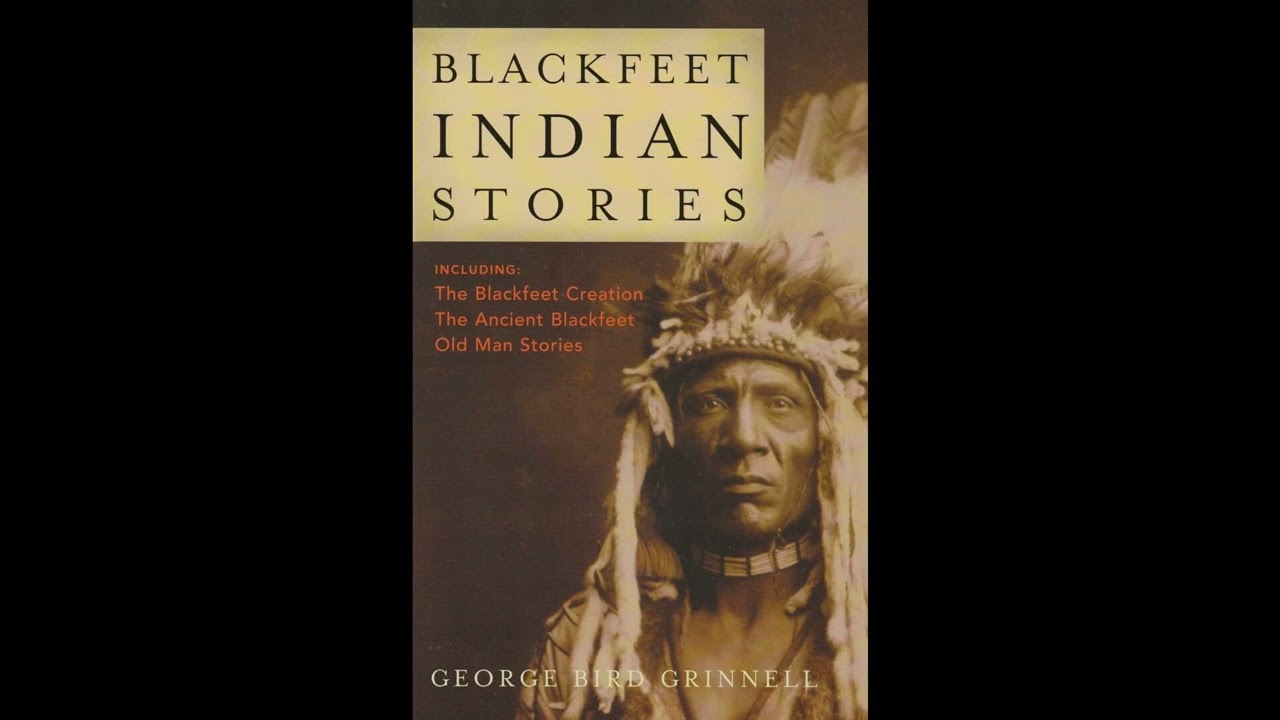
Blackfeet Indian Stories
Step into the heart of a world shaped by ancient wisdom, keen observation, and the enduring power of story. George Bird Grinnell’s Blackfeet Indian Stories is more than a mere collection of tales; it is a meticulously preserved echo of a people’s spirit, a direct transmission from the oral traditions of the Blackfeet Confederacy. At a crucial moment in American history, Grinnell became a conduit, ensuring that the creation myths, heroic sagas, and everyday parables of a powerful Plains nation would not fade into silence. For listeners today, this volume offers an unparalleled opportunity to connect with Indigenous thought, understand a foundational North American culture, and find universal truths in narratives passed down through countless generations. It is a vital document, offering both a window into a specific cultural worldview and a mirror reflecting the broader human experience of living with the land and with one another. The stories Grinnell presents transport the listener to the vast, windswept plains and majestic mountains that form the traditional homelands of the Blackfeet people. We meet figures central to their cosmology and daily life, most notably Napi, or Old Man, the creator and trickster whose actions often initiate the world's features, sometimes through cleverness, sometimes through bumbling misadventure. Alongside Napi, the narratives are populated by a vivid cast of characters: wise animal teachers like the Coyote, Bear, and Buffalo, each embodying specific traits and often speaking with human voice; courageous warriors who face fearsome beasts or rival tribes; young men and women navigating the challenges of coming-of-age; and elders whose profound understanding guides their communities. Each story, whether explaining why certain birds have their colors or recounting a brave deed, is a self-contained world. Across these narratives, a narrative arc unfolds not of a single protagonist, but of a worldview itself. The listener encounters stories detailing the very beginning of the world and humanity, followed by tales that explain the origins of rivers, mountains, and the behaviors of animals. Others serve as moral compasses, illustrating the consequences of greed or hubris, or celebrating the virtues of generosity, courage, and community cooperation. Still others are simple, humorous anecdotes or accounts of historical encounters, reflecting the everyday rhythms of life on the plains. Together, they paint a comprehensive picture of Blackfeet cosmology, values, and their profound connection to the natural environment, revealing a narrative tradition rich in both spiritual depth and earthy pragmatism. George Bird Grinnell (1849–1938) was a singular figure in American history – a naturalist, anthropologist, and conservationist whose diverse passions converged in his dedication to understanding and preserving the American West. Born in Brooklyn, New York, Grinnell’s early life was marked by an influential education at Yale, followed by significant paleontological expeditions with O.C. Marsh across the frontier. These formative experiences ignited his lifelong fascination with both the natural world and the Indigenous peoples who inhabited it. He served as editor of the influential magazine Forest and Stream for thirty-five years, using the platform to advocate strenuously for wildlife protection and the establishment of national parks, famously playing a key role in the creation of Glacier National Park. It was Grinnell’s deep and respectful engagement with Native American cultures, however, that truly set him apart. Beginning in the 1880s, he spent extensive periods living among the Blackfeet, Cheyenne, and Pawnee, developing close relationships with tribal elders and meticulously recording their oral traditions, histories, and cultural practices directly from their own telling. He was not merely an observer but a trusted friend and an indefatigable scribe, committed to capturing these voices at a time when they were under immense pressure from westward expansion and assimilation policies. His other notable works, such as Pawnee Hero Stories and Folk-Tales, The Fighting Cheyennes, and When Buffalo Ran, stand as foundational texts in American ethnography, earning him a significant place as a bridge between scientific documentation and empathetic cultural preservation, often regarded as one of the pioneers in respectful Indigenous studies. The narratives collected in Blackfeet Indian Stories are imbued with several core themes that resonate deeply through the ages. Foremost among these is creation and origin, often embodied by the actions of Napi. Many stories answer fundamental questions: how the world was formed, why people have certain customs, or why specific animals possess their unique characteristics. For example, a tale might explain the shaping of mountains by Napi’s travels or the origin of the buffalo hunt from an unexpected encounter. Another pervasive theme is moral instruction and community values. Stories frequently illustrate the importance of virtues such as generosity, humility, and courage, and the negative consequences of selfishness or disrespect. A narrative might depict a hunter who shares his meager kill with an elderly woman and is subsequently blessed with abundance, contrasting with a proud warrior who learns a difficult lesson about hubris. Further, the stories highlight the profound human-nature relationship central to Blackfeet worldview. Animals are not merely creatures but often sentient beings with wisdom, power, and the ability to interact directly with humans, teaching lessons or offering aid. Tales frequently emphasize the interdependence of all life, fostering respect for the natural world as a living, giving entity. Finally, the trickster archetype, personified by Napi, offers not only humor but also subtle lessons about human folly and the unexpected ways change can occur. Napi’s often misguided attempts to create or solve problems frequently result in accidental benefits or provide humorous explanations for the world's oddities, demonstrating that wisdom can emerge even from chaos or absurdity. Grinnell’s efforts to preserve these stories occurred during a pivotal and often tragic period in American history. The late nineteenth and early twentieth centuries witnessed the dramatic climax of westward expansion, leading to the forced displacement, cultural suppression, and devastating population decline of many Indigenous nations, including the Blackfeet. The buffalo, central to their way of life, had been hunted to near extinction. Amidst this upheaval, there was a growing awareness among some academics and reformers of the urgent need to document and understand these rapidly changing cultures before their traditional knowledge was irrevocably lost. Grinnell’s work was part of this emerging field of American anthropology, standing in contrast to the prevailing governmental policies of assimilation, advocating instead for the recognition and respect of Indigenous traditions. His sympathetic approach, built on years of personal engagement, yielded invaluable material that countered the often-prejudiced views of the era, presenting Indigenous peoples as complex, intelligent, and culturally rich. To experience Blackfeet Indian Stories as an audiobook is to honor the very essence of its origin. These narratives were never primarily meant to be read silently from a page; they were spoken, listened to, and passed down through the living voice. The performance allows the rhythm and cadence of storytelling to come alive, mirroring the communal experience of sitting around a fire and receiving wisdom from an elder. A skilled narrator can bring distinct voices to Napi, the various animals, and human characters, infusing the humor, solemnity, and wonder of each tale with appropriate pacing and tone. The several-hour run length encourages a truly immersive experience, perfect for extended listening sessions where the listener can fully absorb the unique atmosphere and the accumulated wisdom of each successive story, letting the soundscape transport them directly into the heart of the Blackfeet tradition.
Enjoyed Blackfeet Indian Stories? A few ways to support us
Audible & Amazon links are affiliate; we may earn a small commission at no extra cost.
About this production
Human narration by a volunteer reader from LibriVox.org, the public-domain audiobook project. LibriVox volunteers record literary works whose copyright has expired in the United States, releasing the resulting recordings into the public domain.
Blackfeet Indian Stories by George Bird Grinnell. The underlying text is in the U.S. public domain. We do not republish any modern copyrighted edition, translation, or commentary.
The 4K cinematic visuals accompanying this audiobook are generated by an AI image model from prompts derived from the source text. No copyrighted photos, paintings, or stock footage are used. AI generation is disclosed on every video on our YouTube channel as required by YouTube's altered/synthetic content policy.
English subtitles are transcribed from the LibriVox recording with OpenAI Whisper. Translations into the 11 other supported languages are produced by Meta's NLLB-200 neural translation model. No human translator's copyrighted translation is used.
Questions about sourcing or rights? See our DMCA & Sourcing policy or contact us.
Enjoyed this audiobook?
If you'd like to own a copy of Blackfeet Indian Stories or hear a professionally produced edition, the links below help support free audiobook production at no extra cost to you.
As an Amazon Associate we earn from qualifying purchases. Audible / print links are affiliate.