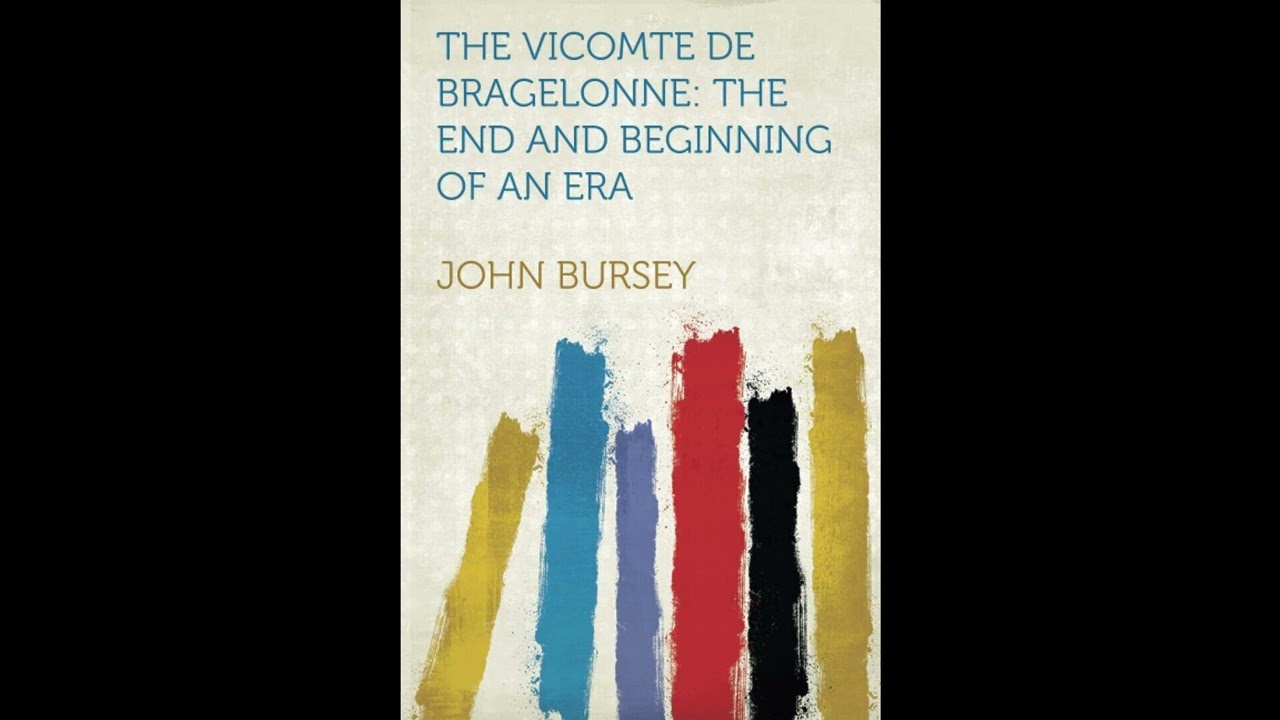
The Vicomte De Bragelonne: The End and Beginning of an Era
"The Vicomte De Bragelonne: The End and Beginning of an Era" stands as a monumental achievement in storytelling, an epic saga that sweeps across the grand canvas of seventeenth-century France. This is not merely a tale of kings and courtesans, but a profound meditation on loyalty, ambition, and the inexorable march of time. It brings to life a pivotal moment in history—the twilight of an age defined by individual heroism and the dawn of absolute monarchy, where the sun king Louis XIV began his magnificent, all-encompassing reign. Listeners are invited to witness the poignant struggles of legendary figures as they grapple with a world rapidly changing beneath their feet, their ideals challenged, their friendships tested, and their very existence rendered obsolete by new political realities. It is a narrative that speaks to the heart of what it means to live through profound transformation, offering both the thrill of adventure and the quiet sorrow of an era fading into memory. The narrative begins as the sun sets on the glorious, swashbuckling era of King Louis XIII, ushering in the complex, burgeoning power of his young son, Louis XIV. At its heart are the figures whose names have become synonymous with heroic friendship: D'Artagnan, Athos, Porthos, and Aramis. While no longer young men, their wit and prowess remain undimmed, though their roles in the world have shifted. D'Artagnan, ever the pragmatist, continues to serve the Crown, striving to navigate the treacherous political currents of the court. Athos, the noble count, embodies a fading aristocratic ideal, while Aramis, the cunning bishop, finds himself drawn deeper into intricate schemes and secrets. Porthos, still possessing immense strength and good humor, seeks to uphold the honor of his friends. Central to this story is Raoul, the young Vicomte de Bragelonne, son of Athos. Raoul represents the younger generation, a man of honor and romantic idealism, deeply in love with Louise de La Vallière. Their budding romance, however, becomes entangled with the burgeoning desires of Louis XIV, leading to a tragic love triangle that mirrors the larger shifts in power and morality at court. As the young king consolidates his authority, figures like the finance minister Nicolas Fouquet find themselves caught between immense wealth and royal jealousy, while the ambitious Jean-Baptiste Colbert rises through the ranks, orchestrating a new, centralized order. The sprawling plot sees our heroes involved in everything from daring prison breaks and clandestine missions to diplomatic intrigues and grand military campaigns. Their personal loyalties are constantly weighed against their duty to the state and the evolving will of the monarch. The story follows their individual paths as they confront challenges both personal and political, charting the rise of Louis XIV's court at Versailles and the dramatic clash between the old guard—those who valued individual liberty and honor—and the new era of absolute power and rigid protocol. The arc builds towards a series of inevitable confrontations, forcing each character to make profound choices that will define their legacy and reshape the destiny of France. This expansive narrative, "The Vicomte De Bragelonne," stands as a remarkable example of historical romance, a genre that has long captivated audiences with its blend of adventure, dramatic human conflict, and evocative period detail. Though the specific circumstances of its creation, including the exact author and initial publication date, are not definitively known or have become obscured over time, the text itself speaks volumes about a literary tradition that flourished particularly brightly in certain periods. It embodies the characteristics of grand, serialized fiction, often published in parts, which became a popular form of entertainment and cultural commentary in centuries past, reaching vast numbers of readers. Works like this demonstrate a profound engagement with history, treating historical figures and events not merely as facts but as springboards for gripping human drama. The commitment to detailed settings and the intricate weaving of historical personages with fictional characters allowed readers to immerse themselves deeply in a bygone era. Such monumental narratives often emerged from periods of significant social and political change, offering both an escape into the past and a lens through which to examine contemporary issues of power, justice, and individual freedom. The very scale of "The Vicomte De Bragelonne" reflects a literary ambition to create an entire world, populated by unforgettable characters whose struggles mirror universal human experiences. Its enduring appeal lies in this grand scope and its ability to transport listeners directly into the heart of a pivotal historical moment. It belongs to that esteemed collection of narratives where character development is paramount, where the emotional weight of decisions reverberates through hundreds of pages, and where the sense of an era's passing is rendered with both sweep and tenderness. The identity of its precise creator may remain a mystery, but the impact of the story itself has cemented its place in the literary consciousness, testament to the powerful resonance of its themes and the undeniable skill of its execution. At its core, "The Vicomte De Bragelonne" grapples with the profound theme of loyalty versus ambition. We see this most keenly in D'Artagnan, whose unwavering service to the crown is constantly tested by his deep personal bonds with his friends, particularly as Aramis pursues his own clandestine political objectives. This internal struggle is mirrored by the shifting allegiances at court, where figures like Fouquet fall from grace due to the King's burgeoning ambition and Colbert's ruthless ascent. The narrative meticulously charts the price of devotion and the corrosive nature of unchecked power, asking whether true honor can survive in a world driven by self-interest and political maneuvering. Another central theme is the decline of an idealized past and the rise of a new order. The aging musketeers represent a chivalric age of personal heroism and independent action, a world slowly but surely being replaced by Louis XIV's absolute monarchy, where individual initiative is subsumed by royal will. Athos embodies this fading grandeur, while Raoul’s tragic love story symbolizes the vulnerability of innocent idealism in a cynical new court. The narrative frequently juxtaposes the freedom and camaraderie of earlier days with the rigid hierarchy and political dangers of Versailles, illustrating the bittersweet reality that all eras must eventually yield to change. This powerful sense of transition gives the story much of its melancholic depth. When a literary creation of this immense scope and historical detail emerged, it spoke to a particular cultural moment, likely in a period where readers held a burgeoning fascination with the past. The era depicted in "The Vicomte De Bragelonne"—the mid-17th century rise of Louis XIV—was a time of immense historical significance, marking the solidification of France as a dominant European power and the establishment of the Sun King's absolute authority. This dramatic shift from a feudal-leaning aristocratic society to a modern, centralized state provided fertile ground for powerful storytelling. Narratives such as this allowed audiences of later centuries to engage with and reflect upon themes of national identity, the nature of governance, and the personal cost of political transformation, finding both entertainment and insight into the foundations of their own world. For a story of such grand scale and historical sweep, the audiobook format offers an unparalleled immersion. Listeners can fully appreciate the nuanced character voices, the dramatic tension in the dialogue, and the shifting atmosphere from court intrigue to battlefield courage. The substantial run length allows for a true commitment to the narrative, perfect for extended sessions or accompanying daily activities, letting the story unfold at its own deliberate pace. A skilled narrator brings the prose to life, giving each character a distinct presence and carrying the listener through the emotional highs and lows, ensuring that every plot twist and moment of quiet reflection resonates deeply. It is an experience that transforms a classic text into a vivid, auditory drama.
Enjoyed The Vicomte De Bragelonne: The End and Beginning of an Era? A few ways to support us
Audible & Amazon links are affiliate; we may earn a small commission at no extra cost.
About this production
Human narration by a volunteer reader from LibriVox.org, the public-domain audiobook project. LibriVox volunteers record literary works whose copyright has expired in the United States, releasing the resulting recordings into the public domain.
The Vicomte De Bragelonne: The End and Beginning of an Era by Alexandre Dumas. The underlying text is in the U.S. public domain. We do not republish any modern copyrighted edition, translation, or commentary.
The 4K cinematic visuals accompanying this audiobook are generated by an AI image model from prompts derived from the source text. No copyrighted photos, paintings, or stock footage are used. AI generation is disclosed on every video on our YouTube channel as required by YouTube's altered/synthetic content policy.
English subtitles are transcribed from the LibriVox recording with OpenAI Whisper. Translations into the 11 other supported languages are produced by Meta's NLLB-200 neural translation model. No human translator's copyrighted translation is used.
Questions about sourcing or rights? See our DMCA & Sourcing policy or contact us.
Enjoyed this audiobook?
If you'd like to own a copy of The Vicomte De Bragelonne: The End and Beginning of an Era or hear a professionally produced edition, the links below help support free audiobook production at no extra cost to you.
As an Amazon Associate we earn from qualifying purchases. Audible / print links are affiliate.