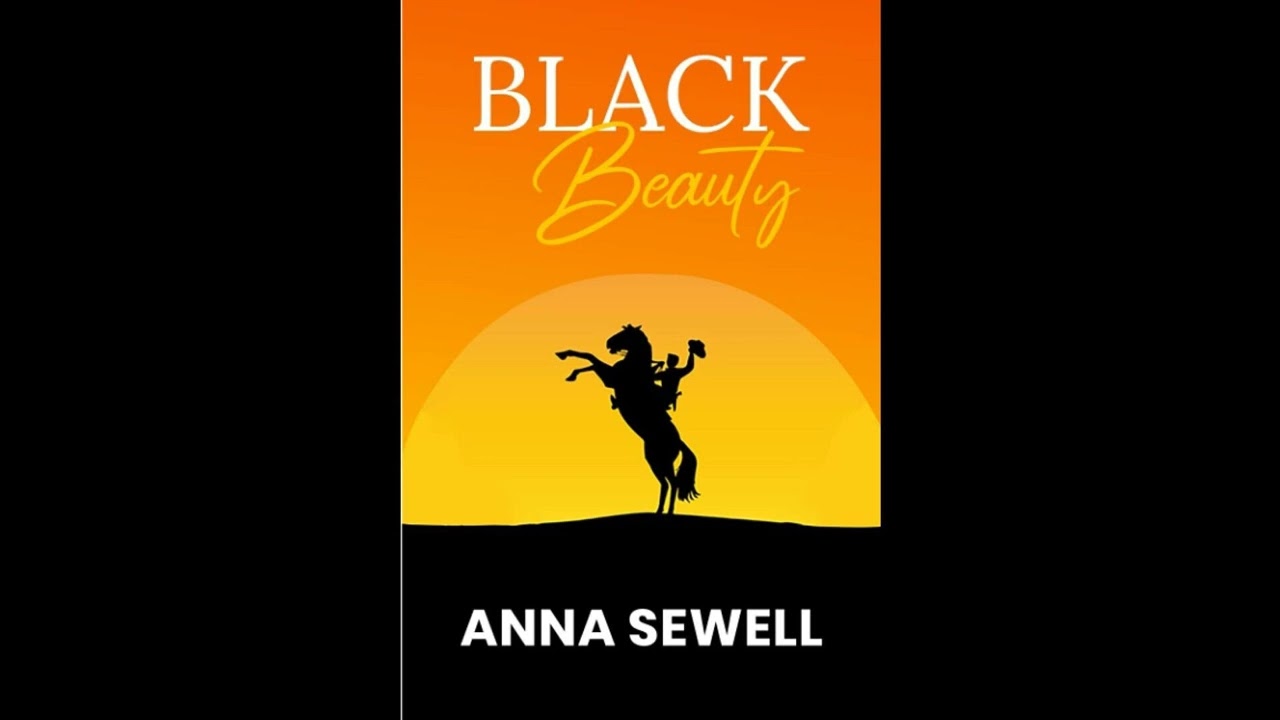
Black Beauty
Anna Sewell's Black Beauty, an enduring classic first published in 1877, stands as far more than just a tale about a horse. It is a powerful autobiography, told from the unique perspective of a magnificent black horse, chronicling his life from the pastoral fields of his youth to the grueling streets of London. While often categorized as children's literature, its profound message resonates deeply with readers of all ages, offering a poignant examination of empathy, kindness, and the inherent dignity of all living creatures. In a world still grappling with questions of animal welfare and our collective responsibility towards the vulnerable, Beauty's voice remains remarkably relevant, prompting us to consider the perspectives of those who cannot speak for themselves, challenging us to look beyond immediate utility and recognize the sentient lives around us. The story begins in the serene English countryside, where a spirited young colt with a beautiful black coat and a white star on his forehead enjoys an idyllic upbringing. Born to a kind mare, Duchess, and under the gentle care of Squire Gordon and his compassionate stable manager, John Manly, Black Beauty learns the ways of the world. He makes friends with other horses like the lively Merrylegs and the fiery Ginger, whose own tragic past hints at the darker side of human interaction. Life at Birtwick Hall is nearly perfect, characterized by soft words, generous feeds, and meaningful work. However, the fortunes of a horse are dictated by its owners, and Beauty's life is destined to change hands multiple times, each transition bringing new experiences—some joyful, others heart-wrenching. As Beauty matures, he moves from the care of the benevolent Squire Gordon to other households, each presenting its own set of challenges and lessons. He serves various masters and mistresses, from the frivolous to the harsh, witnessing firsthand the spectrum of human behavior towards animals. He experiences the pride of being a carriage horse, the pain of cruel harnessing, and the exhaustion of being overworked. His story becomes a series of vignettes, each revealing the subtle and overt ways in which humans can either cherish or neglect their equine companions. Through it all, Beauty recounts his observations, his fears, and his hopes, allowing us to see the world through his intelligent, suffering, yet often forgiving eyes, always maintaining his gentle spirit despite the trials he faces. The author, Anna Sewell, was born in Yarmouth, Norfolk, England, on March 30, 1820, into a devout Quaker family. Her upbringing instilled in her a strong sense of social justice and compassion, which would later become the bedrock of her only novel. A significant event in her youth, an injury at the age of fourteen that left her partially invalid and often dependent on horse-drawn carriages for mobility, gave her a unique and deeply personal understanding of horses. This physical limitation fostered a lifelong connection with these animals, allowing her to observe their working lives and feel their experiences with an unusual intimacy. She moved frequently with her family, including her mother, Mary Wright Sewell, herself a successful author of moralistic children's books, which undoubtedly influenced Anna's own literary aspirations and moralistic intent. Black Beauty was written during the final years of Sewell's life, as her health steadily declined. She dictated the story to her mother, often from her sickbed, pouring her life's observations and convictions into the narrative. The book was published in 1877, just a few months before her death on April 25, 1878. Sewell's explicit purpose in writing the book was "to induce kindness, sympathy, and an understanding treatment of horses." Though it was quickly embraced by children, she primarily wrote it for adults who worked with or owned horses, hoping to foster a more humane approach. Her singular literary output cemented her place as a pivotal figure in both Victorian literature and the nascent animal welfare movement, demonstrating the power of storytelling to effect real-world change. One of the central themes of Black Beauty is, unquestionably, animal welfare and the devastating impact of cruelty. Through Beauty's narration, Sewell shines a spotlight on common abuses of her era, such as the use of bearing-reins, which cruelly held a horse's head high, causing pain and restricting breathing for purely aesthetic reasons. We see the stark contrast between the gentle hand of John Manly, who always considers the horse's comfort, and the recklessness of individuals like Reuben Smith, whose drunken riding leads to a severe injury for Beauty. The book powerfully illustrates how neglect, overwork, and callousness shorten lives and break spirits, while kindness and attentive care allow animals to thrive, reinforcing the idea that animals, like humans, respond to fair treatment and suffer from ill usage. Another potent theme is empathy and perspective-taking. By presenting the narrative through Beauty's eyes, Sewell forces listeners to step into the hooves of a horse, experiencing the world from a non-human viewpoint. We feel Beauty's fear during a stable fire, his frustration when misunderstood, and his genuine affection for kind masters. This narrative choice not only humanizes the animals but also serves as a broader lesson in understanding and compassion, encouraging us to consider the inner lives and feelings of others, regardless of species or station. The story also subtly touches upon social class and the capriciousness of fortune, as Beauty's quality of life fluctuates wildly depending on the wealth and moral character of his successive owners, mirroring the precarious existence of many working-class individuals in Victorian England. The late nineteenth century, when Black Beauty was conceived and published, was a period of significant social change in Britain. While the Industrial Revolution had brought forth new technologies, horses remained indispensable for transportation, agriculture, and industry. They pulled omnibuses and cabs through crowded city streets, hauled goods, and served as personal mounts. Yet, public awareness of animal rights was still in its infancy. Organizations like the Royal Society for the Prevention of Cruelty to Animals (RSPCA) had been established earlier in the century, but practical reforms in the treatment of working animals were slow to take hold. Sewell's Quaker background, with its emphasis on pacifism, equality, and compassion for all beings, aligned perfectly with the growing, albeit gradual, sentiment for humanitarian reform, making the time ripe for a book that could speak directly to the plight of animals. Sewell's novel emerged from this context as a clarion call for change, a moral treatise disguised as an accessible story. It sought to educate the public about the physical and emotional capacities of horses, challenging the prevalent view that animals were mere unfeeling property. Its immediate and immense popularity helped to catalyze shifts in public opinion and contributed to real legislative changes in animal welfare, particularly concerning the abolition of practices like the bearing-rein. The book's heartfelt plea for kindness resonated across society, proving that a gentle story could be a powerful instrument of social advocacy, forever altering how many people perceived their four-legged companions and solidifying its place as both a beloved narrative and an important social document. Listening to Black Beauty as an audiobook offers a unique and deeply personal immersion into the horse's world. The spoken word brings a singular intimacy to Beauty's first-person narration, allowing his gentle, observant voice to truly inhabit the listener's imagination. A skilled narrator can perfectly capture the cadence of Beauty's thoughts, conveying his innocence, his moments of fear, his enduring loyalty, and his quiet suffering with an immediacy that reading alone might not achieve. The run length of several hours makes this a perfect companion for long walks, daily commutes, or as a comforting presence during quiet evenings. Listen for the narrator's subtle shifts in tone that distinguish between kind-hearted masters like Jerry Barker and the more careless or cruel figures, bringing the bustling atmosphere of a London street or the peaceful quiet of a country stable vividly to life, allowing the full emotional weight of Sewell's compassionate tale to unfold with profound effect.
Enjoyed Black Beauty? A few ways to support us
Audible & Amazon links are affiliate; we may earn a small commission at no extra cost.
About this production
Human narration by a volunteer reader from LibriVox.org, the public-domain audiobook project. LibriVox volunteers record literary works whose copyright has expired in the United States, releasing the resulting recordings into the public domain.
Black Beauty by Anna Sewell. The underlying text is in the U.S. public domain. We do not republish any modern copyrighted edition, translation, or commentary.
The 4K cinematic visuals accompanying this audiobook are generated by an AI image model from prompts derived from the source text. No copyrighted photos, paintings, or stock footage are used. AI generation is disclosed on every video on our YouTube channel as required by YouTube's altered/synthetic content policy.
English subtitles are transcribed from the LibriVox recording with OpenAI Whisper. Translations into the 11 other supported languages are produced by Meta's NLLB-200 neural translation model. No human translator's copyrighted translation is used.
Questions about sourcing or rights? See our DMCA & Sourcing policy or contact us.
Enjoyed this audiobook?
If you'd like to own a copy of Black Beauty or hear a professionally produced edition, the links below help support free audiobook production at no extra cost to you.
As an Amazon Associate we earn from qualifying purchases. Audible / print links are affiliate.

![Children's Classics in Dramatic Form, Book Two. [1909] by Augusta Stevenson — free full audiobook](https://img.youtube.com/vi/h4bTKUeuO7U/maxresdefault.jpg)